
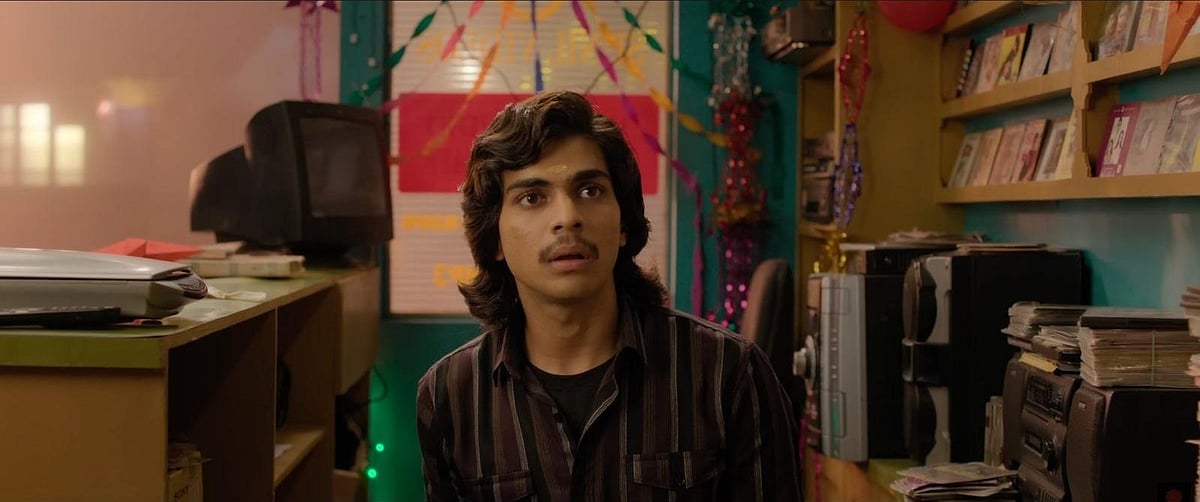
The director calls Mollywood Times the second film in his Success Trilogy, but it’s perhaps more convenient to call it his own narcissistic cinematic universe. In a sense, it’s not impossible to find parallels between Mukundan Unni, the protagonist of his first film and the thoughts and calculations of Vineeth. If Mukundan was driven by a pragmatic desire to achieve materialistic success no matter what, Vineeth aspires for nothing short of greatness. Both are Machiavellian, and they’re both willing to do just about anything to get where they want. If Mukundan finds nothing wrong in endangering the lives of a bus full of children to make a killing out of the insurance payout, Vineeth doesn’t flinch before deleting the first feature he directs, just so people don’t perceive him as a lesser filmmaker. Their narcissistic pursuits define them to such a degree that they look at being termed ‘selfish’ as a badge of honour.
These are qualities that make Vineeth the absolute opposite of the template good guy that populate our movies. When he dreams of making a movie, he doesn’t want to change society, nor does he want to speak for the voiceless. He wants to make the scariest Malayalam movie ever, and he takes pride in believing that his grandfather became comatose after watching his film. In a highly complex sub-plot, Vineeth’s voiceover problematises the plight of his friend, who seems to benefit from affirmative action. But unlike taking a safe position to repeat the democratic nature of cinema, Vineeth’s personal politics is such that he underlines the notion that cinema is as prejudiced as the society outside of it.
Credit: Source link