When Christopher Nolan announced he was making The Odyssey, it felt almost inevitable.
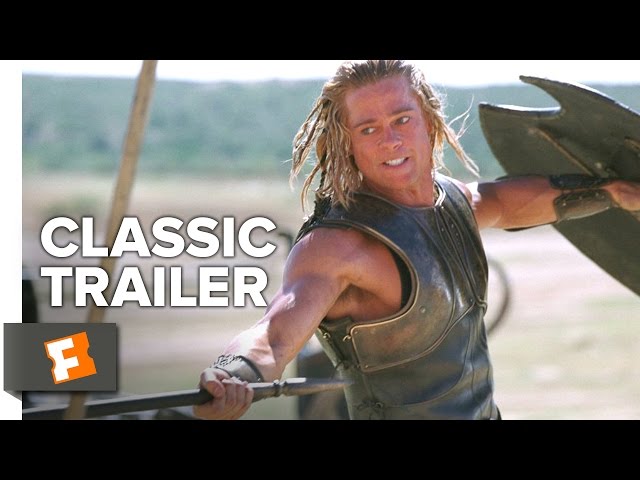
Every generation finds its own Homer. Mine was a crusty, dog-eared paperback — and much later, Troy.
But what surprised me wasn’t that Hollywood was returning to Homer. It was that my 14-year-old daughter had gotten there first.
Long before Nolan’s announcement. Long before the social media buzz. Long before Hollywood reminded us that Odysseus existed.
The strange thing is, she had never seen Troy. Homer wasn’t part of her school reading list, yet. She wasn’t particularly interested in Greek history. In an age when every imaginable form of entertainment sits one tap away, why would a teenager become fascinated by a 3,000-year-old epic?
For context, my daughter is what her generation would call a “theater girlie.” The only time she visited New York, our itinerary revolved around Broadway schedules rather than tourist landmarks. She was singing Hamilton years before Lin-Manuel Miranda entered my consciousness and somehow discovers musicals before they become mainstream. So when she kept bringing up The Odyssey, I assumed there must be a new Broadway adaptation.
“There is,” she said.
“It’s called Epic.”
I had never heard of it.
What I expected was another Broadway production. What I found instead completely changed how I think about storytelling.
Epic: The Musical didn’t begin on Broadway. It didn’t even begin in a theater. It began online.
Its creator, Jorge Rivera-Herrans, released songs one at a time. Before there was a finished stage production, there were already millions of listeners. Fans animated entire scenes, debated character motivations, recorded orchestral covers, choreographed performances, produced artwork, and filled social media with their own interpretations of Homer’s world.
The audience wasn’t waiting for Broadway to decide when the story was ready. They had already started telling it themselves.
What struck me was what my daughter never asked.
She never asked whether Epic was officially licensed. She never asked who owned the rights.
She cared that it was meaningful. She cared that it was alive.
And perhaps that’s the first sign that our generation and hers think differently about stories.
Those of us in media tend to ask, “Who owns the rights to this?”
They seem to ask something else: “Is this a world I can belong to?”
For most of the last century, media operated like a stage. There were people under the spotlight. And there were people in the seats.
Creators created. Audiences applauded. Studios protected the intellectual property.
Everyone knew where the stage ended and the audience began.
In theater, there’s even a term for crossing that invisible line: breaking the fourth wall — when the performer acknowledges the audience. But even then, the audience remained just that: the audience.
My daughter’s generation doesn’t want the fourth wall broken.
They want it removed.
‘The Backrooms’ explained
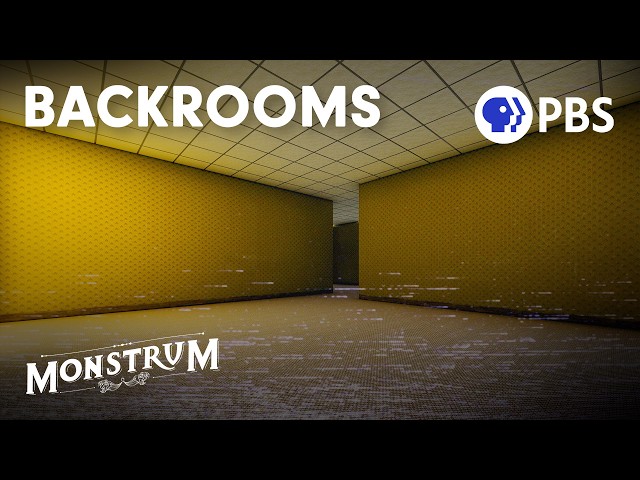
I’ve seen this in another one of my daughter’s fascinations: The Backrooms.
If you’ve never heard of it, you’re probably over 40.
The Backrooms began with a single unsettling image posted online. From that one image, an entire universe of stories, creatures, rules, films, games, artwork, and mythology grew, created by thousands of people who have never met each other.
Nobody waits for the next “official” installment. The community keeps expanding the universe.
No one asks, “Whose story is this?”
They ask, “What can I add?”
That’s the point. The Backrooms isn’t just a story. It’s an invitation to become one of its storytellers.
And perhaps that’s the question that defines this generation’s relationship with media.
For decades, media companies competed by owning three things: the studio, the distribution, the audience. That’s how value was created.
That model isn’t disappearing. Hollywood will keep making extraordinary films. Broadway will keep producing remarkable theater.
But we can already see another model quietly emerging.
Its currency isn’t ownership. It’s participation.
It may also explain why many traditional media companies struggle to understand younger audiences.
We continue to think in terms of distribution: How do we get our content in front of more people?
Younger audiences increasingly think in terms of participation: How do I become part of this world? They’re not looking for a front-row seat. They want a backstage pass — or better yet, a role in the production.
The value of a story increasingly lies not only in how many people watch it, but in how many people feel invited to extend it.
Ironically, this may be taking us back to where storytelling began.
Long before publishing houses and movie studios, stories belonged to communities.
Many of us might remember, although not fondly, being forced to read Lam-ang in high school.
What we rarely appreciate is that Lam-ang survived for centuries for the same reason Homer’s epics did — not because someone copyrighted them, but because communities kept retelling them. Each storyteller added nuance. Every generation reshaped familiar tales to reflect its own world.
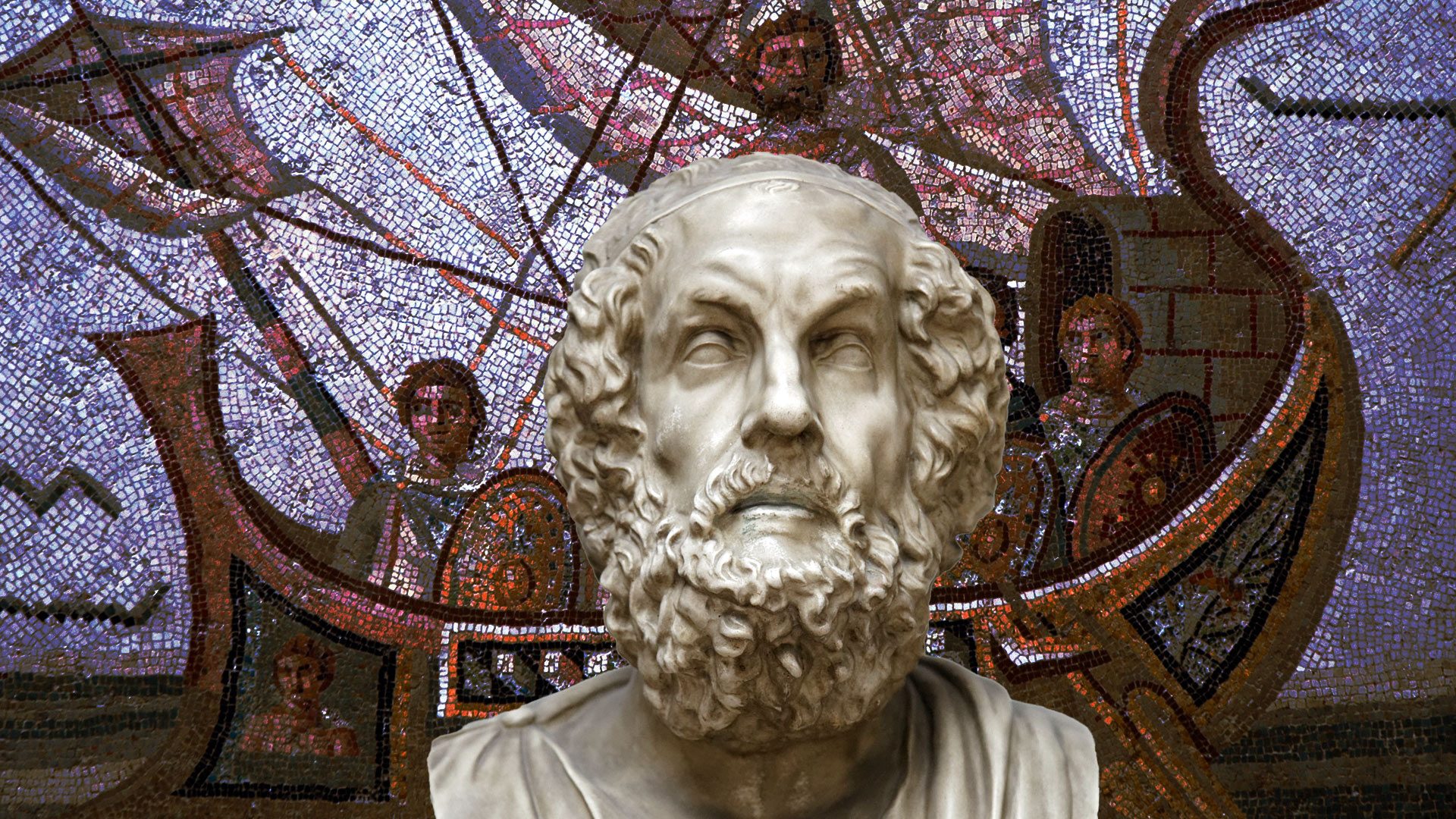
Homer himself probably understood that better than anyone.
The Odyssey wasn’t preserved because someone owned it. It endured because generation after generation chose to tell it again.
Christopher Nolan will tell it one way. Jorge Rivera-Herrans has told it another.
My daughter and millions of young people are telling it in ways neither Homer nor Hollywood could have imagined.
Which makes me wonder if we’ve been asking the wrong question all along.
Instead of asking who owns a story, perhaps we should ask who feels invited to continue it.
Maybe that’s why Homer has survived for nearly three thousand years.
Not because anyone owned his stories, but because every generation believed it had the right to tell them again.
Christopher Nolan is simply the latest storyteller.
He won’t be the last. – Rappler.com
Vince Rodriguez has spent more than 30 years in Philippine media, with experience spanning news, sports, content production, channel management, and marketing. He is currently Head of Network Marketing at TV5. His writing explores the intersection of media, culture, audiences, and the stories that shape how we see the world. He is married to journalist Niña Corpuz and is the father of three children, ages 14, 12, and 8, who continually challenge—and reshape—his understanding of the future of media.
Credit: Source link