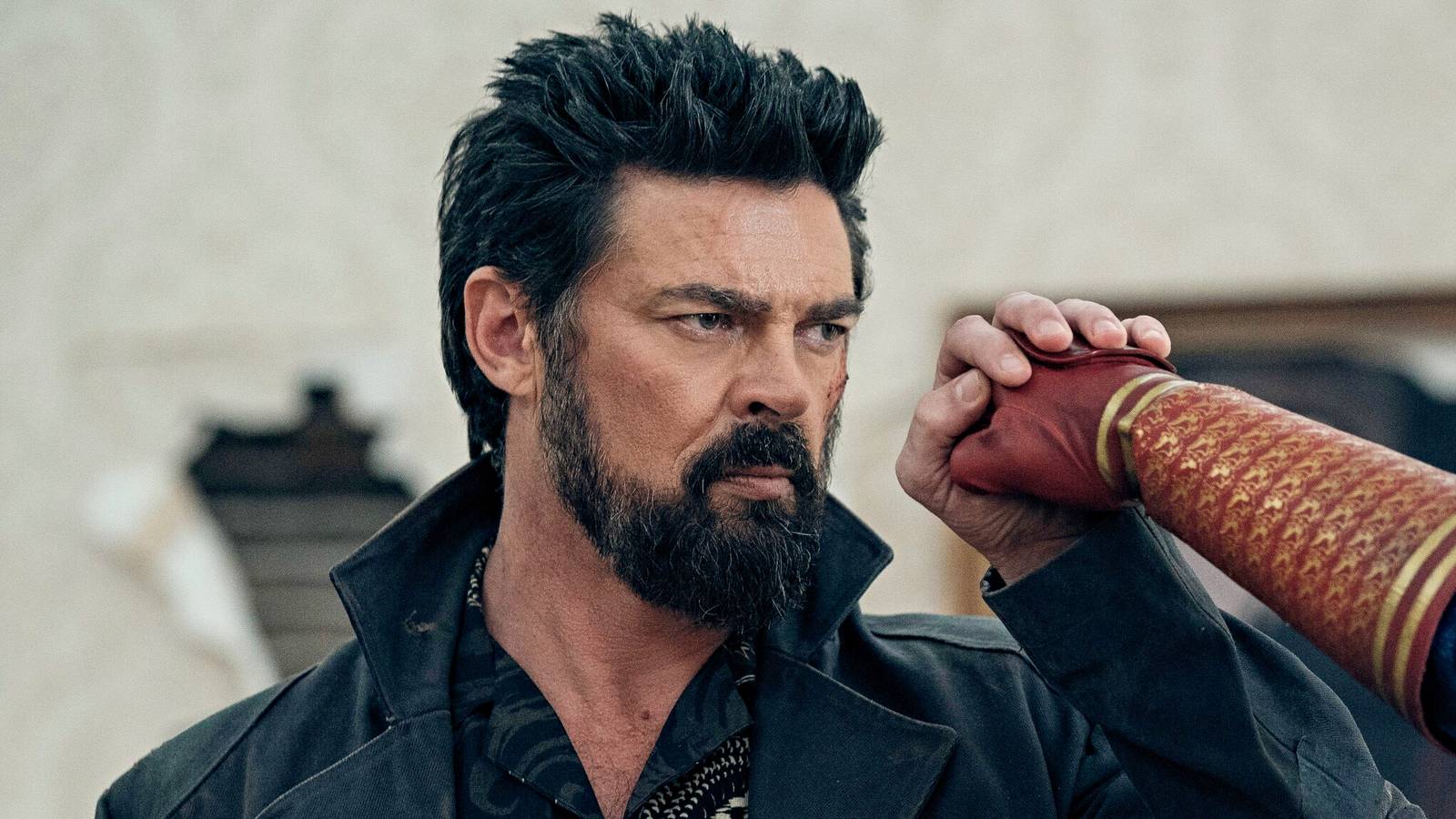
The third film from Joel Silver and Robert Zemeckis‘ underrated Dark Castle entertainment production house, 2002’s Ghost Ship has much of the same delightfully campy, gory energy the two producers brought to their HBO Tales from the Crypt project roughly a decade prior. Ghost Ship tells exactly the story its title promises, with a lot of style — but it may be most notable today because it features a striking, young Karl Urban‘s Hollywood feature film debut.
Long before he perfectly embodied Dredd and Johnny Cage, or lorded over the ultraviolent superhero series The Boys, Urban debuted as Munder, a daredevil, wisecracking member of a world-class ship salvage operation alongside Gabriel Byrne‘s Murphy and Julianna Margulies‘s Epps. In true Dark Castle style, the crew encounters ghostly apparitions, expensive special effects, surprisingly splashy gore, and a needlessly complicated plot once they board the eponymous haunted ship. The film is still a campy blast in 2026, though, and is currently streaming free on Tubi.
Karl Urban Made His Hollywood Debut In a Dark Castle Classic
While Ghost Ship is mostly centered around Byrne and Margulies’s characters (as well as its elaborate production design and effects), Urban came out of the gate swinging, proving a strong screen presence as the salvage crew’s resident welder. Urban acquits himself well as a man on a mission, wielding tools while smoking a cigarette in true ’90s fashion, and he gets the film’s second most memorable death scene.
More notably, though, Urban proves his dedication in a scene in which he and a crew mate are tricked by the ship’s spectral inhabitants into shoving baked beans into their mouths, only to discover that they’ve really been devouring live maggots. It’s a genuinely gross moment in a movie generally more concerned with CGI ghosts than icky practical effects. Even worse, though, Urban said in a later interview that the stomach-churning scene was completely real, and his second time putting live insects in his mouth for a role.
‘Ghost Ship’ Still Delivers Campy, Gory Thrills That Perfectly Evoke the Early 2000s
Much like Dark Castle’s two prior big-budget horror romps, House on Haunted Hill and 13 Ghosts, Ghost Ship starts with a bang. A vividly realized period bash on the upper deck of an Italian cruise ship turns into a bloody mess when some rigging cuts loose — then cuts everyone on the deck neatly into bits. It’s a now-legendary opening that delights in falling, flailing body parts and severed torsos dragging themselves around the deck. It is also, unfortunately, the highlight of the film. However, Ghost Ship has early 2000s pleasures still to offer, provided you’re fine with some of the nonsense that comes with them.
This is one of those films that expects audiences to find a disappearing and reappearing ghost girl frightening, and in which characters urgently shout each other’s last names over and over again for much of the runtime. It also features Mudvayne diegetically on the soundtrack and a shameless, trip-hoppy Nine Inch Nails ripoff as the accompaniment to a spastically edited gore sequence. It’s 2002 studio horror in a nutshell.
It also features genuinely impressive visual effects for the most part (it’s still hard to tell that this was largely shot on a soundstage rather than a scale set or actual ship), as well as goofy, haunted-house scares and gore that are pleasurably redolent of Zemeckis and Silver’s Tales from the Crypt pedigree. While the plot becomes nonsensical to an almost headache-inducing degree toward the end (what is the ferryman’s purpose on the ship, again?), it still moves like a rocket, and everyone is doing their professional best, certainly including Karl Urban.
All of Dark Castle’s early releases are still well worth a watch for horror fans in 2026, and Ghost Ship offers all the glossy, gory thrills one expects from a film of the period, as well as Urban’s first Hollywood role. It can be streamed today for free on Tubi

- Release Date
-
October 25, 2002
- Runtime
-
91 minutes
- Director
-
Steve Beck

Credit: Source link