
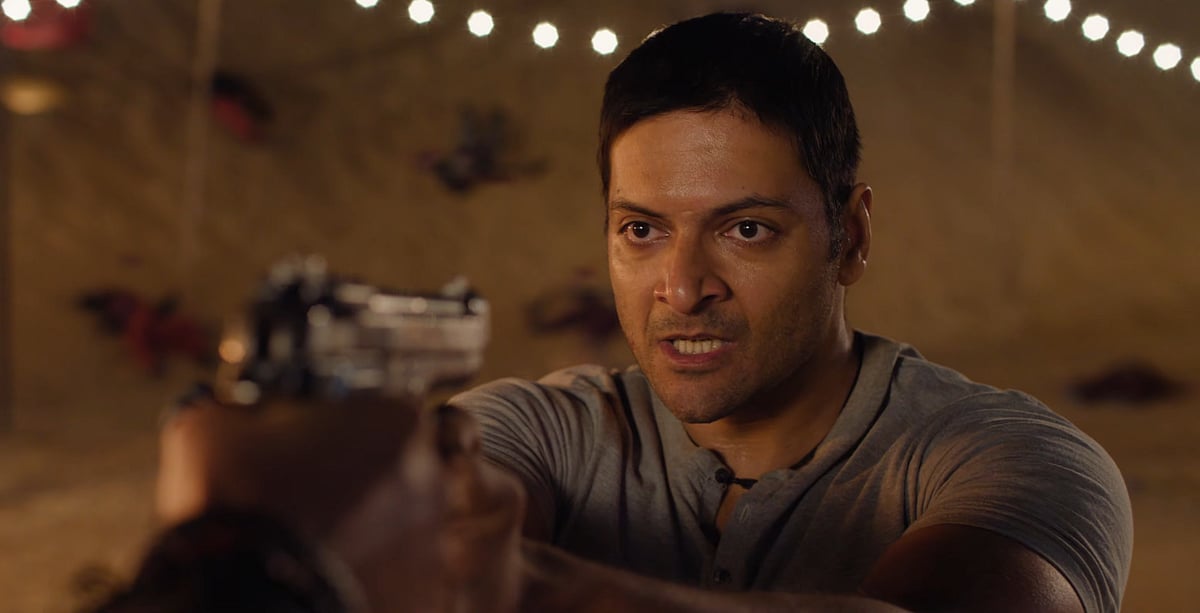
There’s also a sense that the film knows it’s critic-proof. The indulgence is off the charts. It does everything in its long-form-infected power to inflate the running time under the guise of an immersive experience. For instance, there are not one but two road-trip pieces to Jaisalmer featuring the Tripathi clan driving into enemy territory. When I say road-trip tropes, I mean it; they unfurl like isolated mini-films of their own, even including petrol-pump stops (“it’s cheaper before we cross the border”) so that an engine-oil brand can be advertised ‘organically’. There are random diversions, a belated inter-caste love story, an item song, the foreshadowing of a death that can be seen coming from outer space, and a truckload of Rajasthan-tourism-fuelled sand dune sequences to diversify the UP-centric grammar of the series. The movie keeps coming up with lateral excuses to continue its lifetime-achievement-award-like run without losing the vitality of the original. The bullets, like in Season 3, continue to be incompetent and biased; they refuse to hit the main cast during shootouts, regardless of how close-range the shots are. The action pieces look tired after all these years, but the film somewhat remembers that the real kinetic energy is in the verbal exchanges.
Despite the obvious greed, though, there’s much to appreciate about the mainstream beats of the writing. I like how the many threads and conflicts — clumsy when introduced — are tied up with proper payoffs. Because of the timeline, we know that there will be no main-character deaths, yet the theatricality is effective. Guddu’s hulk-smash rage issues and steroid addiction are put to good use with a horse-injection subplot that elevates the climax. The fate of a wristwatch belonging to his family comes full circle, too. The newer characters and equations are given complete arcs. A spunky mechanic in Jaisalmer joins the ride, but he isn’t reduced to comic relief. Babban’s small entourage — his lover Mumtaz, a former business partner, and especially his loyal henchman Birju — supplies the narrative. The small touches work: like Birju jousting with his counterpart (Kaleen’s iconic henchman Maqbool), the villains’ weakness being love, or Beena’s identity finding fruition in a solid post-credits sequence. Babban himself is a compelling-enough baddie, because it feels like he’s the protagonist of his own underdog tale.
Credit: Source link