
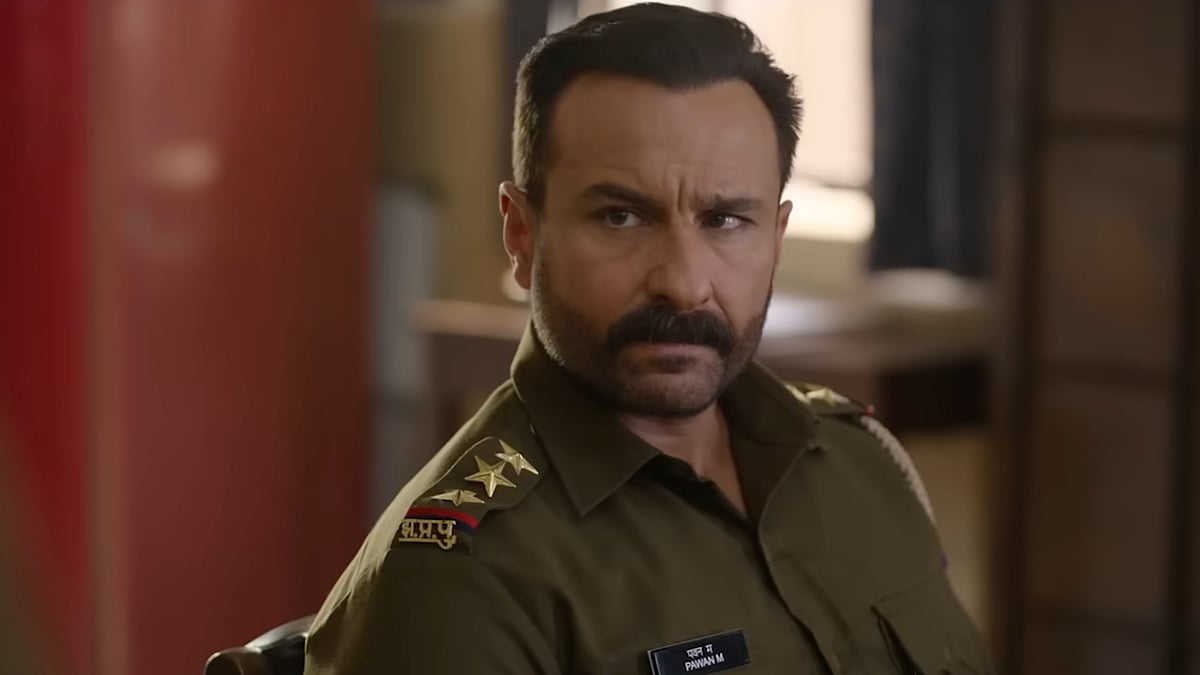
I also like that the chain-smoking cop is presented as a man of faith (a proud Lord Shiva disciple) who uses Mahabharata analogies at the drop of a hat. In fact, one of the traitors in the film is shown to be a non-believer. It would’ve been easy for Kartavya to employ the urban-liberal gaze and critique the role of faith in an environment full of blind devotion and brainwashed citizens; it would’ve also been easy for it to go the other way and depict divinity as the only solution. But by presenting Pawan as a pious man, it actually reclaims the legitimacy of religion and mythology from the clutches of those who weaponise it as a sibling of history. There is no right or left, it suggests, when humanity itself is at stake. It’s a nifty detail in a film that often hides in plain sight.
It helps that Kartavya is technically sound, too. It creates a familiar atmosphere; the fictional town of Jhamli embodies everyday ghosts, not malignant spirits. It’s a visual manifestation of how things work: undisputed, unfussy, subdued. Of the supporting cast, Manish Chaudhari is typically sharp as Pawan’s morally ambivalent boss and a cog in the wheel of a cult-like conspiracy. Young Yudhvir Ahlawat is striking as the teenager in the middle of the manhunt; his wide-eyed and full-toothed face conveys an image of innocence lost — but almost found — in a region that resembles a war-torn valley because of him. Sanjay Mishra teases our preconceived notions of the noble veterans he plays; Zakir Hussain is unsettling as the regressive patriarch stuck in a bygone era. I get the gimmick of casting an actual journalist — in this case, Saurabh Dwivedi — as the sinister godman responsible for a slain journalist. Ironically, or maybe not, he is the weakest link. Or perhaps the intent is to show this leader as an unremarkable orator who is always putting on a performance of charisma and control.
Credit: Source link