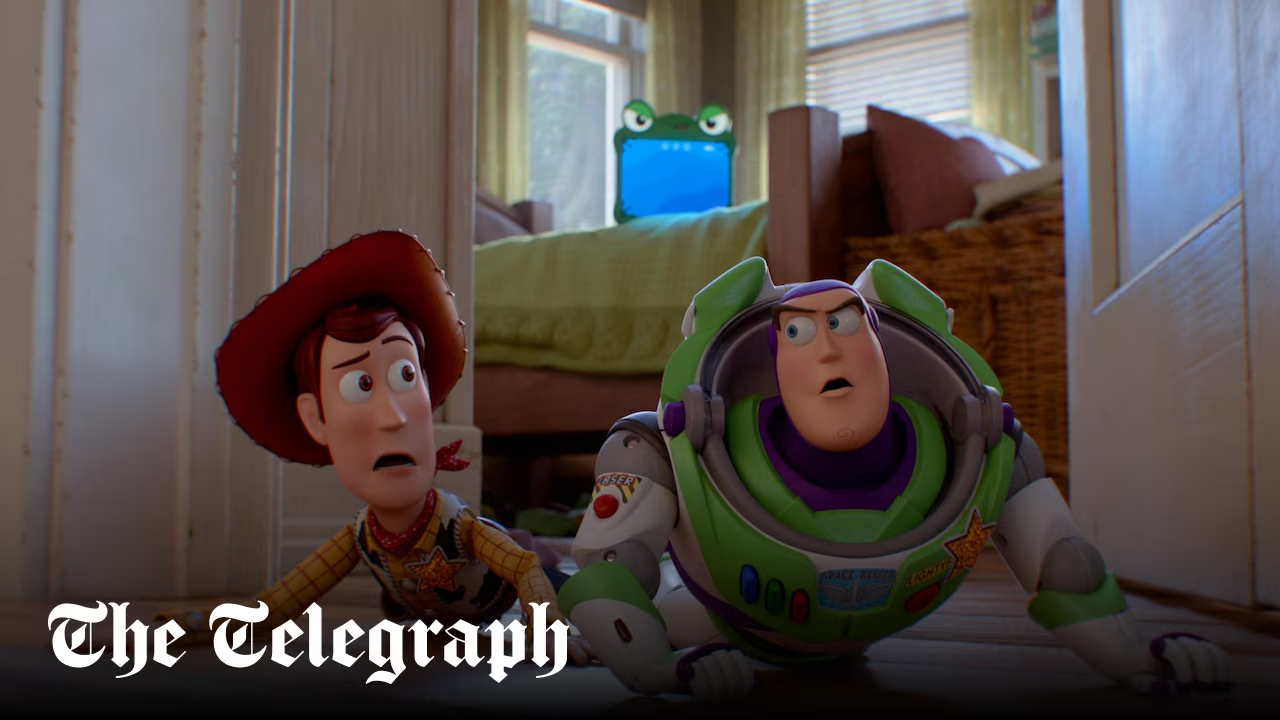
Williams’s performance in Aladdin brought about a generational shift: great animation was no longer seen as merely for children, which meant blockbuster levels of success were suddenly within reach. A gold rush ensued. Hanks and Allen were brought in to Toy Story, and Matthew Broderick, Jeremy Irons, Rowan Atkinson, Whoopi Goldberg and James Earl Jones to Disney’s first post-Aladdin project, The Lion King. (For playing Mufasa, Jones earned a reported $1m: a sight more than the $7,000 he received for providing the voice of Darth Vader in the original Star Wars.)
The newly founded DreamWorks Animation went all-in. In 1998 it released its first two features: Antz, starring Woody Allen, Gene Hackman, Sharon Stone, Sylvester Stallone, Christopher Walken, Jennifer Lopez, Danny Glover, Dan Ackroyd and John Mahoney, and The Prince of Egypt with Val Kilmer, Ralph Fiennes, Michelle Pfeiffer, Sandra Bullock, Jeff Goldblum, Patrick Stewart, Helen Mirren, Glover (again) and Steve Martin.
In the years ahead, there was often little correlation between calibre of cast and quality of material. DreamWorks’s roundly feeble Shark Tale, from 2004, starred Will Smith, Robert De Niro, Angelina Jolie, Renée Zellweger, Jack Black and Martin Scorsese as some computer-generated fish who vaguely resembled them. But Smith reportedly trousered $15m and the film took almost $375m worldwide, so everyone was happy.
Those actors who had already hitched themselves to a successful series – the Shreks, Toy Stories and Frozens – have found themselves in the most lucrative gigs since then; while there has been some recasting further down the hierarchy. But animation riches continue to materialise for the right roles: in 2016, Dwayne Johnson was paid $21m for Moana and almost double that for its 2024 sequel, for which he struck a deal that entitled him to a share of its profits.
Credit: Source link