

The 2000s were a transformative era for the film industry, with the first few years of the decade proving especially lucrative for all kinds of motion pictures. 2002, for instance, was a record-shattering year for theatrical moviegoing that not only included the first ever movie weekend to clear $100 million domestically on opening (with “Spider-Man”), but also reached a 21st century high in tickets sold. 2009, meanwhile, delivered “Avatar,” which dethroned “Titanic” to become the biggest movie in history in North America. The 21st century theatrical moviegoing scene certainly started off with a bang thanks to the 2000s.
However, no decade of box office numbers is devoid of flops or financial misfires. The 2000s were no exception, as this decade produced several box office duds that are still talked about in hushed whispers thanks to the towering magnitude of their respective financial shortcomings. In particular, five box office flops from the 2000s proved so momentous in their failures that they ended up reshaping the Hollywood landscape. Sometimes, their long-term influence was rooted in proving that a specific medium of storytelling was no longer financially viable.
Others reflected how certain movie stars that were once instrumental to the theatrical ecosystem were no longer viable. However these 2000s box office flops changed the cinematic landscape, these five movies overhauled everything in ways their respective filmmakers never could’ve imagined. Not even the glorious box office highs of the 2000s could lift these features to profitability or positive long-term ripple effects.
Treasure Planet

The complicated history behind Disney Animation’s biggest flop, “Treasure Planet,” includes the reality that this film was a passion project for directors Ron Clements and John Musker. They spent decades trying to bring this production to life in the hopes that audiences would feel as enthusiastic about this story as they did. While many today consider “Treasure Planet” a superb example of a Disney movie flop that’s actually worth watching, this 2002 feature was, unfortunately, one of the 12 biggest box office bombs of the 2000s. Worldwide, “Treasure Planet” only grossed $91.8 million (just $38.1 million of which came from North America) on a $140 million budget, making it a massive money drain for the Mouse House.
With “Treasure Planet” failing, Walt Disney Animation Studios was warier than ever of the 2D animation game. This box office boondoggle solidified that hand-drawn animation was no longer perceived as a viable art form by major American movie studios. Meanwhile, its demise also paved the way for studios to eschew more challenging or tonally complex stabs at family entertainment. Years like 2006, where each month brought one or two new CG animated comedies aimed at kids starring celebrity-voiced critters, would’ve been unthinkable before “Treasure Planet” fully capsized the concept of action-oriented animated family fare.
“Treasure Planet” undoubtedly reshaped Hollywood, just not in the positive ways its creators would’ve wanted. All those decades of work couldn’t produce something that had more upbeat ripple effects for the film industry.
Final Fantasy: The Spirits Within
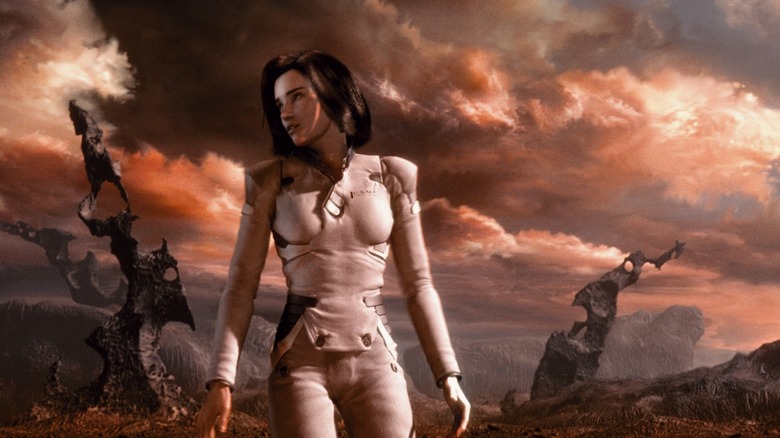
If it’s any consolation to the folks behind “Treasure Planet,” it’s not like the 2002 Disney feature was the only sci-fi animated movie to crater at the box office in the early 2000s. The dawn of the 21st century was littered with titles more keen on explosions and spaceships than musical numbers and princesses. Presumably, this was a byproduct of animation directors and artists looking for something different to do after the 1990s were so dedicated to making “Beauty and the Beast”-style pastiches like “Anastasia” and “Quest for Camelot.” Unfortunately, in pursuing these alternate aesthetics, all of these titles ended up blurring together. Moviegoers couldn’t tell “Titan A.E.” from “Treasure Planet.”
Not even being rendered in CG animation or utilizing the “Final Fantasy” brand could help “Final Fantasy: The Spirits Within” avoid a grisly box office fate. Worldwide, this movie grossed just $85.1 million on a mighty $137 million budget — a catastrophic result. Part of the fallout from this box office failure was that no major American movie studio would go near a PG-13 theatrical animated movie (save for “The Simpsons Movie”) for years to come. Then there were the unrealized plans involving the lead character of “The Spirits Within,” Aki Ross. Prior to the film’s debut, the hope was that Aki could become the first digital actor and headline other motion pictures entirely divorced from “The Spirits Within.”
Of course, that never happened. Those dismal box office numbers put those plans — and any similar ambitions — on permanent hiatus.
The Love Guru
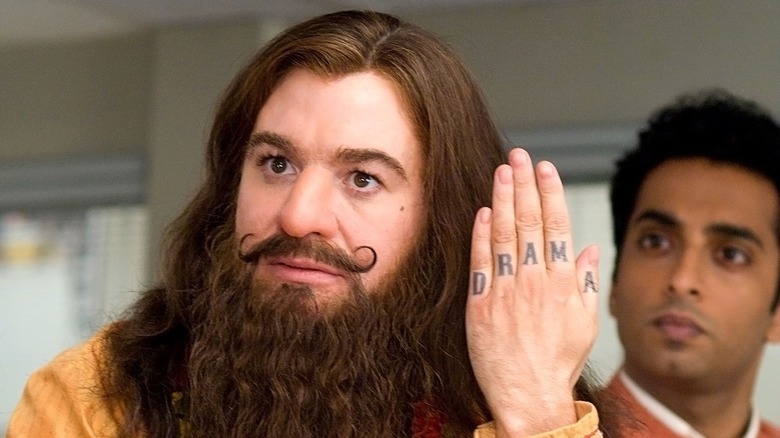
Before 2008, “Saturday Night Live” veteran Mike Myers had a pretty steady box office track record. Titles like “So I Married an Axe Murderer” proved he wasn’t bulletproof as a leading man, but he was generally quite capable of drawing a crowd. Prior to 2008, he’d anchored five different live-action films that each cracked over $50 million domestically, with four of them exceeding $100 million. As late as 2002, “Austin Powers in Goldmember” scored the fifth biggest domestic opening weekend in history for any movie. Then came “The Love Guru,” the bizarre comedy that almost ruined Mike Myers’ career. This feature wasn’t just a box office misfire; it was a catastrophic failure that signaled a turning point for American comedies.
“The Love Guru” cost $62 million, yet only made $40.1 million worldwide, including $32.2 million domestically (or less than half of what “Goldmember” grossed on opening weekend). With this flop, Myers was no longer viewed as a viable lead in Hollywood. More pressingly, though, “Love Guru” cratering also signaled that audiences were moving on to new kinds of big-screen comedies. Before “Guru,” moviegoers showed up in droves for “Knocked Up” and “Superbad,” cheaper and raunchier fare more rooted in reality. In the years that followed “Guru” imploding, Hollywood wouldn’t greenlight further theatrical comedies centered on wacky, Austin Powers-like personalities.
Instead, Judd Apatow-influenced yukfests like “Bridesmaids” ruled the day. Mike Myers and his “Love Guru” antics were no longer “groovy, baby” with audience expectations for comedies.
The Island

When the studio that would become DreamWorks Pictures SKG was first announced in 1994 by founders Steven Spielberg, Jeffrey Katzenberg, and David Geffen, expectations were enormous for this proposed media empire. These three industry titans uniting to make a new entertainment entity was an event rife with potential. Eventually, DreamWorks would develop many box office hits and award season darlings, as well as every DreamWorks Animation movie. However, the studio’s final years of independence were rough. 2003 was an especially grueling year full of box office flops. While DreamWorks Animation excelled with “Shrek 2” and “Shark Tale” the following year, DreamWorks still delivered generic misfires like “Win a Date with Tad Hamilton!” and “Envy.”
Then, in July 2005, Michael Bay’s “The Island” debuted. The title only grossed $162.9 million worldwide on a $126 million budget, a disastrous haul on its face. Even worse, Warner Bros. handled the film internationally (where it made $127.1 million), while DreamWorks was stuck with its abysmal $35.8 million sum. Immediately after its box office numbers cratered, “Island” was seen as an ominous sign for the long-term health of DreamWorks.
Five months after “Island” failed, DreamWorks was sold to Paramount Pictures. A studio that previously put out numerous major movies in 2000 would now be a shell of its former self. Audiences and filmmakers alike would have fewer options for new movies going forward. “The Island” helped inspire tragic shrinkage in the Hollywood landscape.
Battlefield Earth

Few productions have been as poorly conceived from the get-go as “Battlefield Earth.” For one thing, this 2000 sci-fi disaster was based on a series of L. Ron Hubbard sci-fi novels that dared to ask “what if Frank Herbert’s prose had no personality and put people to sleep?” For another, it cast John Travolta (the person driving this whole affair, which was passion project of his) as a towering alien spouting clumsy dialogue that included phrases like “lousy ceiling!” and “do YOU want lunch?” In execution, director Roger Christian only exacerbated all these grave inherent shortcomings by filtering nearly the entire feature through Dutch angles.
Other major 2000s box office bombs like “Treasure Planet” have today cultivated sizable cult followings. In contrast, it’s no secret that “Battlefield Earth” is one of the worst movies ever made. Grossing only $29.7 million worldwide on an $80 million budget, the financial failure of “Battlefield Earth” had countless ripple effects on the larger film industry. For one thing, John Travolta, a lucrative leading man in the second half of the 1990s, never came close to regaining his box office clout after “Earth.”
More urgently, “Battlefield Earth,” which launched in May 2000, heralded the challenges of launching non-“Star Wars” or James Cameron sci-fi movies at the box office in the 21st century. Titles like “Sky Captain and the World of Tomorrow,” “John Carter,” “The Island,” and “The Adventures of Pluto Nash” reinforced that the cataclysmic failure of “Battlefield Earth” was no anomaly.
Credit: Source link