The 1990s were an explosive era for motion pictures. Years like 1999 delivered no shortage of all-time great masterworks that are still being talked about to this very day. Meanwhile, the decade’s biggest blockbusters, like “Independence Day,” “Jurassic Park,” and others, are still discussed by modern filmmakers and audiences alike. Gazing over at the most lasting and discussed 1990s movies, it’d be easy to assume that this decade was nothing but good times and Toad the Wet Sprocket music. Of course, every era of cinema history has its box office misfires, including the gigantic financial failures that upend the entire industry.
So it was with the 1990s, which had its fair share of films that came crumbling down when they actually hit theaters. Five major 1990s box office flops had an especially far-reaching and tremendously adverse impact on the wider film industry. These are films whose financial failures are still being felt in the modern cultural world. Some of these ripple effects include flops that led to the demise of once-great production companies. Others turned Hollywood executives off certain genres for years and years. Still others confirmed that once-invincible leading men were no longer sturdy box-office draws.
Whatever made these 1990s box office flops so lastingly influential on the larger film industry, their respective financial shortcomings are impossible to forget. Decades later, as everyone gets caught up in ’90s nostalgia, let’s never forget these five box office non-starters and their lasting cultural legacies.
Cutthroat Island
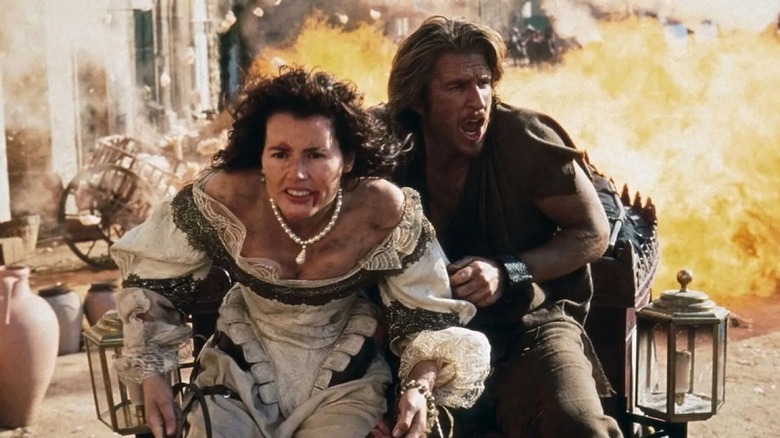
When “Pirates of the Caribbean: The Curse of the Black Pearl” immediately became a box office sensation in July 2003, much of the press around the feature’s success focused on how it defied the longstanding film industry perception that pirate movies were financially doomed. Throughout cinema history, pirate films were expensive to make yet often flopped. A potent example of this phenomenon was 1995’s “Cutthroat Island,” a Geena Davis/Matthew Modine feature from director Renny Harlin. This colossal boondoggle was, to put it gently, far removed from the best pirate movies ever made.
Costing $115 million to make, spending so much on “Cutthroat Island” was a bizarre move on countless fronts, including the fact that neither of its two leads had previously headlined a blockbuster of that scale. With only $18.5 million worldwide, “Cutthroat Island” wasn’t just a flop. It was an embarrassment. The fallout from this failure reinforced Hollywood’s hostility towards pirate movies. Meanwhile, “Cutthroat Island” hastened the demise of production company Carolco Pictures. A company that previously provided titles like “Terminator 2: Judgment Day,” “Total Recall,” and the initial “Rambo” movies to theaters was no more.
That void would impact the American film industry for years to come. Some retrospective assessments of “Cutthroat Island” have even lamented the film’s convincing studio executives that costly American action movies with female leads were a bad idea. “Cutthroat Island” had no shortage of adverse effects on the film industry.
Quest for Camelot
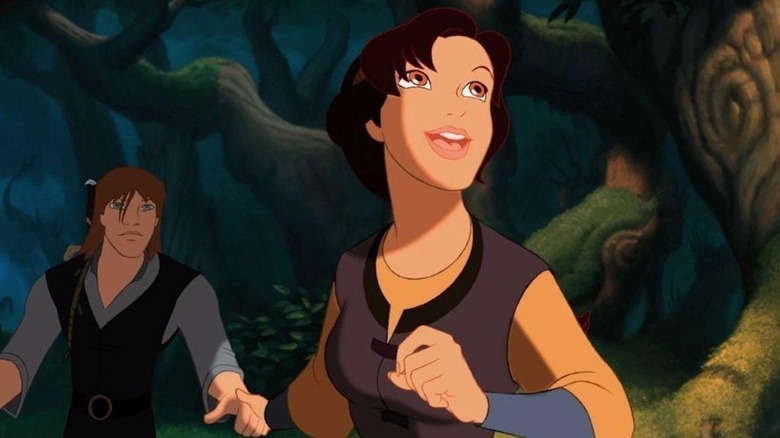
Disney’s 1990s Renaissance era didn’t just remind the Mouse House of the power of animated storytelling. Massive hits like “Aladdin” and “The Lion King” inspired other American movie studios to launch their own animation labels in the hopes of scoring similar success. By the mid-’90s, companies like DreamWorks SKG and 20th Century Fox were all gearing up to make their own answers to “The Lion King.” Also part of this parade of studios chasing the legacy of the 40 best Disney movies of all time was Warner Bros. The endeavors of Warner Bros. Feature Animation technically began with “Space Jam” in 1996, but the first fully animated title from this label came with May 1998’s “Quest for Camelot.”
An animated musical take on King Arthur lore, complete with a wacky two-headed dragon and an underdog lady protagonist, “Quest for Camelot” was obviously hankering for some of that Disney magic. Grossing only $38.2 million worldwide, “Quest for Camelot” didn’t come anywhere close to meeting box office expectations. That summer’s Disney animated film, “Mulan,” outgrossed “Camelot” within its first three days of domestic play. “Camelot” failing immediately adversely impacted other Warner Bros. animated films, such as inspiring studio apathy towards the following year’s “The Iron Giant.”
“Quest for Camelot” also reinforced that animated family films weren’t automatic moneymakers, as many of the biggest box office bombs of the 2000s could attest. Disney often made it look easy, but “Camelot” brutally reminded Hollywood that fantasy musical numbers aren’t enough to make a hit.
Wild Wild West
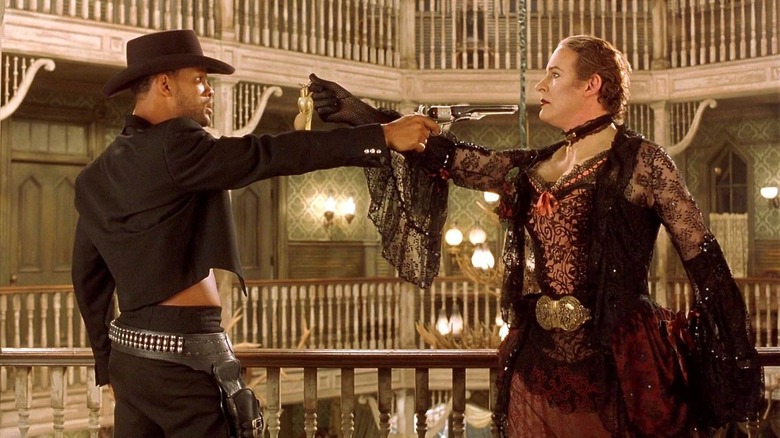
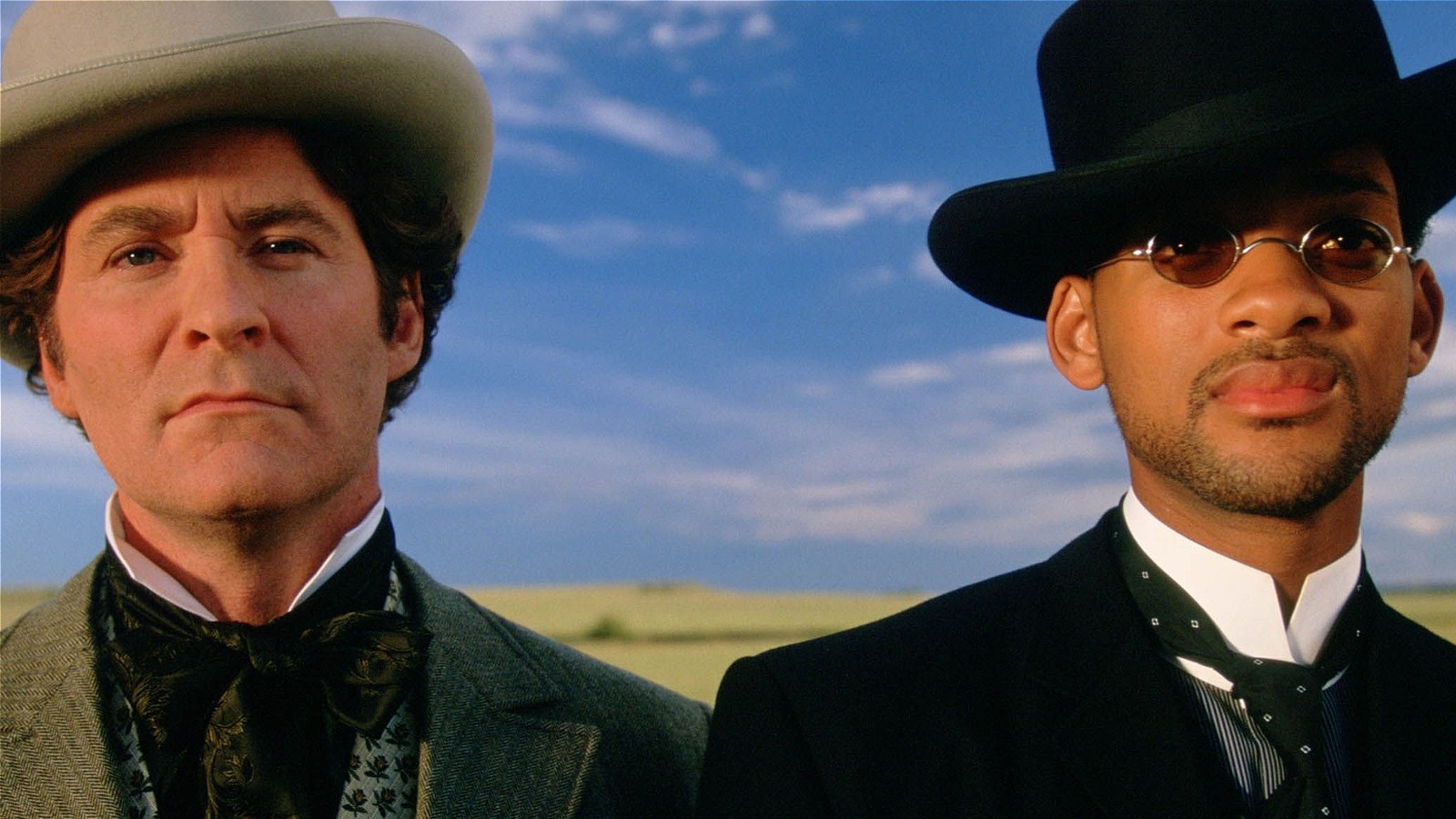
Sometimes, it takes nuance and in-depth analysis to understand why certain movies flopped. In the case of 1999’s “Wild Wild West,” there’s no mystery or Master’s Degree needed to understand why this cratered. Beyond the movie itself being a hollow “Men in Black” retread that stifled Will Smith’s leading man chops, it also cost $175 million to make. That same summer’s “The Phantom Menace,” in contrast, cost $115 million to produce. One of the most expensive movies ever made at the time of its release, “Wild Wild West” would’ve needed a miracle to break even at the theatrical box office. It never got that miracle, of course.
Worldwide, “Wild Wild West” only grossed $221.23 million, an abysmal haul that didn’t come close to replicating the global grosses of previous Smith hits like “Independence Day.” Unsurprisingly, Smith’s next two forays into summer blockbusters would be sequels (“Men in Black II’ and “Bad Boys II”) to counterbalance this misguided foray into Westerns. The ripple effects of “Wild Wild West” went beyond influencing Smith’s subsequent star vehicles. Hollywood also pulled back on making more Westerns in the early 2000s, while “Wild Wild West” leading man Kevin Kline stayed out of the limelight for two years after the film’s failure.
Even Hollywood’s love of movie adaptations of TV shows died down (save for “Charlie’s Angels”) for a few years after “Wild Wild West.” This flop inspired so much post-release trepidation rather than the excitement of many Will Smith summertime hits.
Last Action Hero
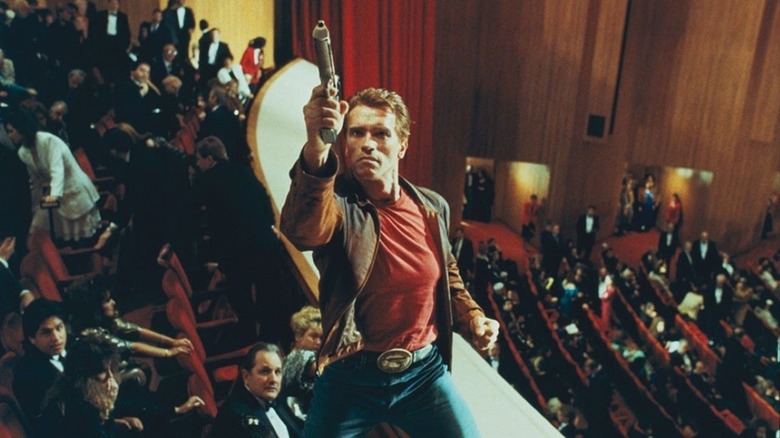
As five superhero movies that flopped because of bad release dates can attest, a good release date can make all the difference in the world for costly summertime tentpoles. “Last Action Hero” is one of the most brutal examples of that harsh truth. This Arnold Schwarzenegger star vehicle opened a week after “Jurassic Park,” which meant it had no chance at becoming a must-see attraction. People weren’t interested in a meta-take on traditional action films. They wanted to see the dinosaurs and the suspenseful spectacle defining this Steven Spielberg masterpiece. Costing $85 million to make, “Last Action Hero” only made $137.29 million worldwide.
The long-term effects of “Last Action Hero” were immense. For one thing, it signaled the end of the ’80s action movie star and the box office being dominated by heroes like Rambo. The groundbreaking CGI in “Jurassic Park” had opened up new possibilities for summer blockbusters. Thus, digital aliens in “Independence Day” or CG tornadoes in “Twister” dominated subsequent summer moviegoing seasons rather than beefy bodybuilders. Meanwhile, Schwarzenegger’s vulnerability as a leading man was more apparent than ever after this title. He’d continue to have post-“Last Action Hero” hits like “True Lies,” but Hollywood could no longer look to him in the ’90s as an automatic license to print money.
“Last Action Hero” also embodied the initial headwinds Sony had in handling studios like “Action Hero” financier Columbia Pictures. This Schwarzenegger flop loomed large over Sony’s decisions for its film options for the rest of the ’90s.
The Rocketeer
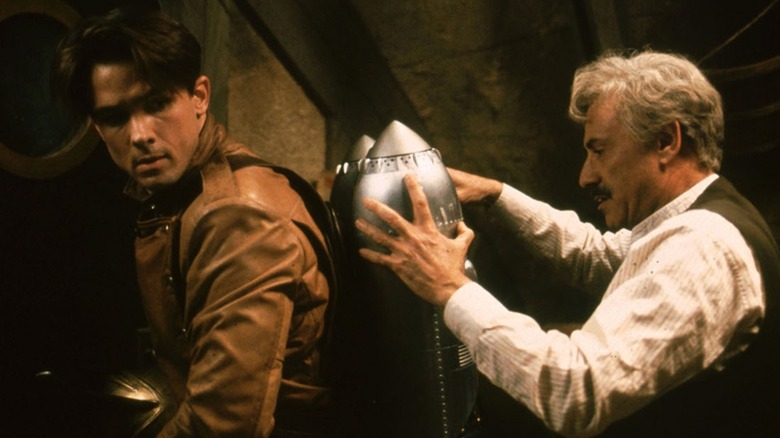
Starting in the late ’70s with “The Black Hole,” Walt Disney Pictures occasionally dropped live-action tentpoles meant to challenge the public’s perception of what “Disney entertainment” could look like. 1980s features like “Tron” and “Something Wicked This Way Comes” played into this operation. 1991’s “The Rocketeer” fit into this legacy, but it was also clearly an attempt by Disney to make some of the box-office magic of 1989’s “Batman” happen again. Much like Tim Burton’s noir-inspired vision of Batman, “The Rocketeer” was based on a comic book character (albeit one who’d only been around since 1982) with roots in 1930s/1940s pop culture.
However, “The Rocketeer” flopped with only $46.7 million domestically on a $35 million budget. This alone was the real reason “The Rocketeer” never got a sequel, despite its zippy titular lead character seemingly being perfect for headlining countless subsequent adventures. More pressingly, “The Rocketeer” was an early warning of the box office woes many ’90s superhero films (save for “Blade” and some “Batman” sequels) would face. “Spawn,” “Steel,” “The Phantom,” the same apathy audiences showed for “The Rocketeer” materialized again and again with these box-office non-starters. “The Rocketeer” established that audiences wouldn’t show up for just any comic book movie.
Meanwhile, films under the Walt Disney Pictures banner shifted towards live-action updates of old cartoons (like “Inspector Gadget” and “George of the Jungle”) rather than more tonally daring works for the rest of the decade. “The Rocketeer” ended more audacious Walt Disney Pictures releases just as the decade began.
Credit: Source link