
The love for Broadway is due to its ability to bring storytelling on stage with live music and breathtaking choreography. The vibrant form collaborates with some of the greatest minds in the creative industry and transports audiences into entirely new worlds. But what happens when Broadway blends with Hollywood and brings a cinematic touch to it? Let’s delve in to know how Hollywood is trying to bring in Broadway on the global stage and much more.
Hollywood’s fondness for Broadway adaptations
Although Broadway and Hollywood have a long shared creative relationship, in recent years, in the showbiz industry, we have seen a massive boom of studios adapting Broadway styles for their next big-screen projects, transforming musicals into cinematic events. Be it Wicked, Mean Girls and many more films, the Broadway adaptations are proving that stories that resonate with the audience will definitely bring in more popularity.
But what is the main essence of blending both worlds together? To begin with, established popularity, in turn, makes them attractive adaptation prospects and memorable music and elements that can translate effectively into cinematic experience and years of audience engagement.
Success of recent Broadway adaptations in Hollywood
Recent Broadway adaptations in Hollywood have seen great success. That comes along when the main backbone, i.e., the studio, makes transitions from stage to screen with cinematic touch. Some of the adaptations that became successful on the global stage are the following:
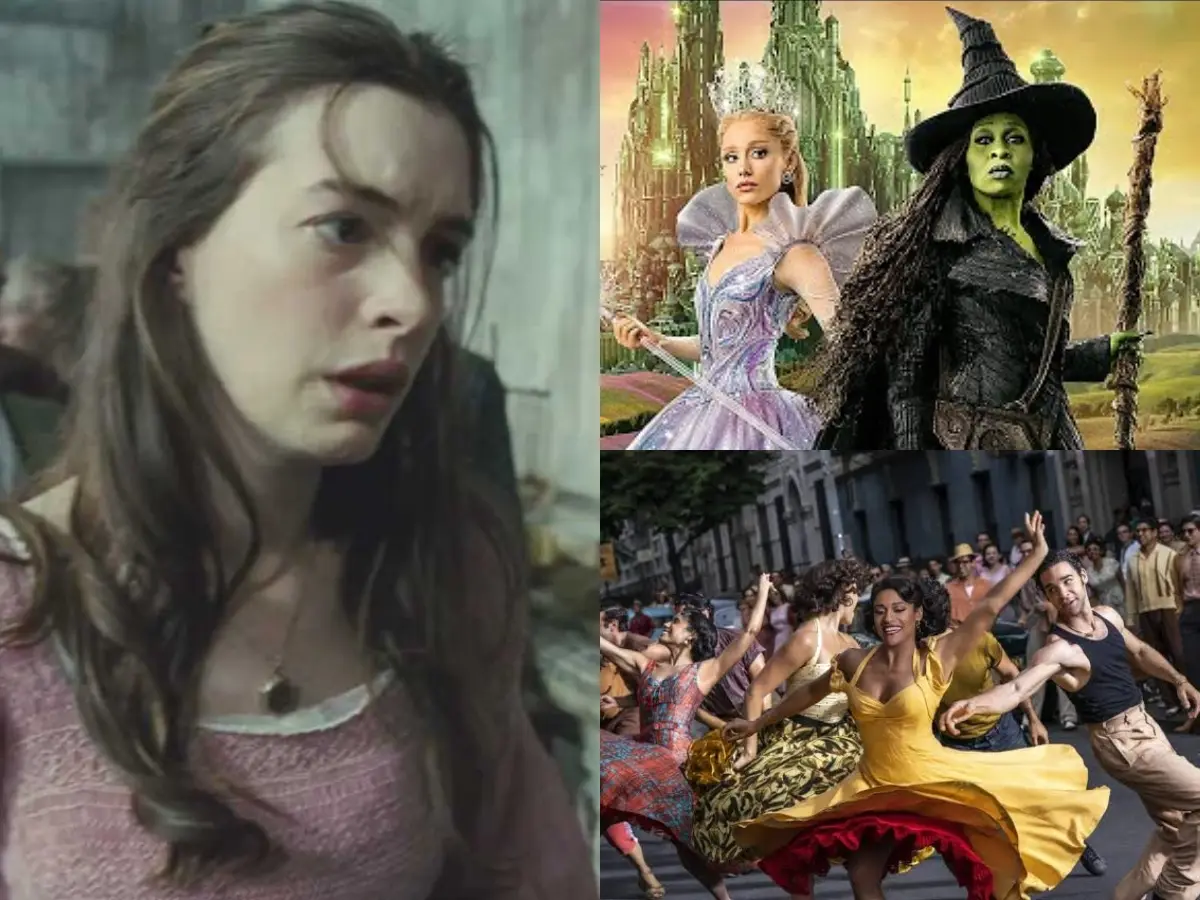
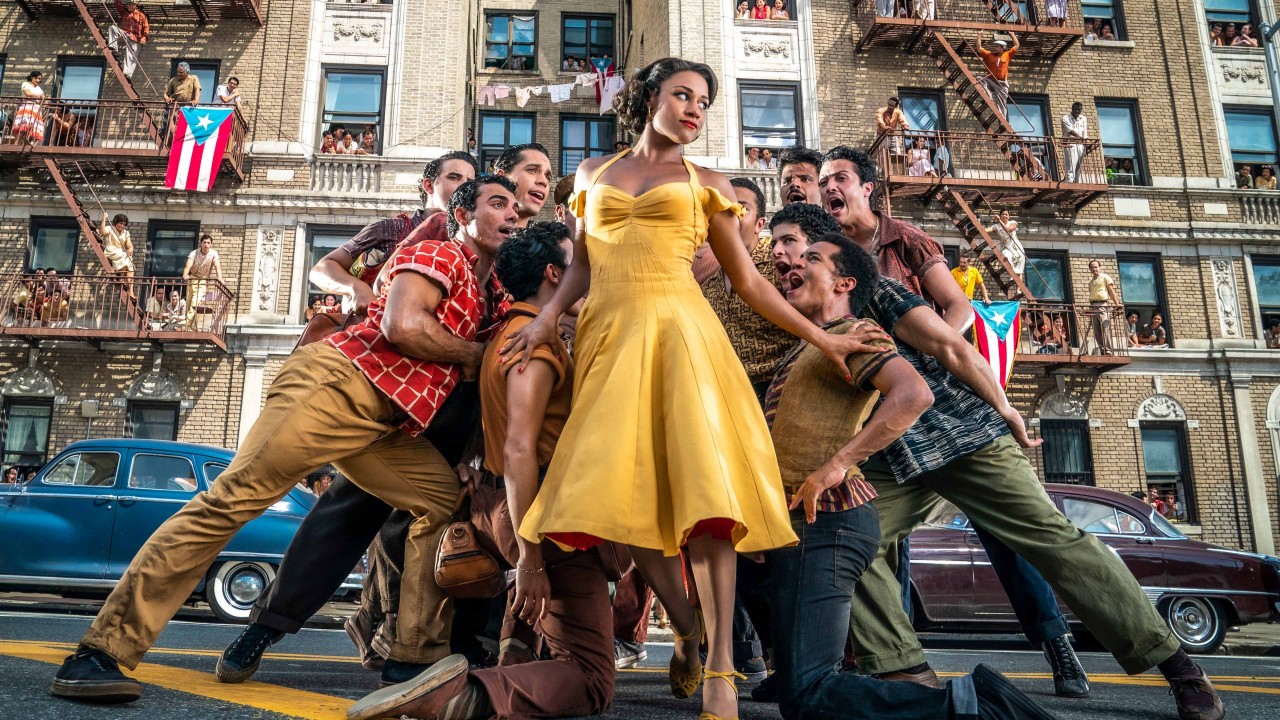
West Side Story is a musical that reimagines Shakespeare’s Romeo and Juliet in 1950s New York City. The original Broadway production opened in 1957, featuring a book by Arthur Laurents, music by Leonard Bernstein, and lyrics by Stephen Sondheim. It revolutionised musical theatre with its dark themes and complex, jazz-infused score. Steven Spielberg directed a critically acclaimed cinematic remake of the classic 1957 Broadway musical. The film showcases the story of Tony, a young man affiliated with a Caucasian gang, who meets and falls in love with Maria, the sister of a Puerto Rican gangster. As a result, they face many challenges in their quest to unite.
The film features a star-studded cast, including Ariana Grande, Jonathan Bailey, Jeff Goldblum and Cynthia Erivo, among others; it is an adaptation of the iconic Broadway musical Wicked. The movie was split into two parts by Universal Pictures and was helmed by Jon M Chu. The musical is loosely based on the 1995 novel of the same name by Gregory Maguire, which itself was based on the 1900 novel The Wonderful Wizard of Oz by L. Frank Baum and its 1939 film adaptation.

The original Broadway run opened in 1987. It featured a famous score by Claude-Michel Schönberg and lyrics by Herbert Kretzmer; it is best known for its sweeping orchestrations, soaring ballads, and iconic barricade sets. It is based on the stage musical of the same name by Schönberg, Boublil, and Jean-Marc Natel, which in turn is based on the 1862 novel Les Misérables by Victor Hugo. The star-studded cast includes Hugh Jackman, Russell Crowe, Anne Hathaway, Eddie Redmayne, Amanda Seyfried, and Helena Bonham Carter.
How is the digital world helping musicals reach wider audiences?
The digital era has seen a massive boom post-Covid and has only grown with the integration of artificial intelligence into daily life. The technology has definitely transformed how audiences can discover and engage with any kind of content, and that includes musicals, which breaks down the barrier that once limited Broadway productions to theatregoers in a handful of cities.
Services such as Netflix, Disney+, and other streaming platforms have made musical content accessible to viewers worldwide. Moreover, social media platforms like X, Instagram and many more have become powerful tools to make people aware of the new content and introduce the youngsters too, generating an interest before people decide to buy a ticket.
Previously only a local audience was accessible; now people from other countries can have access too, which enables communication across countries. For example, as mentioned about social media platforms, fan edits, music and doing trend videos make a lasting impression on the audience, and they are confident to watch them.
What was once an occasional adaptation strategy has evolved into a creative pipeline that benefits both industries, turning stage productions into worldwide cinematic events.
Credit: Source link