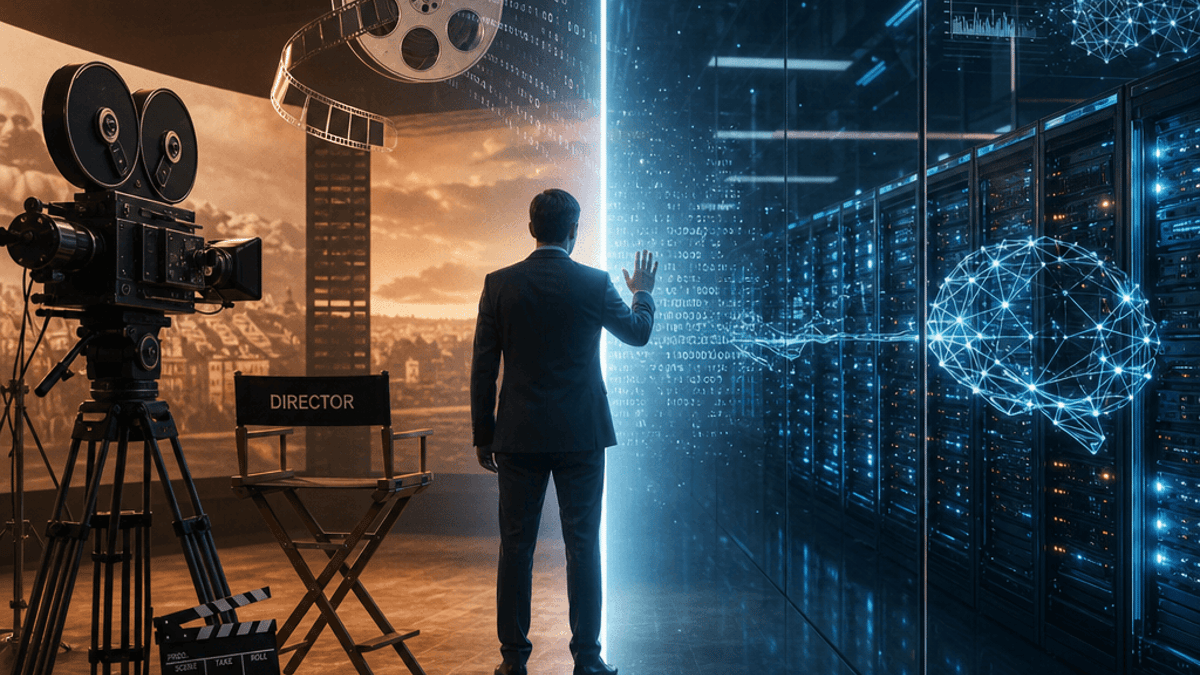
Amazon-owned MGM Studios has quietly shelved its planned biopic about OpenAI, marking the latest flashpoint in Hollywood’s increasingly fraught relationship with artificial intelligence. The decision comes as the entertainment industry grapples with how to portray the very technology that’s threatening to reshape it, while Meta faces scrutiny over employee data security and data center workers push back against AI infrastructure expansion.
Amazon’s MGM Studios has pulled the plug on what could have been one of the first major Hollywood treatments of the AI boom. The studio’s decision to scrap its OpenAI biopic isn’t just about one film – it’s a symptom of the entertainment industry’s identity crisis as it tries to both profit from and protect itself against artificial intelligence.
The move comes at a peculiar moment. Hollywood spent much of 2023 and 2024 on strike, with writers and actors demanding protections against AI replacing their work. Now, studios are discovering that making movies about the very companies developing that technology creates its own set of complications. According to Wired’s Uncanny Valley podcast, which broke down the decision, the lines between collaboration and competition have become impossibly blurred.
MGM’s parent company Amazon has its own substantial AI ambitions. The retail and cloud giant has invested heavily in Anthropic, OpenAI’s primary competitor, committing billions to the Claude AI developer. Making a heroic biopic about a rival’s founding story while you’re betting the farm on their competition creates obvious narrative tensions that apparently proved too messy even for Hollywood.
But the complications run deeper than corporate rivalry. The film industry is simultaneously trying to harness AI for production efficiencies while keeping it from replacing human creativity. Studios want AI tools for visual effects and pre-production, but they don’t want screenwriters replaced by large language models or actors displaced by digital avatars. Telling OpenAI’s origin story means grappling with those contradictions on screen.
Meanwhile, the human infrastructure powering AI expansion is facing its own reckoning. Data center workers – the people who physically maintain the massive server farms training models like GPT-4 and beyond – are organizing against grueling conditions and rapid buildouts that prioritize speed over safety. These facilities have multiplied across the country as Microsoft, Google, and Meta race to expand AI computing capacity.
Speaking of Meta, the company is dealing with its own data controversy. Employee information has reportedly leaked, raising questions about how tech companies protect internal data even as they tout their security capabilities to enterprise clients. For a company that’s pivoted hard toward AI and the metaverse, the incident underscores the basic cybersecurity challenges that persist alongside futuristic ambitions.
The convergence of these stories – a scrapped AI biopic, labor organizing at data centers, leaked employee data – illustrates how messy the AI revolution actually is behind the hype. It’s not a clean narrative of innovation and progress. It’s corporate conflicts of interest, worker exploitation, security failures, and an entertainment industry that can’t decide whether to celebrate or condemn the technology remaking it.
Hollywood has always been drawn to origin stories about disruptive technology, from The Social Network to Steve Jobs biopics. But those films had the benefit of hindsight. Making a movie about OpenAI while the company is actively reshaping the entertainment industry – and while your parent company backs its competitor – apparently requires more editorial distance than currently exists.
The irony isn’t lost on industry observers. Amazon wants to use AI to make content cheaper and faster. It’s exploring AI-generated shows and using machine learning to optimize what gets greenlit. But it can’t figure out how to tell the story of the company that made that possible without exposing its own contradictions.
The MGM Studios decision to abandon its OpenAI biopic reveals how thoroughly AI has complicated every corner of the tech and entertainment ecosystem. Studios can’t make movies about AI companies without navigating their own AI strategies, workers are pushing back against the infrastructure making it all possible, and even internal data security remains a challenge for the companies promising to revolutionize everything else. Hollywood has always loved stories about ambitious founders and world-changing technology, but apparently some stories hit too close to home when the disruption is still actively disrupting. What happens next will depend on whether the industry can find a way to tell honest stories about AI while simultaneously trying to control how AI tells stories about everything else.
Credit: Source link