In September 2025, Disney and ABC announced that Jimmy Kimmel and his late-night talkshow would be taken off the air indefinitely, after a conservative backlash against the host’s comments about the murder of far-right influencer Charlie Kirk. President Donald Trump personally championed the decision, calling it “great news for America”. He further called for other programmes critical of his administration to be removed. Though Kimmel’s suspension was reversed within a week, many commentators viewed this concerning development not as a sudden escalation of crisis, but a continuation of Hollywood’s habitual acquiescence to authoritarian pressure.
In a guest essay for the New York Times, journalist and Trump biopic] The Apprentice screenwriter Gabriel Sherman explicitly linked Kimmel’s cancellation to the Hollywood blacklist of the 1940s and 1950s, during which hundreds of film workers were accused of communist sympathies and unpatriotic subversion, barred from practising their craft, some forced into exile. “Each time, studios claimed they had no choice,” writes Sherman. “Each time, they did – and they made it.”
This sordid chapter in Hollywood history – and the long shadow it continues to cast – comes under renewed scrutiny at this year’s Locarno film festival. Curated by Iranian film-maker/critic Ehsan Khosbakht, director of Celluloid Underground, an expansive retrospective programme showcases features, shorts, archival newsreels and recent documentaries. The bulk of the screenings are devoted to blacklisted stars, writers and directors and the works they made at the height of the “red scare” – much of which was produced under pseudonyms. But Khosbakht has also made space for controversial figures such as Elia Kazan and Edward Dmytryk, infamous for informing on their peers in front of Congress. It’s a fascinating juxtaposition that finesses the popular Us-v-Them narrative, and illustrates one of the most tragic outcomes of the blacklist, namely the annihilation of a once-thriving Hollywood left. Under McCarthyism, people previously united by shared political ideology found themselves enemies.
Perhaps the most prominent victim was John Garfield, a consummate actor of rare intensity and one of the pioneers of method acting on screen in films such as The Postman Always Rings Twice, Body and Soul and Gentleman’s Agreement. His studio assignments soon dwindled and his career was cut short when he declined to name names to the House Un-American Activities Committee (Huac). Garfield’s precarious final years are eerily mirrored in He Ran All the Way, from 1951, the actor’s final film before his death at 39 from a heart attack. In this taut noir, one of the highlights of the retrospective, he plays a thief and a murderer on the run. Much of the film takes place inside a claustrophobic flat where the marked man has taken a family hostage while the police close in. Such a setup is not uncommon in the noir genre, yet the socially conscious script, co-written by fellow blacklistee Dalton Trumbo, transforms this criminal tale into a potent allegory. For the politically hunted in Hollywood, there seemed to be no escape.
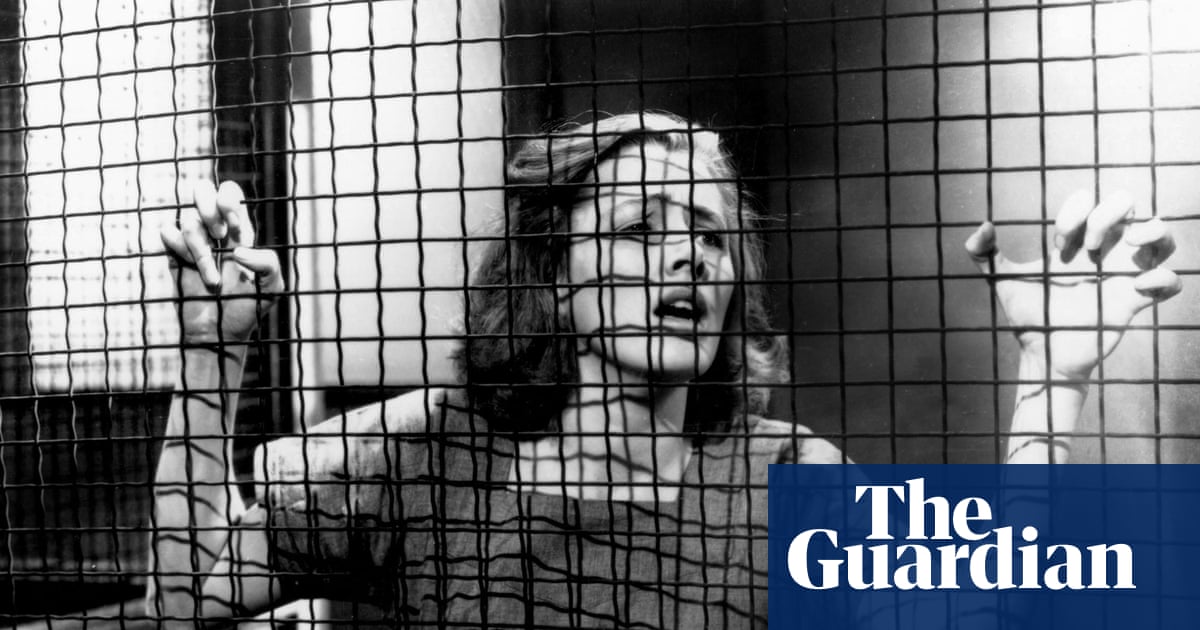
Themes of persecution, entrapment and warring allegiances recur again and again in this period. Prime examples include John Cromwell’s 1950 women’s prison film Caged; Fred Zinnemann’s classic western High Noon, from 1952; and Irving Lerner’s 1959 fugitive drama City of Fear. These films allude to the culture of fear endured by the blacklisted; other titles exemplify the radical, socialist beliefs that first landed them in trouble. There are pro-labour tales of working-class struggle such as Dmytryk’s 1943 Tender Comrade, about the women left behind while men were away during the war, and Salt of the Earth, about a miners’ strike in New Mexico, which was made outside the studio system by blacklistees in 1954. At the same time there were searing indictments of racism and sexism: Smash-Up: The Story of a Woman, from 1947, starring Susan Hayward as a singer who gives up her career for her husband, and Intruder in the Dust, a noir adapted from William Faulkner about a black man accused of murder.
Through this season, we can see the Hollywood left as an artistic movement as well as a political one, with its own recurring visual and storytelling motifs. It also captures the ideological catch-22 of working within the studio system where films commissioned for the war effort – sometimes containing sympathetic but politically naive depictions of the USSR, then an ally of the US against Axis powers – would later be used as examples of treasonous subversiveness.
Exile was the fate of many of the blacklisted workers, and this retrospective tellingly gathers productions from Argentina, Spain, Italy and elsewhere. Britain emerged as a vital creative haven, with the largest number of American blacklistees residing in London. But all was not all smooth sailing, as many struggled to find work. Though he would become an essential contributor to British cinema with classics such as The Servant (1963) and The Go-Between (1971), American director Joseph Losey felt pure panic when he first arrived in the capital: “I was petrified. And I had physical attacks. I thought that I was going to die.” Losey poured his turmoil into the strikingly self-reflexive 1956 film The Intimate Stranger, co-scripted by blacklisted screenwriter Howard E Koch. Centring on a US film-maker banished to London, the film swaps political persecution for an adulterous scandal, but the atmosphere of paranoia remains the same. “I feel as if I’m out in the open with somebody ready to take a potshot at me,” exclaims the tortured protagonist, “and I don’t know who or where or how.”
A footnote to the Hollywood blacklist story was the brief return to the UK of England’s prodigal son, Charlie Chaplin. Though targeted by Huac, Chaplin was never called to testify, and his re-entry permit to the US was revoked in 1952 as he travelled to London to promote his new film Limelight. After settling in Switzerland, Chaplin made A King in New York on a soundstage at Shepperton studios. Like Losey’s dramas, it carries shades of autobiography. Chaplin plays a deposed European king who is suspected of communism after taking an American boy with a socialist upbringing under his wing. Despite Chaplin’s previous ordeal in America, the film ends on a markedly hopeful note: wrapping the weeping boy in his arms, Chaplin’s fallen king reassures the despondent child of a not-so-far future when “all this hysteria is over”.
Considering how the political compass has once again veered towards extremism in the US, Chaplin’s gentle optimism seems sadly misplaced. Most of these films sound an urgent warning from the past. Whether produced independently or abroad, masked by pseudonyms or fully credited, these acts of artistic resistance attest to the resilience of creative integrity against the odds.
Credit: Source link