
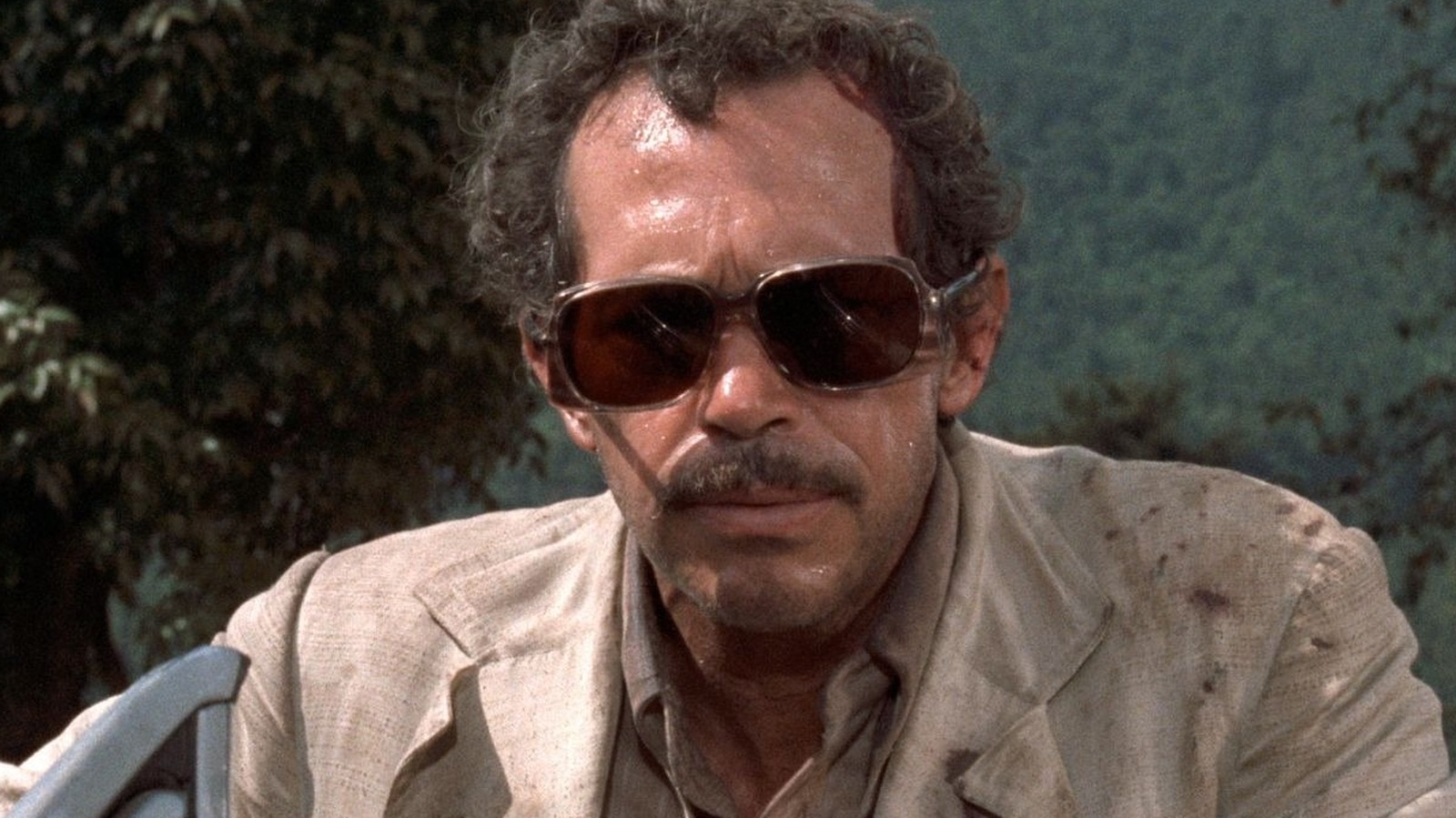
The title of Sam Peckinpah’s 1974 neo-Western masterpiece “Bring Me the Head of Alfredo Garcia” isn’t a metaphor. Its plot concerns Bennie (Warren Oates), a bartender pianist who hears tell from some passing bounty hunters (Gig Young and Robert Webber) that one Alfredo Garcia has a million-dollar bounty on his literal head. Anyone who delivers his severed head to a ruthless Mexican industrialist known only as El Jefe (Emilio Fernández) will indeed be awarded a suitcase of cash. Garcia, you see, impregnated El Jefe’s daughter Teresa (Janine Maldonado), so El Jefe wants revenge over the matter of Teresa’s “purity,” if you will.
Bennie is no bounty hunter, though. Really, he isn’t much of anything. He’s a retired Army vet, sure, but he doesn’t exactly have principles or character. He’s just sweaty and desperate, and we learn via Oates’ performance that Bennie is kind of pathetic to boot. Hence, the bulk of the movie traces his efforts to carry Alfredo Garcia’s head — unrefrigerated in a canvas sack — and bring it to El Jefe for payment. A million dollars would certainly get Bennie out of the hot, sticky, booze-soaked doldrums that he lives in. He has a girlfriend, kind of, in the form of Elita (Isela Vega), to whom he wants to propose despite having yet to tell her, “I love you.” Early in the film, Elita even admits that she once had a fling with Alfredo Garcia because, well, he actually said to her, “I love you.”
“Bring Me the Head of Alfredo Garcia” is a sweat gland of a movie. It’s all bodily grease, heavy breathing, and overwhelming desperation. Hollywood doesn’t make ’em like this anymore, but does this particular ’70s Western hold up?
Bring Me the Head of Alfredo Garcia is sticky, desperate, and awesome
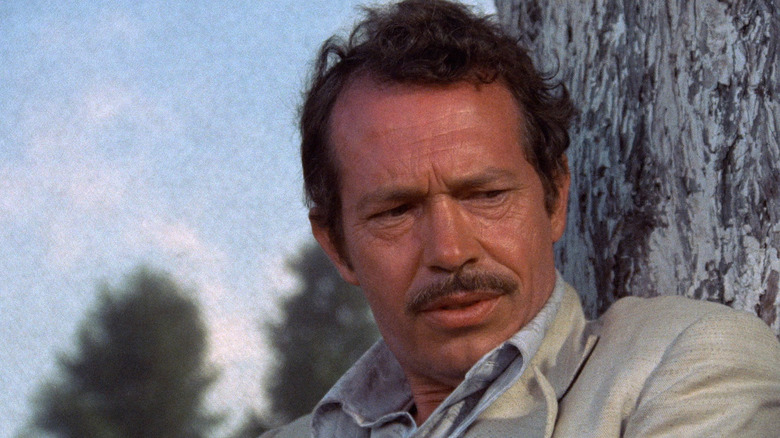
“Bring Me the Head of Alfredo Garcia” is staged like a classic Western, but it’s filtered through the desperation of a modern-day Hell. Bennie is lucky in that Alfredo Garcia is actually already dead, having died in a car crash a week earlier. The fact that Alfredo Garcia is dead from the jump lends a Sisyphean sense of futility to Bennie’s endeavor and El Jefe’s bloodlust. Revenge has already been stymied, yet poverty and a bleak sense of purpose still live in Bennie’s heart. Now all he needs to do is dig up Alfredo, sever his head, and drive to El Jefe. It’ll be more complex than you’d think.
The film becomes a bizarre, dark journey into increasingly hot hopelessness. When Bennie and his girlfriend are accosted by bikers, there are a lot of uncertainties. Is Elita willing to go with the bikers? Will Bennie kill them for attempting to hurt him and Elita? And if he does, is it a triumph or is it just the tired impulse of a violent man, bereft of imagination, who takes pleasure from nothing? Bennie knows how revenge plots are supposed to function, but he’s been living with them for so long that he now only enacts blood revenge with an automated indifference.
The back half of the movie covers the relationship that Bennie begins to form with Alfredo’s head as it gathers flies in the front seat of his car. Bennie realizes that he and Alfredo aren’t all that different. They loved the same woman, and they’re now being bossed around by the same crime lord. What’s more, they’re both miserable bastards doing the best they can. One of them just happens to have beaten the other to the grave.
Hollywood stays away from sweaty, miserable movies nowadays
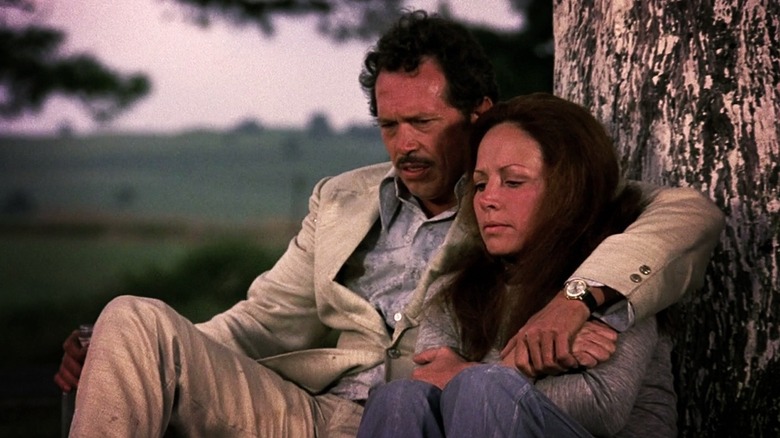
Alfredo Garcia is in a sad sack, and Bennie is one. This is a film that undoes the ideas behind the cinematic “nobility” of blood revenge. Recall that blood revenge is pretty much something that only happens in movies. Characters get so emotionally worked up that they feel the need to kill. In real life, delivering a severed head to an angry crime lord would be a lot of hard f***ing work. And one would have to get that head to its destination quickly before it starts to smell.
Sam Peckinpah made notoriously violent movies, including the highly controversial “Straw Dogs,” “The Wild Bunch,” and “Pat Garrett and Billy the Kid.” He was drawn, time and again, to the flustering American machismo that was born in the dust of Westerns, actioners, and war pictures, but he also clearly saw the futility of such machismo as endemic to said genres. “Bring Me the Head of Alfredo Garcia” undoes cinematic masculinity, making it into a sweaty cul-de-sac of pathetic misery. Needless to say, it’s great. And so few films reach this level of intensity anymore, especially not in mainstream Hollywood.
The influence of “Bring Me the Head of Alfredo Garcia” can be seen in the underseen 2000s neo-Western “The Three Burials of Melquiades Estrada,” as directed by Tommy Lee Jones. That film is likewise about transporting a body through a modern-day Old West landscape. This act is about honoring the dead, yet a similar sense of futility eventually begins to take hold. Death, after all, is final. No use in quibbling beyond that.
Credit: Source link