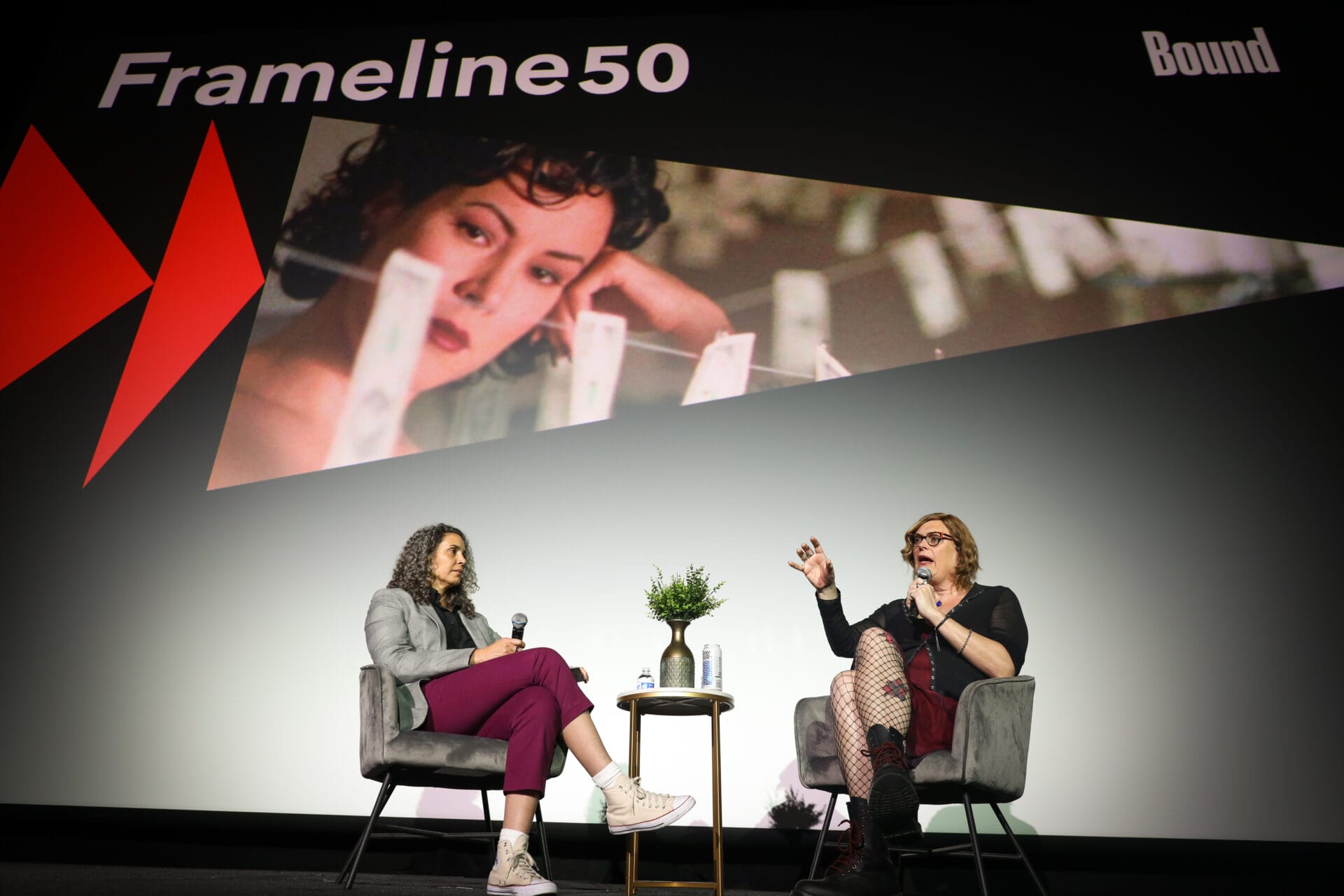
Thirty years ago, Bound hit theaters. It was the Wachowskis’ directorial debut and went on to become a beloved cult film, and one of the most important queer films of the 90s. It also received the award for Outstanding Film – Wide Release at the 8th Annual GLAAD Media Awards. GLAAD had a chance to sit down with one half of the directing duo, Lilly Wachowski, to talk about Bound, how Hollywood has changed in the last thirty years, and how her new production company, Anarchists United, seeks to change the landscape of cinematic storytelling.
[The following interview has been lightly edited for length and clarity.]
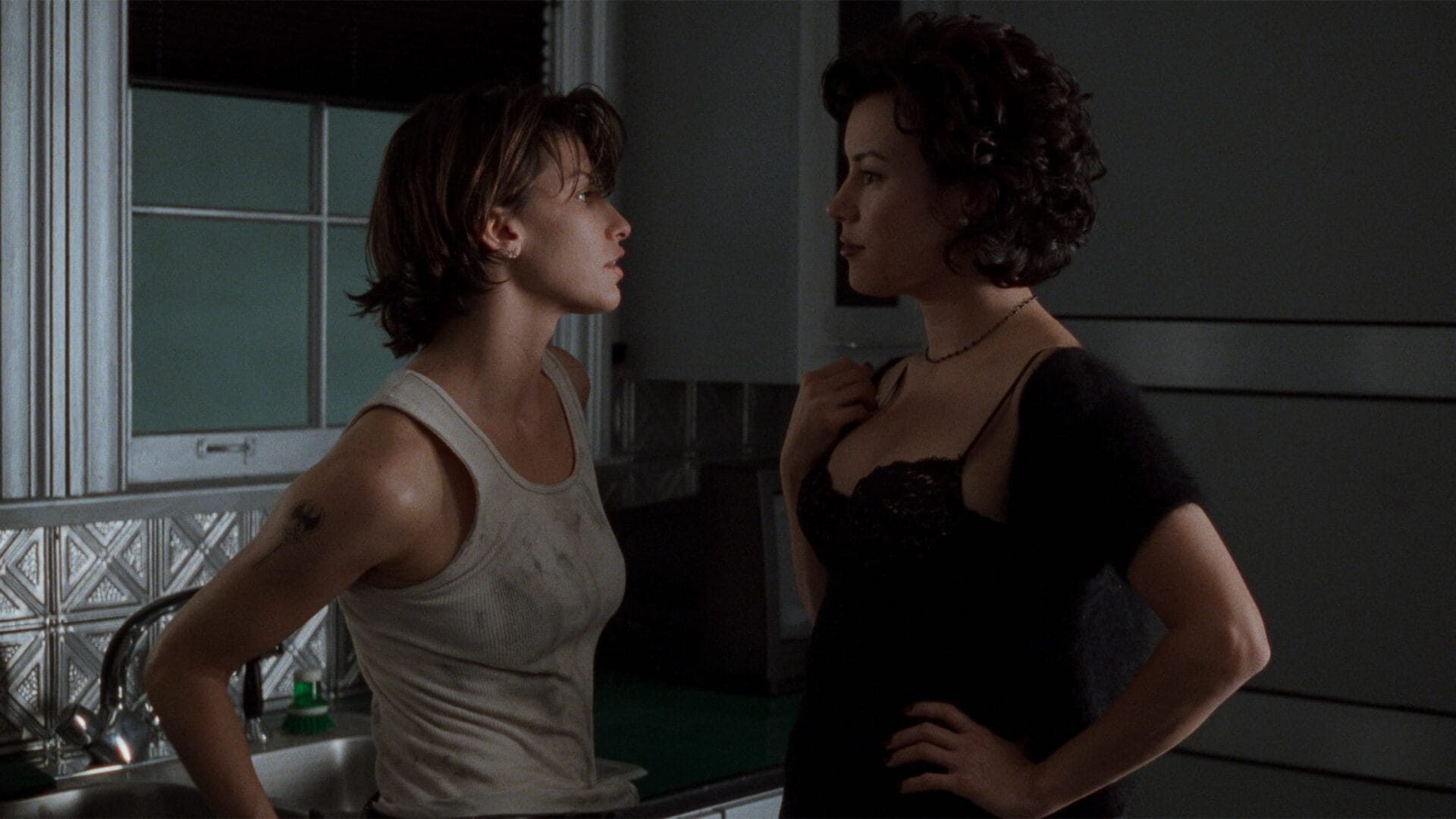
GLAAD: It’s been thirty years since the film Bound was released in theaters. The movie was unapologetically queer, especially for the ’90s. It was hailed at the time as a rare and realistic portrayal of a lesbian relationship on screen. Looking back on it now from your vantage point as an out trans woman, do you get anything out of the film that you may not have consciously realized when you were making it?
Lilly Wachowski: Of course. When you are so deeply embedded in the closet, you see all sorts of signposts in your art. You see signposts in your life, the way that you live, the way that you organize, the way that you interact with the world. It is like, “Oh, that’s the way. That’s why I am the way I am.”
When I see Bound, and the very first shot is the closet, I immediately have a sense that we are integrating lots of things that are going on in our subconscious into the narrative. We’re working in genre, specifically film noir, which has this rich history. It allows you as a filmmaker to play against audiences’ expectations. With those kinds of structures, you’re able to secretly implant these things in your art that you might be going through as an individual.
A film like Bound, and films like The Matrix, where a lot of the themes are about liberation, identity, and fighting against power structures that are holding specific folks in place, be it women, lesbians, or Black and Brown folks – those are all parallels to the things that me and Lana were going through in our subconscious.
As I said, with Bound, that closet is the most obvious signpost to me right off the bat. The idea of wanting out is right there. You’re not even thirty seconds into the film and that’s one of the key lines. And the boxes you make out of your lives; there are all these structures, which is part of what’s happening in the narrative. Corky and Violet have built these lives but they’re trapped.
So, yeah, there are lots of cool things to peruse from the vantage point of being, first, out of the closet finally, but also being older and able to look back on your life with a little bit more introspection and honesty.
GLAAD: It’s interesting when you’re talking about the genre piece of it, Especially in the ’90s, it was an era where women in genre films were so often used as props.
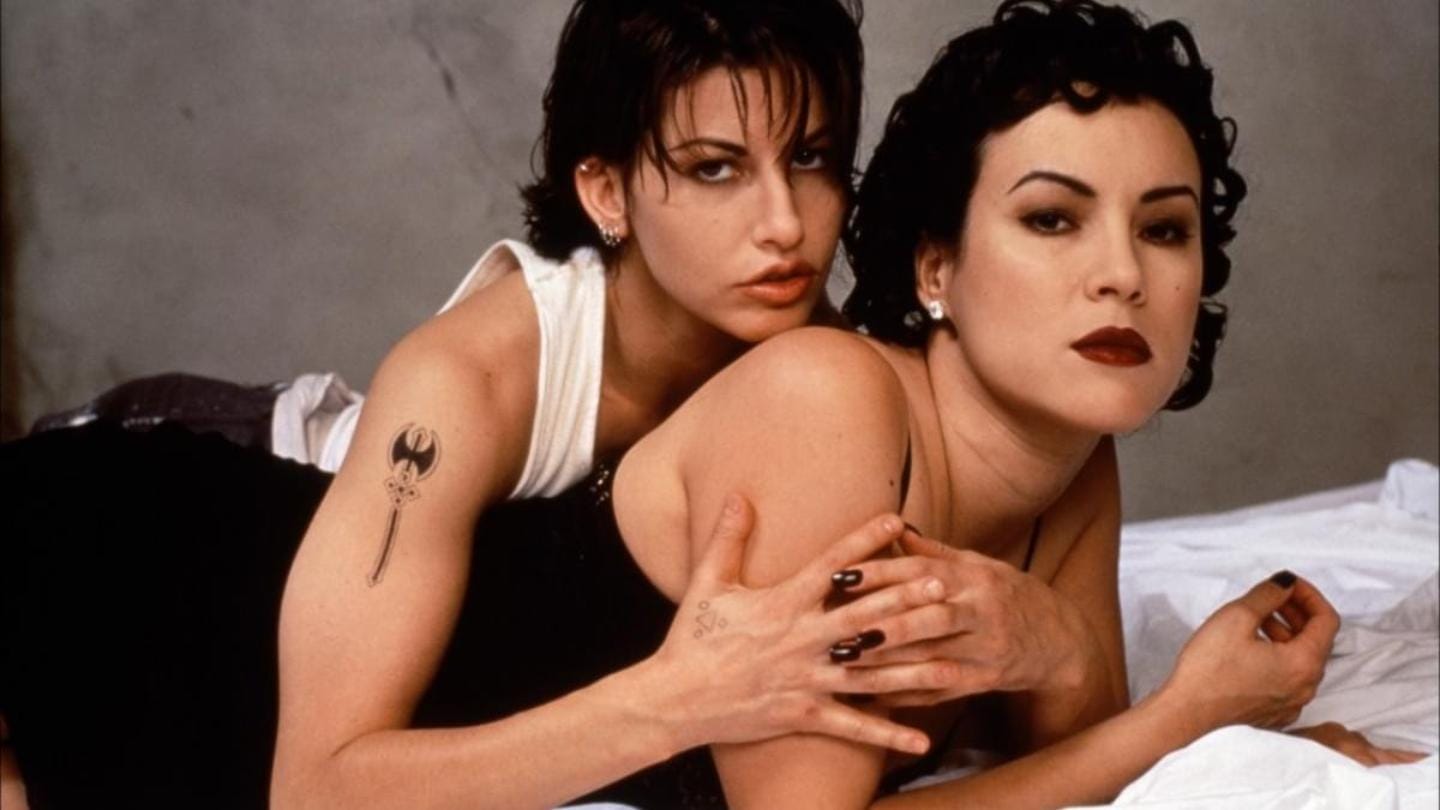
Corky and Violet, on the other hand, are the center of Bound, and it’s the women who get to ride off into the sunset together at the end. The men are, in many ways, much more ancillary to their story. Was that an intentional turning of the genre on its head back then, or was it something that just evolved because this was simply the story you wanted to tell?
LW: Partially that was one of the justifications for making the two characters women. There’s all sorts of stuff going on in the gestation period of the story; all of our internalized queerness that we were not letting out.
But when you think of it architecturally, if you say you want to work in a film noir setting, usually in film noir you have love triangles. We specifically wanted to have a film noir where the hero was a woman, and if she is this moll of this gangster, we didn’t want the third part of the triangle to be a man, because the man then becomes a crutch for the woman. So, we landed on the idea, “Well, what if it’s a woman?”
That’s a story that I told myself, or it was a justification for Bound to exist. It is a justification that we used to be able to explain why ‘two dudes’ were making a movie about two lesbians. It’s not exactly the honest answer. The honest answer is we’re two queers who want to make a queer movie.
But it’s partially honest because we related to all of the things you’re talking about. We could see that women were horribly represented in Hollywood. They’re horribly represented in genre, and when they are represented, they’re often the villains, the double-crossers, the Jezebels, or whatever.
We wanted to have two women who were in love and got to go off into the sunset. Even films that were hailed as feminist masterpieces, like Thelma & Louise, the message of that movie is that patriarchy destroys you. We were like, “Well, that kind of sucks. We’re sick of seeing that.” So a lot of these things were going through our heads as we were trying to develop this story.
GLAAD: Did the fact that there was a lesbian couple at the center of the story affect your ability to get financing and get the film made back then?
LW: I don’t think so. Maybe it helped a little bit.
Our producer, Dino De Laurentiis, at the time, had made money off of us because he had optioned our script, which had a bit of a moment and was passed around Hollywood. People were very excited about it. Dino sold it to Warner Brothers for a lot of money, and he asked us, “What are you doing next?”
Our experience with Warner Brothers wasn’t so good at the time because they were taking our script and rewriting it, sort of gutting it, much to our chagrin. So we said we wanted to make our own movie and direct. I think because Dino was really old Hollywood at the time, he looked at the proposition of making this film from a more exploitative point of view.
There’s a lot of queerness in exploitation. Oftentimes filmmakers of the ’70s and ’80s were able to inject queer themes into lower-budget films. Even though it’s B-movie, schlock, or exploitation, because those kinds of films are moneymakers for those companies at that level, it gives you a chance to bring queer characters to the table, so long as you’re working within the genre itself.
With Dino, as soon as we said what the story was, he was like, “Yeah, okay. We have a deal,” so long as it was within the budgetary framework of what he was working with.
GLAAD: On that note, there was some scrappiness on the production side. How do you feel that the industry has changed in these last three decades, and do you think it would be possible to get a film like this made today?
LW: I think the industry has changed for the worse since I’ve been around making films. I think that has a lot to do with antitrust laws being torn down, and the hyper-consolidation of studios into giant media conglomerates. When you have fewer places to bring your art to be financed and distributed, it stifles the flow of art. You end up with a more homogenized flow of what gets made and what doesn’t.
You can see it in GLAAD’s report. I was just looking at GLAAD’s report of how many trans people were in major motion pictures by the big studios: zero. If that’s not an indication of what I’m talking about, nothing is.
[That said], one thing that the internet has done is proliferate ideas. It has proliferated our connectivity, in some ways. In that proliferation of ideas, we’re able to easily find ourselves. It’s much easier to connect and much easier to see yourself in the experiences of other folks like you. Because of that, I think we are in a time where there is the potentiality for way more interesting art about queer lives.
Even though the structure in place is stifling the financing towards this art, you’re getting a lot more interesting things starting to poke through when they are able to. Stuff like Leviticus—I just saw that, a really cool horror movie. We also just saw Jane Schoenbrun’s piece, Teenage Sex and Death at Camp Miasma, fucking amazing.
GLAAD: Anarchists United is a new production company that you’ve started alongside Sarah Marie Flores and Lawrence Mattis. What are the industry issues that you see that Anarchists United is seeking to fix, and how do you go about fixing them?
LW: Yes, that is a good question. The impetus for starting the company was after I finished the second season of Work in Progress, we hadn’t even finished the season, we were editing the last few episodes, when we were told by the Showtime executives that they were not going to renew the show for a third season. A couple of months later, the show was pulled from streaming.
The conversations I was having with Lawrence and Sarah were happening right around that time, maybe a little before. I could tell this was not an isolated experience; it was happening to a lot of shows around us. The writing was on the wall. This idea of pulling things from streaming is particularly nefarious when you think about it in terms of transness and queerness, because literal erasure is happening in front of you. When you think of that quote, “You can’t be what you can’t see,” I feel like I was hitting a panic button.
That’s where Anarchists United came from. We were talking about the ideal of United Artists, Mary Pickford Studios, and the idea of artist-run co-ops. I said, “Somebody needs to do this.” Sarah said, “That somebody is us.” So we started trying to figure out what our company could look like.
Because we have these other historical examples in front of us, I wanted to head off the idea of single-person ownership so the company could continue without one person making all the decisions. I said this needs to be a true collective.
We came up with a structure where the studio would be owned by a not-for-profit foundation. The foundation would give out money to young, struggling, or cool artists trying to make stuff. Hopefully, those folks could bring it into the studio, which can make it, make money, and fund the foundation. You create a structure supporting underrepresented voices that can exist in an evergreen operation outside of the studio structure. The studio is run by me, Lawrence, and Sarah, but is owned by the foundation, and the foundation board provides the moral compass. If the studio decides to step down, the foundation is in place to ensure the studio stays on mission.
GLAAD: I find this a very fascinating loop of non-profit and for-profit that serves as a symbiosis of both production and artist support. Is it something that you hope to see emulated elsewhere in Hollywood, or even think is possible, or is traditional Hollywood too big for something like this?
LW: I think there are a lot of folks who are trying similar things, and that’s excellent. We have these little sprouts growing up where we are imagining a different future for ourselves. The more people who work at that, the better.
Being a trans person, I am the embodiment of radical change and optimism. Because I can imagine a better version of myself, taking the steps I’ve taken is an act of optimism. Even as our country is sinking into this plutocratically fascist morass, I am optimistic that we are going to hit rock bottom soon. When everything starts to fall apart, there are going to be people and plans in place to build something different, better, and fairer for all of us.
GLAAD: There’s also been this assumption on the part of a lot of Hollywood executives post-election that stories of marginalized people and by marginalized people are not going to sell in this environment. Yet, the box office data says the opposite. Look at a film like Sinners, for example. The data tells us that audiences actually crave these stories and are very interested in them. How does Anarchists United seek to break that logjam or shift that perception in Hollywood?
LW: It’s a complicated question because the studios are complicit. There is a mandate from the tops of those companies instructing their studios to put out a specific kind of content. That is a big problem. You see that with CBS Paramount, Warner, and Amazon, where they say, “We can’t touch that. That’s too political.”
A big part of what we’re up against is the right-wing propaganda apparatus that pushes the narrative that these types of films are bad and that nobody wants to see them. The amount of bots that swarm a show like Acolyte is massive. They have literally cut storylines out due to pressure from online trolls. The trolls do not represent actual individuals; they are a bot swarm that brings down the ratings, review-bombing shows to the point where they construct a false narrative. The studios then point to this and say, “See, we tried this and it doesn’t work.” It’s not that people don’t want it; it’s that studios are listening to this fake narrative.
I don’t know what to do about that. To dismantle those kinds of apparatuses, it has to come from government institutions. There are ways to push back in countries where the legal system hasn’t been completely warped and compromised, like Canada, Australia, or the EU. They can look at platforms like X and say, “This platform, and the way it pushes disinformation, is harmful to our democratic way of life,” and start imposing sanctions and shutting down these sites. Once that starts to happen, the US will have a model to follow, once more democratically aligned people find their way back into government positions.
Propaganda and its proliferation is poison. We’re in a war for truth and information in this country. I’m just a filmmaker. I can tell it’s a problem, but it’s not something I can solve. I can only try to talk about it, and hope people with bigger brains can figure out how to take care of it.
As a filmmaker, what I can do is make subversive art that has mass appeal. I can do my best to impart that knowledge onto young filmmakers, develop stories that can pierce through commercially inclined spaces, and get a machine running that is eventually able to self-finance. Self-financing is especially key in this era of hyper-consolidation. That’s what I’m concentrating on: getting Anarchists United’s first film going, starting the engine, and slowly snowballing into bigger and better things.
GLAAD: On that note, in the way that you’re supporting other artists, you have a number of programs running already—the Writers Discovery Fellowship, the Anarchists United grants program. Can you say more about these, and what you have in store for the rest of 2026?
LW: The programs are evolving. One of the things we are interested in is making sure we don’t have preconditions on our grants. That is one of our focal points. Artists are artists, and often all we need is to pay our rent and buy food to survive. A lot of sticking points when we were working on those programs were making sure we are providing money unconditionally.
We also have a filmmaker-focused grant where we want to take a piece of work from a writer-director and develop it like any other piece of IP. We would go through script development, bring the script into production planning, work with a line producer to get a budget, and work with the filmmaker to bring that budget down if needed. This gives the filmmaker a higher-end pre-production experience. That is one of the cooler grants we are going to offer.
Right now, the foundation is in a holding pattern until we are able to expand the operational capacity of the studio. One cannot expand without the other. Once we expand the studio side, the foundation can give out more grants and expand all of its programs.
We are not brick-and-mortar right now, but when we talk about the future, we always land on studio space or co-working space that can be a cooperative space for filmmakers. We eventually want to expand into our three different operating cities: New York, Chicago, and LA.
These kinds of endeavors require us to look around and see who else is out there doing what we’re doing, and build robust alliances. We’re all about reaching out, connectivity, and expanding our capacity, both in terms of organizations and the number of artists we connect with in trans, queer, Black, and Brown spaces. That’s the stuff.
To find out more about Anarchists United, please visit www.anarchists-united.org.
Credit: Source link