
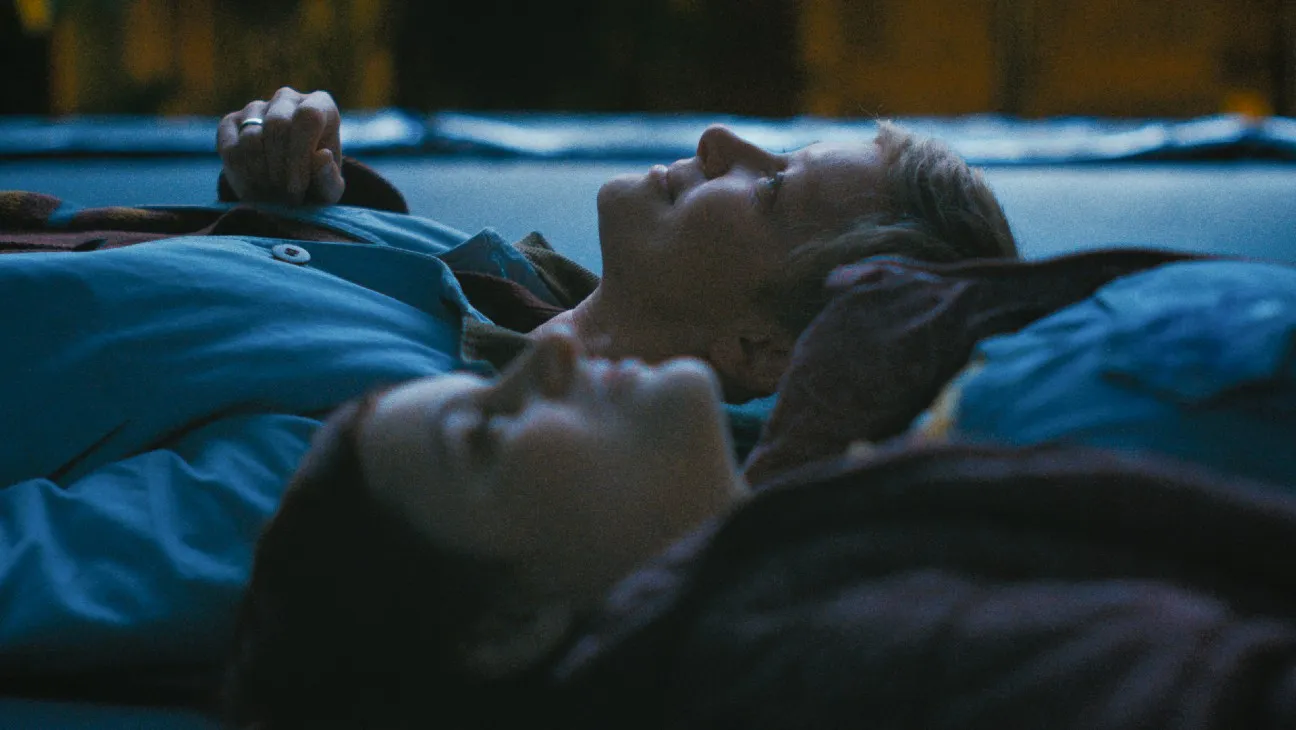
Director: Lauren Meyering
Writers: Mackenzie Breeden, Lauren Meyering
Stars: Gretchen Mol, Iqbal Theba, Lillian Carrier
Synopsis: As her mother Sandy (Gretchen Mol) grapples with an uncertain diagnosis, autistic 22-year-old Margarita (a revelatory Lillian Carrier) must reluctantly grow up.
On-screen autism in film is a slippery slope. Films far too often get it wrong in one way or another. Lauren Meyering’s Horsegirls somehow manages to get everything right while delivering a heartfelt narrative on mothers and daughters.
Hollywood’s history of depicting characters on the autism spectrum leaves plenty to be desired. Whether it’s Rain Man, I Am Sam, or even The Accountant, autism can be portrayed as a superpower, overdone with tics, or used as a catch-all for a variety of disabilities, usually portrayed by neurotypical actors. Instead of utilizing any of those tropes, Horsegirls keeps the quirk to a minimum while remaining innately human.
Instead of focusing on the struggles and harsh realities of autism in today’s world, the film smartly assumes the world is a good place, despite bad things happening to the characters. Instead of inserting a stock villain character or an unnecessary roadblock for the characters to overcome, all the struggles come from organic or natural occurrences. Humans are never the problem. Every conflict feels real since it is out of the characters’ control.
Smartly, the filmmakers don’t focus just on the life of lead character Margarita (Lillian Carrier), but on her mother, Sandy (Gretchen Mol). While other films may show how hard caring for Margarita can be, that’s never shown to be the case. Margarita is portrayed as independent, resourceful, intelligent, and even deceptive. She is a bit infantilized, but never oversimplified. She is a complex character who can be a bit much, but Sandy is a mother who understands and settles into a rhythm. On the flip side, Sandy is often frustrated and angry at Margarita. Their relationship is one of love, respect, but also ebbs and flows of emotion. It’s never a purely black or white experience. Things shift.
On its surface, Horsegirls is nothing but quirky and precious. The plot literally focuses on a girl with autism who joins a hobby horse dance team while her mother struggles with cancer. That plot screams overly cute, delicate, and pretentious. Instead, the film zags where every other film would devolve into some other dumb messaging. The filmmakers don’t try to get across some agenda or message. It’s just a simple, sweet story about the relationship between a mother and daughter and how it needs to evolve with circumstances.
As much as the film showcases Margarita’s desire for independence, it also focuses on Sandy’s preparation and anxieties if she is no longer around to help Margarita. Sandy carries the universal worry of every parent to prepare your child for the world, but with the added anxiety of having an atypical child in an uncaring world. Luckily, the uncaring world is generally filled (at least in this film) with generally good people. But even then, people are not some version of Mr. Rogers. The film just has a sunnier view of humanity than most.
Whether it’s Margarita’s boss (Iqbal Theba) at a Halloween store, the coach of the dance team (Jerod Haynes), or a kindly dance competitor (Delaney Love Duncan), people are nice to Margarita because she radiates joy and goodness. It’s an infectious energy, conveyed perfectly by Carrier. Casting an autistic actress in the lead role automatically gives the film a level of authenticity other films wouldn’t have. With Carrier, the film finds a touching, sensitive portrayal of a character that might be frustrating at times, but is well understood. It’s a one-of-a-kind performance from a one-of-a-kind performer.
Mol adapts to her role of Sandy well, balancing the frustration with the empathy and overwhelming love. Mol has never been known for her motherly sensibilities on-screen, but she fits the role like a glove. As important as Carrier’s performance is to the film’s success, Mol is equally as important for the film’s main dynamic. For a performer with such a populist career, this might be her best performance.
The rest of the cast is hampered by the film’s delicate sensibilities, never getting those big standout scenes of lesser films, but they buy in completely to the filmmaker’s vision. Haynes’ performance could have gone badly in a lot of different directions, but he consistently underplays the part Same goes for Theba, who is extremely pleasant, but still feels like a real person. Actor Matthew Schwab gets some of the best laugh lines in the film as Magarita’s co-worker.
Horsegirls is one of the film surprises of the year. On-screen autism has rarely been portrayed with such poignance, humor and reality without devolving into quirk.
Grade: B+
Credit: Source link