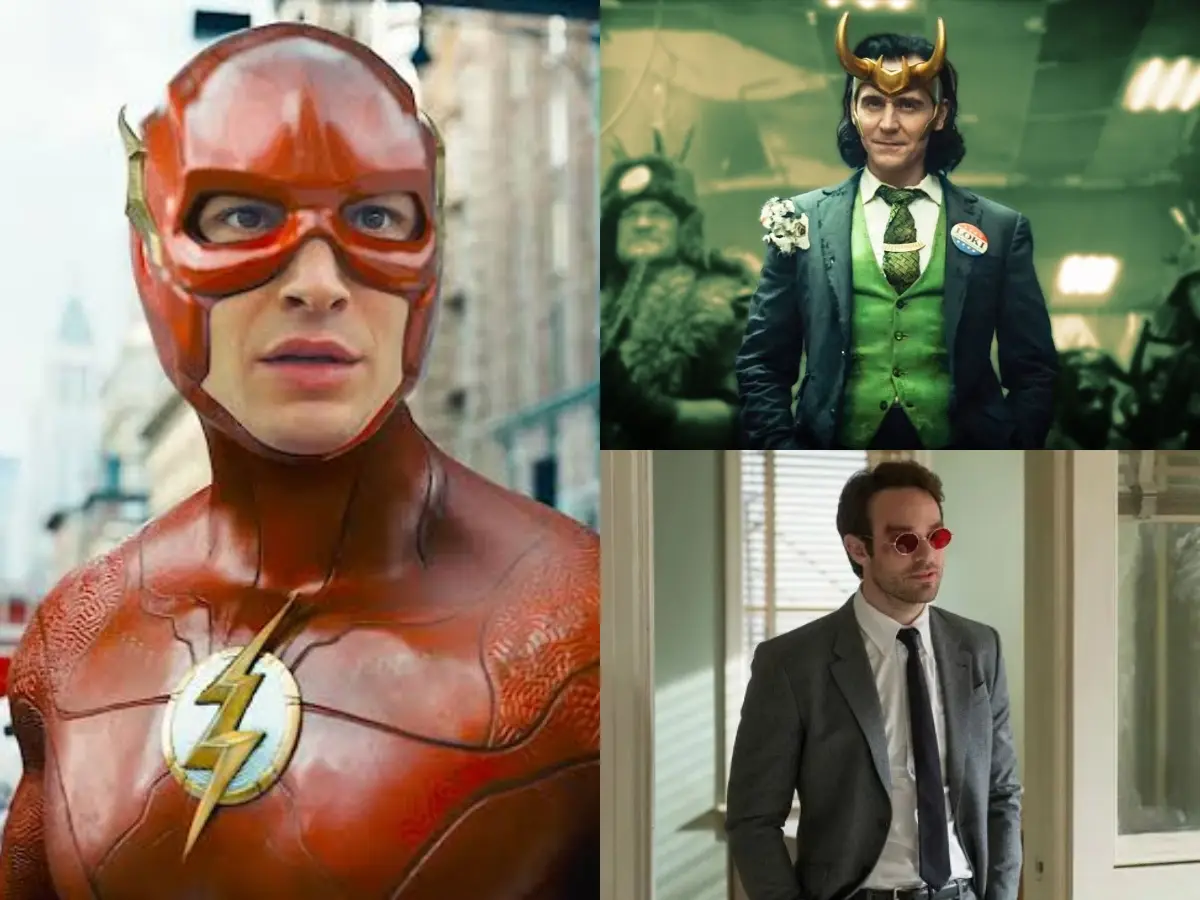
For decades, the biggest battles between Marvel and DC were fought at the box office. Superheroes were built for multiplexes, billion-dollar grosses and cinematic universes that demanded audiences turn up for the next major event. However, with recent box office disappointments, Marvel and DC are changing the landscape of cinema with their superhero storytelling through small screens. Marvel and DC are not abandoning the cinema. But they are no longer treating it as the only stage that matters. The superhero playbook is being rewritten, and the most interesting chapters are now being written on the small screen.
Journey of cinematic dominance to streaming expansion
Marvel changed Hollywood with the interconnected Marvel Cinematic Universe, building a theatrical model in which individual films fed into massive crossover events. Marvel’s Avengers films turned the interconnected cinematic universe into Hollywood’s most successful franchise model, while DC relied on theatrical heavyweights such as The Dark Knight trilogy, Wonder Woman, Aquaman and The Batman. The biggest superheroes and the biggest events, belonged to cinemas.

However, streaming changed that equation. Shows like The Falcon and the Winter Soldier and Loki directly impacted the narrative stakes of subsequent Marvel movies, expanding on the multiverse. Following an initial mandate for rapid output, Marvel scaled back on streaming volume to focus on refined, standalone miniseries and returning flagship shows like Daredevil: Born Again on Disney+.
:max_bytes(150000):strip_icc()/023_ringside_313_unit_00463r-2000-a9d8889f85664ab3895fb20764b0e170.jpg)
While DC has followed a different route. Peacemaker turned a supporting character from The Suicide Squad into the lead of his own series, while The Penguin expanded the world of The Batman through a crime drama centred on Colin Farrell’s Oz Cobb. Under the new DCU, Creature Commandos and
Lanterns further demonstrate how television can be used for animation, detective stories and characters outside the traditional blockbuster formula.
Blend of superheroes between movie character and TV character
The bigger change is that the line between “movie character” and “TV character” is disappearing. DC’s interconnected model allows characters and storylines to move between formats, while Marvel continues to keep its television projects within the broader MCU. That flexibility could define the next era of superhero storytelling. Films can remain the home of large-scale spectacles, while television offers space for longer, more character-driven and genre-specific narratives.
Marvel and DC are no longer treating television merely as an extension of their theatrical ambitions. Marvel is moving towards more traditional, multi-season storytelling after an era dominated by limited streaming series, while DC is building television and animation directly into its interconnected universe.
With projects such as Daredevil: Born Again, Peacemaker, Creature Commandos and Lanterns, both studios are testing how superheroes can thrive beyond the multiplex. The future of the genre may not be about choosing between cinemas and streaming but understanding which stories work best on each screen.
Modern MCU and DC Shows released so far
Since 2021, Marvel Studios has directly integrated its shows into the canonical phases of the MCU: WandaVision (2021), The Falcon and the Winter Soldier (2021), Loki (2021–2023), What If…? (2021–2024), Hawkeye (2021), Moon Knight (2022), Ms. Marvel (2022), She-Hulk: Attorney at Law (2022),
Secret Invasion (2023), Echo (2023–2024), X-Men ’97 (2024–), and Agatha All Along (2024).
Major Modern Universes in ncludes the Arrowverse (Arrow, The Flash, Supergirl, Legends of Tomorrow), DC Extended Universe (DCEU) spinoffs (Peacemaker), and standalone hits like Smallville, Gotham, The Sandman, and The Penguin.
Credit: Source link