For a century, people have been predicting the death of Hollywood. Television would kill it, then home video, then the internet, then streaming, then artificial intelligence. The predictions were always premature. Hollywood always reinvented itself and kept going.
But if Netflix acquires Warner Bros., this long-prophesied death may finally arrive, not in the sense that filmmaking will cease but in the sense that Hollywood will become a system that circles a single sun, materially changing its cultural output. All orbits — every deal, every creative decision, every creative career — will increasingly revolve around the gravitational mass and imprimatur of one entity.
The danger here is not annihilation but centralization. Netflix is the No. 1 premium streaming service. Warner Bros. is one of the most successful of the legacy film studios, and HBO has long been the premier brand in prestige television. These are not middling players; they are two of the main pillars of the modern entertainment industry.
The scale in itself should give regulators pause. Netflix will spend roughly $18 billion this year on content, and Warner Bros. will spend around $20 billion. In a very inclusive analysis that counts sports rights and similar categories, KPMG estimated that the top 12 U.S. media and entertainment companies together spent $210 billion in 2024, so this merger would roughly double Netflix’s share of industry spending, to 18 percent from 9 percent.
Defenders of the deal could argue that consumer prices won’t rise. But antitrust law is not limited to mergers’ effect on prices. Regulators can object to mergers that reduce consumer choice even when prices remain flat, as we saw in the proposed merger, since blocked, of JetBlue and Spirit Airlines.
The consideration of consumer choice is particularly relevant in a culture-producing industry. When two of the most important sources of premium programming are combined, the marketplace loses an entire programming philosophy: a unique sensibility; a separate development culture; an independent set of tastes, relationships and risk thresholds.
Having fewer bidders generally means that fewer shows get made. Fewer visions means a narrower range of storytelling. Consolidation aligns decision making around one organization’s or one individual’s point of view. If the merger proceeds, the feature-film development ecosystem, already imperiled, will be further constrained, leading to fewer and less interesting movies. And will this new entity nurture the kind of risky sensibility that brought us premium television like “The Sopranos” and “The White Lotus”?
But nowhere will the effects be more consequential than in the business of theatrical film. Warner Bros. is a cornerstone of the movie theater distribution system, reliably accounting for more than 15 percent of the major-studio theatrical box office. Netflix, by contrast, has been explicitly hostile to theatrical releases. Ted Sarandos, a chief executive of Netflix, has suggested he would preserve Warner Bros.’ strategy, but assurances made premerger have a habit of melting away postmerger, when cost pressures and quarterly incentives take over. If Netflix chooses to shrink or eliminate Warner’s theatrical slate, theatergoers across America will feel the impact immediately.
In making a case for approval, Netflix may argue that the market in which it operates is not limited to premium film and television but rather encompasses the entire universe of human amusement — TikTok, YouTube, sports, games, books and even taking a walk. This is a standard tactic: Define the market so broadly that dominance becomes mathematically impossible.
But producers can’t sell a television show to taking a walk. A Netflix merger with Warner Bros. would create a monopsony problem: too few buyers with too much bargaining power. Writers, directors, actors, showrunners, puppeteers, visual effects artists — all are suppliers. The fewer buyers competing to hire them, the lower their compensation and the narrower their opportunities. This reasoning essentially spurred the Department of Justice to block the proposed Penguin Random House merger with Simon & Schuster in 2022. In that case, the issue was not consumer prices; it was the diminished bargaining power of authors. The analogy to Hollywood is nearly perfect.
Hollywood has survived many predicted deaths. But it has never tested what happens when the number of major creative buyers collapses toward one dominant center of gravity. A merger between Netflix and Warner Bros. wouldn’t destroy Hollywood, but it would flatten its creative diversity, weaken its theatrical channel and bring a huge cultural category under the near-total control of a single company.
Roy Price is the chief executive of International Art Machine, an entertainment studio, and was previously the head of Amazon Studios.
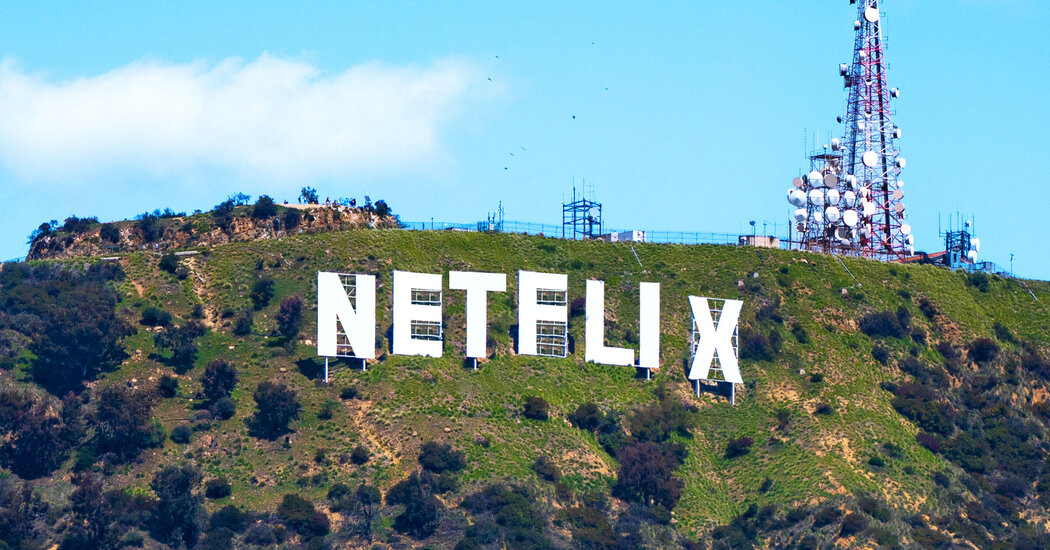
Source photograph by AaronP/Bauer-Griffin/Getty Images
The Times is committed to publishing a diversity of letters to the editor. We’d like to hear what you think about this or any of our articles. Here are some tips. And here’s our email: [email protected].
Follow the New York Times Opinion section on Facebook, Instagram, TikTok, Bluesky, WhatsApp and Threads.
Credit: Source link