We have thousands of human-written stories, discussions, interviews and reviews from today through the past 20+ years. Find them here:

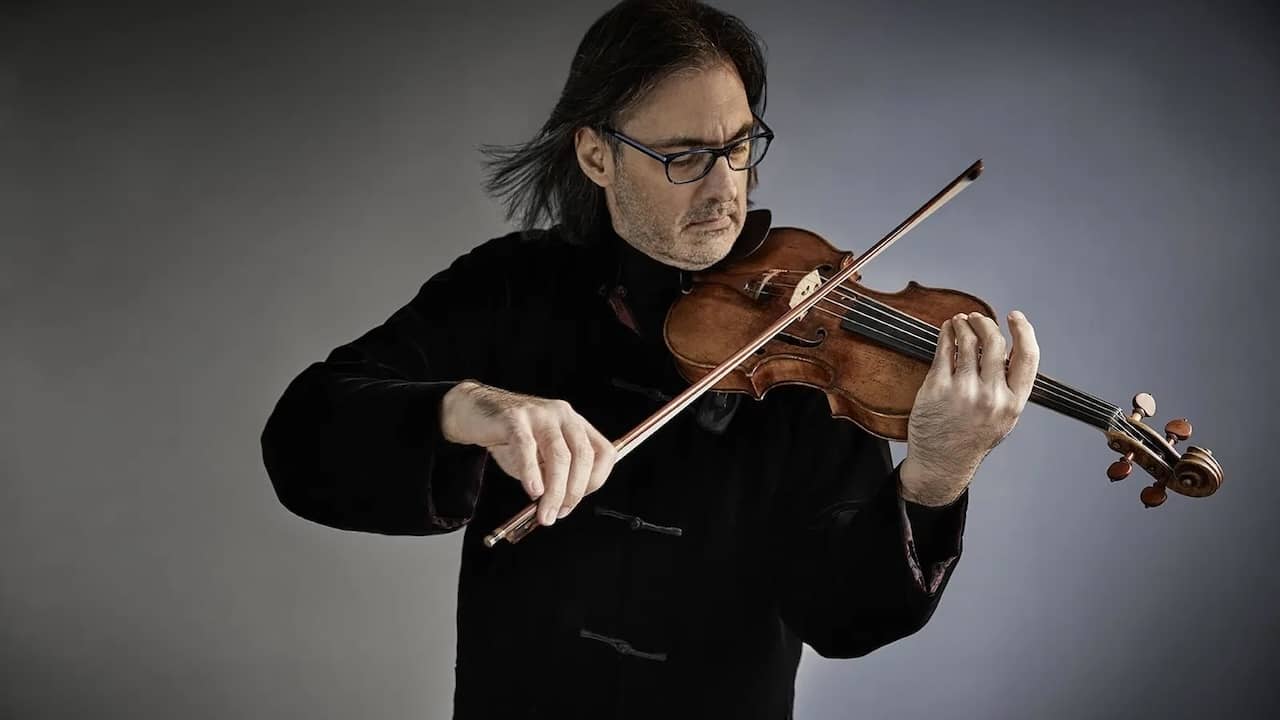
Violinist Leonidas Kavakos has performed the popular Tchaikovsky Violin Concerto many times – I suspect that by now, he is just having fun with it.
Kavakos, 58, is a native of Athens who is well-known on concert stages around the world. He plays the 1734 “Willemotte” Strad, and his latest projects include a number of trio recordings of Beethoven symphonies with cellist Yo-Yo Ma and pianist Emanuel Ax. Earlier this year, he also was named Principal Guest Conductor of the Minnesota Orchestra.

Violinist Leonidas Kavakos. Photo courtesy Opus 3 Artists.
On Tuesday night at the Hollywood Bowl, his virtuosity and control were on display as he performed the Tchaikovsky concerto with the Los Angeles Philharmonic and Thomas Søndergård. Clearly he has long mastered its abundant technical tricks – which are challenging enough that the piece was once deemed “unplayable.”
But he also “played” with the piece – a little like an impish kid, bending the rules and resisting predictability to make things more interesting. He occasionally subverted the pulse, pushing fast passages a little faster or lingering on long notes a little longer than the orchestra did. He added some touches, like a little extra run during the frenzied sextuplet passage after D. He made the weird tension of the C# trill at the end of the second movement seem somehow much weirder and more important.
His first-movement cadenza was elegant and accurate, and when he landed a particularly high note toward the beginning of it, a big cheer peeled out from the audience, with one person whooping, “YEAH!”
The end of the first movement, where the soloist usually gets drowned in the noise of the orchestra, he deftly made the solo part pop out, and he smiled graciously at the inevitable applause following the end of the first movement.
The second movement was a taffy-pull — holding back and then pushing forward against the relative steady tempo of the orchestra. Kavakos applied a nice crisp spiccato to the third movement, which was a highlight of the performance with its bright tempi and barrage of notes sounding with clarity. The enthusiastic audience gave him a standing ovation, but there was no encore.
The second half of the concert featured another perennial favorite, Beethoven’s Symphony No. 7. Tempos were relatively brisk, but not out of today’s ordinary realm; the piece clocked in at 39 minutes. It was a relatively trim orchestra (10 first violins, eight seconds, etc.) and an interpretation that leaned more classical than romantic. The sound mix seemed a little off, with individual first violins poking out of the tapestry while the second violins and violas were hard to hear.
After a number of recent performances featuring conductors that directed with no batons, I was amused by the contrast when Søndergård took the stage with a seemingly extra-long white baton, which he used to graceful effect. The first movement had exciting energy, and the Bowl camera operators showed impressive repertoire-awareness in the way they featured just the right soloists and orchestra sections at the right time on the big screen.
At the close of the first movement Søndergård left no time for applause, swiftly giving the downbeat to move straight into the second-movement Allegretto – it was a smooth move. This is a beautiful movement that blossoms from a soft heartbeat in the basses to a powerful melody in the violins, and again the tempos was decently brisk – an active heartbeat, or a walk where you could see the flowers, but maybe not smell them.
The third and fourth movements were energetic and spot-on – and certainly principal timpanist Joseph Pereira merits a shout-out for the solid rhythmic backbone he provided throughout the entire symphony. In all it was a lovely evening at the Hollywood Bowl.
By the way, late last year the Hollywood Bowl stage was dedicated to John Williams, the great film composer and conductor. This week was the first time I’d seen the sign – here is how it looks:

The newly-named John Williams Stage – the sign is right below the large screen.
You might also like:
* * *
Enjoying Violinist.com? Click here to sign up for our free, bi-weekly email newsletter. And if you’ve already signed up, please invite your friends! Thank you.
Replies
Credit: Source link