The filmmaker Jane Schoenbrun’s last film, the eerie and sad I Saw the TV Glow, used a made-up artifact from the pop-culture past — a cultishly beloved supernatural television show — as a kind of seeing stone, gazing through its lens to inspect matters of identity. Schoenbrun draws from the next well over in their new film, Teenage Sex and Death at Camp Miasma, which employs a fictional slasher movie of yesteryear as the portal into a conversation about self and desire. It’s heady, strange stuff, perhaps not as emotionally resonant as TV Glow, but captivating in both its confusion and honesty.
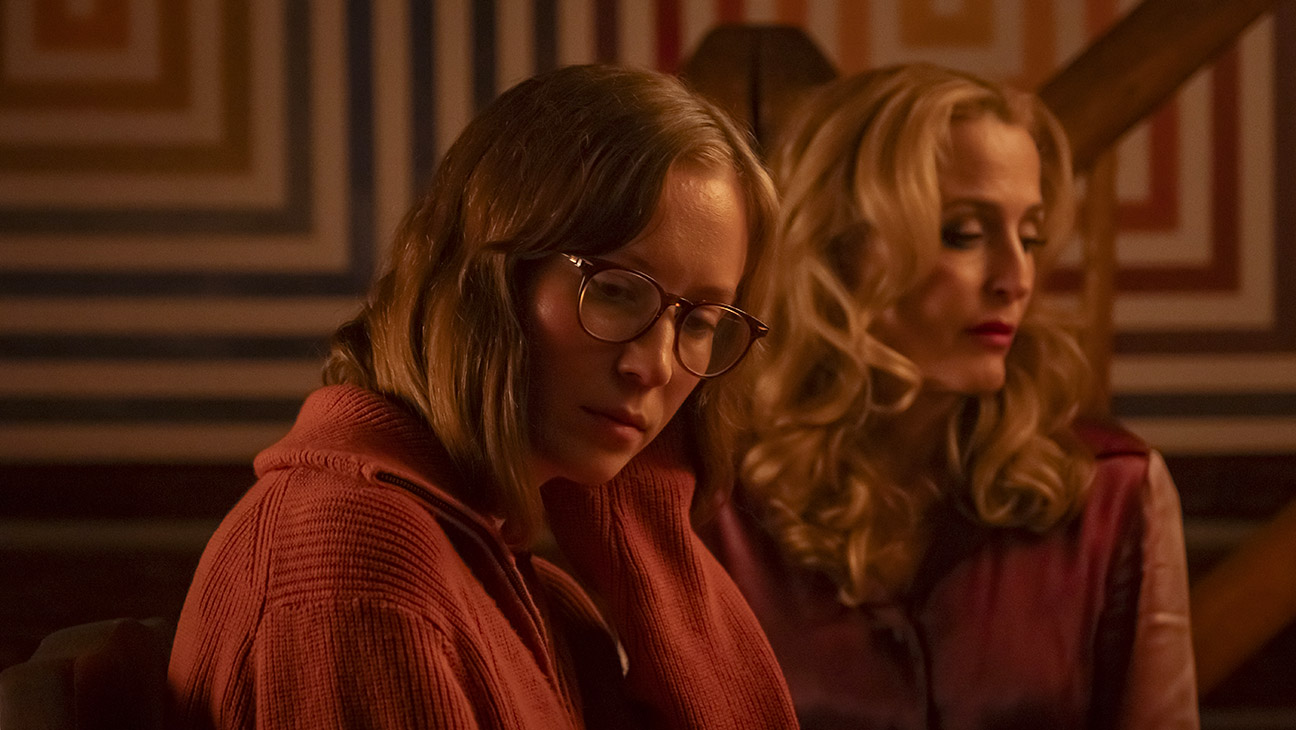
Hannah Einbinder plays Kris, an up-and-coming filmmaker who has parlayed Sundance success into a gig rebooting a once-popular horror franchise called Camp Miasma. The original film was a watershed smash hit, spawning myriad sequels and merchandise and intense fan adoration of its killer, Little Death, who was once a gender fluid teenager bullied to death by his fellow campers. Kris, long a devotee of the franchise, is determined to cast the reclusive star of the first film, a mostly forgotten actress named Billy (Gillian Anderson, drawling away like she’s still doing Streetcar). A journey to Billy’s house — a remote cabin near the Washington/British Columbia border — leads Kris on a curious, blood-spattered journey of discovery.
Teenage Sex and Death at Camp Miasma
The Bottom Line
Talk about losing it at the movies.
Venue: Cannes Film Festival (Un Certain Regard)
Cast: Hannah Einbinder, Gillian Anderson, Dylan Baker, Jack Haven, Sarah Sherman
Writer and director: Jane Schoenbrun
1 hour 52 minutes
Schoenbrun has stuffed their film with cultural references, to amusing effect. If something about the now-problematic gender-bending killer of Camp Miasma reminds you of 1983’s Sleepaway Camp, Schoenbrun is not coy about the parallel. If Billy, who wears a turban and caftan in a few scenes, calls to mind Norma Desmond of Sunset Boulevard, Schoenbrun directly assures you that that is not an accident. There is a hyper awareness to TSADACM, a determination to point out each of its Easter eggs and allusions, lest the viewer think Schoenbrun is trying to outsmart anyone. Schoenbrun is welcoming us into a collective pool of memory, though they have very particular, very personal things to discuss once we’re all in there.
There’s a slight awkwardness to the film’s invitation, a fussy kind of table setting that offers some trite (though, not inaccurate) Hollywood satire to ease us toward what the movie is really about. That nervousness is deliberate, I think; the film is about a person who is forever in their head, unable to exist in a moment without qualifying and explaining and even apologizing for their presence. Kris’ chief insecurity has to do with sex, an act during which she’s never felt comfortable, unable to fully inhabit her body and accept how others might make it feel.
But Camp Miasma, specifically one (ahem) climactic scene involving Billy’s character, has triggered something in Kris. She first saw the film as a probably too-young child, and its depiction of horror-movie teen hedonism — most of its characters operating on horny id — remains both alluring and othering. When Kris tries to academically explain what the film means to her, Billy offers a simpler interpretation in response: The film is really just about “flesh and fluids,” she says.
In many ways, Kris aches to be reduced to such simple matter, to strip away all of her heady anxiety and surrender to basic want. Feeling so outside of that, so different from the teens in the movie (minus Billy’s final girl, who is less eager about sex than everyone else around her), has, in a way, made Kris identify with Little Death most of all. Schoenbrun, who transitioned in their 30s, divulges something quite intimate here, attempting to explain their own longstanding hang-ups about sex, their detachment from something that so many people seem to enjoy so readily.
That candor is refreshing, and the film’s conclusions about accepting the idiosyncrasies of one’s individual eros are quite moving. But Schoenburn does not make it easy for the audience to reach those conclusions. TSADACM can be alienatingly offbeat; it is situated somewhere between the real world and fantasy, and is consistently blurring those borders. We see many scenes of the movie within a movie, and it looks and moves nothing like actual 1980s slasher films do. Little Death wears a giant HVAC vent on their head instead of a mask, there are ludicrous founts of blood that would be more at home in a Troma film. Schoenbrun is not going for kicky mimicry here — literalism is not their chief aim.
Similarly, the landscape surrounding Billy’s cabin — which is on the property of the abandoned camp where the original film was shot — is made up of highly saturated color and painted backdrops. We have ventured into some kind of other place, much as Kris (and, in some ways, Billy) frequently disappear into the reverie of a movie. But that abstraction does not dilute the potency of Schoenbrun’s inquiry; we do, by the end, keenly feel that a very real crucible has been passed through, that Kris — and, by extension, her creator — have come to some new and significant realization about their physical being.
If that all sounds awfully heavy, it is, instead, handled mostly with a comic touch. TSADACM could be called a comedy, with its pithy one-liners and deliriously exaggerated depictions of gore and arousal. Just as she is on Hacks (another story of an intense connection between a younger writer and an older performer), Einbinder is droll and peppery, while also handling the dramatic bits quite well. Anderson is having a lark; she takes a rare juicy film role and runs with it, happily serving as a vessel for Schoenbrun’s complicated obsessions.
Teenage Sex and Death at Camp Miasma will certainly not be to everyone’s liking. It isn’t a quirky, movie-nerd paean to B-movie horror. Nor is it strictly a tete-a-tete between two lesbian icons (Anderson is not gay, but she has been an idol of the community since her X-Files days). It is a far less definable film than that, and difficult to get a satisfying hold on. But it makes an impact nonetheless; one leaves the theater once again awed by Schoenbrun’s willingness to bare so much of themselves (albeit in oddball allegory). The film is disarming in its palpable longing, in the way it tries to explain to an audience of strangers how its maker has lived in their changing body. It’s an act of generosity, one person saying to another with wistful empathy, “I can be weird about this stuff, too.” And then, Schoenbrun presents a comforting idea: Life isn’t a movie. But if it was, maybe you get to write it for yourself.
Credit: Source link