Credit: Alamy
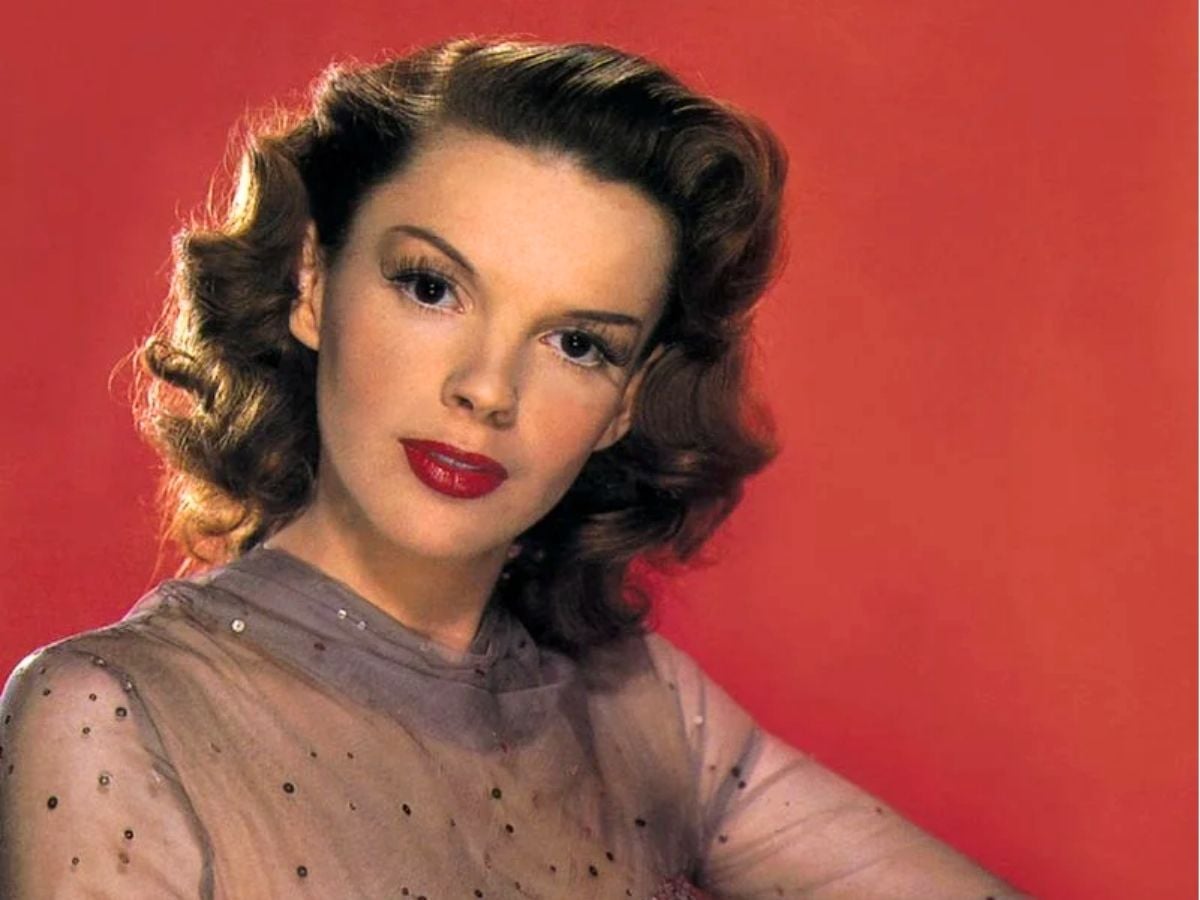
You might not recognise the name Frances Ethel Gumm, but you certainly know her alter ego, Judy Garland.
She was an all-out icon, not just because she played Dorothy in The Wizard of Oz and gave birth to Liza Minnelli, but because she embodied the drama of Hollywood on and off screen, and if there’s one thing that people love, it’s a star wrapped up in simultaneous levels of glamour, chaos, and tragedy.
When she was cast in the leading role of MGM’s huge musical hit, a timeless classic which saw Garland wear her blue dress and red heels, the most iconic outfit in the history of cinema, the actor was stuffed with pills which formed a dependency she’d never fully be able to shake. She was exploited, sexually harassed, and put on a strict diet to stay slim, despite the fact that she was only 16. The industry was cruel to Garland from the very beginning, and she didn’t ever truly recover from this experience.
The actor would go on to appear in many classic movies over the coming years, like Easter Parade, Meet Me In St Louis, and A Star Is Born, but behind the scenes, she was struggling. Her dependency on drugs continued to plague her, and it would actually be an accidental overdose on barbiturates that would sadly end her life in 1969 when she was just 47. She suffered from various mental health conditions, and tried to kill herself several times over the years, and the trauma of her treatment in Hollywood no doubt contributed to her poor state of mind.
Garland was also troubled by various unsuccessful relationships, with her first marriage to David Rose resulting in a forced abortion when she was just 20 years old. She accused her third husband, Sid Luft, of hitting her, as well as forcing her into an abortion, while her next husband, Mark Herron, beat her, resulting in their divorce. Then there was her last husband, Mickey Deans, who was reportedly an awful man; she didn’t have much luck in love.
With such a tumultuous personal life made up of nervous breakdowns, abusive husbands, drug addiction, and financial ruin, it was hardly surprising that Garland disappeared from the screen for some time. After the acclaim of A Star Is Born in 1954, which earned her a Golden Globe, she didn’t act again until lending her voice to a musical number in 1960’s Pepe, and then dawned her comeback: Judgement at Nuremberg in 1961.
Directed by Stanley Kramer, the film focuses on the trials that accused various Nazi officials of committing heinous war crimes during the Holocaust, with Garland playing the fearful Irene Hoffman. Her performance was widely praised, with the actor earning an Academy Award nomination. It seemed like she was finally back on top, although she’d only appear in three more movie roles, her last being the rather ironically titled I Could Go On Singing in 1963.
Still, her time filming Judgment at Nuremberg was a great experience for the actor, who explained to interviewer Helen O’Connell the reason for her return to the screen, “It’s a terribly important picture, I think what it has to say is important, and also the opportunity to work with marvellous actors and to work with Mr Kramer was very tempting, and I couldn’t resist.”
She was excited to be working with Kramer, jokingly musing, “I think I could be the president of his fan club. It’s written beautifully. It’s very explosive”. She wasn’t wrong, for Judgment at Nuremberg was a huge success, and it stands as one of Garland’s greatest movies.

Credit: Source link