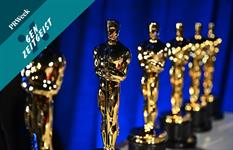
Oscars season is upon us and while voting for the 98th Academy Awards closed last week, most campaigns have been unfolding for months.
Awards season may look like a few weeks of red carpets and acceptance speeches, but the real work happens long before that. Studios carefully plan campaigns well in advance, shaping how films are discussed, remembered and ultimately voted on.
This year’s race has made one thing especially clear: in an era where box office success no longer guarantees cultural dominance, the For Your Consideration period has become a proving ground for how effectively campaigns meet audiences where they are.
Take A24’s campaign for Marty Supreme. One of the most memorable moments this season came when the studio released an 18-minute video titled, Timothee_Chalamet_internal_brand_marketing_meeting_MartySupreme_11.08.2025.mp4, in which Chalamet, the star of the film, fully commits to a parody of an internal marketing brainstorm.
The video alone has generated more than 1.9 million views on A24’s YouTube channel, demonstrating how studios increasingly use internet-native content to extend a campaign beyond traditional press cycles.
But the digital moments were only one piece of a broader cultural strategy. In the months leading up to the film’s release, the campaign spilled into fashion and experiential marketing. Hundreds of fans lined up outside a New York pop-up shop for a limited-edition Marty Supreme windbreaker, created with designer Doni Nahmias. The jacket retailed for $250 and quickly resold online for as much as $4,000 on secondary markets, according to GQ.
@projectbigscreen Is the #MartySupreme jacket worth it or just overhyped movie merch? @Bob Goochman ♬ Lo-fi hip hop – NAO-K
The film itself ultimately earned just under $95 million worldwide, modest compared to other nominees this year. Yet, its campaign generated an outsized cultural footprint through fashion collaborations, surprise appearances and viral content.
In a media environment defined by constant content cycles, attention isn’t just launched — it’s engineered through moments audiences want to share.Increasingly, the campaign itself becomes part of the cultural conversation long before audiences ever see the film.
The evolving FYC playbook
Traditional awards campaigns speak primarily to Academy voters. Screenings, trade ads and Q&As were all designed for industry insiders. Today, many campaigns are built with a broader audience in mind, expanding the narrative around a film beyond the screen itself.
Ryan Coogler’s Sinners provides a good example. Much of the film’s awards push centered on long-form conversations with the director and cast that focused on the creative motivations behind the project rather than traditional promotional talking points. These interviews allowed audiences to see the emotional and personal influences behind the film — something no press release could replicate.
That authenticity translates directly into awards momentum. Just days after director Paul Thomas Anderson’s One Battle After Another appeared to have the Oscar race on lock — winning major precursors including the Critics’ Choice Awards, Golden Globes, BAFTAs and the Producers Guild Award — the narrative shifted.
Coogler’s Sinners captured the SAG Ensemble prize, injecting new energy into the race as final Oscars’ ballots were being cast.
Momentum during awards season is rarely permanent. Campaigns succeed not only by building early excitement, but by sustaining the conversation through the final stretch.
The broader context makes this shift even more significant. This year’s best picture nominees have generated about $1.4 billion worldwide, a roughly 18% decline from last year’s slate, according to the Los Angeles Times.
In previous years, blockbuster contenders like Top Gun: Maverick, Avatar: The Way of Water, Barbie and Oppenheimer naturally drove public attention to the Academy Awards. Without these kinds of box-office juggernauts anchoring the field, the campaigns themselves increasingly carry the responsibility of generating cultural momentum.
That reality is forcing even the most established players to adapt. When Leonardo DiCaprio appeared in a TikTok promoting One Battle After Another, it marked a rare moment for an actor known for his highly selective media presence.
@warnerbros #ChaseInfiniti really putting in the work #OneBattleAfterAnother ♬ original sound – Warner Bros.
The message was clear: no brand, no matter how acclaimed, is above meeting audiences where they are.
The Oscars itself has begun experimenting with broader distribution strategies, including expanded streaming access. Last year’s telecast reached 19.7 million viewers across ABC and Hulu, a slight increase that suggests audiences still show up when the cultural conversation is strong, even if viewership remains far below the 55 million who tuned in during the Titanic era.
What ties these campaigns together isn’t star power — it’s strategy.
Studios are no longer relying solely on traditional press runs or industry screenings to carry a film through awards season. Campaigns now unfold across multiple arenas at once, each designed to deepen the story behind the work and keep it visible in a crowded media environment.
When box office dominance alone can’t drive the conversation, the campaign has to. Awards season makes that dynamic especially visible. The films competing for gold statues may change each year, but the strategies that keep them in public conversation continue to evolve.
In today’s media environment, attention isn’t simply captured. Campaigns have to keep giving audiences a reason to stay engaged.
Abbey Reisler is an account executive at Peppercomm.
Credit: Source link