Despite the impossibly high standards Christopher Nolan set for himself with Oppenheimer, he and his team, including cinematographer Hoyte van Hoytema, pushed things even further with The Odyssey by making their new epic entirely with IMAX cameras. The result is a modern callback to the Hollywood that gave us larger-than-life adventures like Ben-Hur and Lawrence Of Arabia, to large-scale battles, suspenseful moments of escape, and windswept vistas filmed in different countries. As he did when reviving the Batman franchise, Nolan takes a familiar story and filters it through many of his obsessions, like time-jumping through events and focusing on the lonely hero in the throes of a tortured journey, both making this translation uniquely his and reinvigorating what it means to make a Hollywood epic.
The Odyssey begins with Odysseus (Matt Damon) still trying to return home after a war years before. Back in Ithaca, his wife Penelope (Anne Hathaway) fends off slimy suitors like Antinous (Robert Pattinson). While gorging on Ithaca’s hospitality, the suitors in turn plot to kill Odysseus’ son Telemachus (Tom Holland), thereby forcing Penelope to choose a new ruler. Meanwhile, Odysseus is at war with himself, struggling to remember what happened to his crew and how he arrived on an island with Calypso (Charlize Theron)—and her memory-sapping lotus flowers. Slowly, the pieces of his story return to him in flashes of war, monsters, and senseless loss, and Odysseus sets a course to reclaim his home and his family.
There’s much more to the story—almost three hours’ worth—as Nolan plays with the linear sequence of events by jumping backwards and forwards on the timeline. Nolan’s The Odyssey adapts Homer’s poem in a way that feels modern, seamlessly transitioning from the past to the present with the help of Jennifer Lame’s editing, and briskly flying through pages and pages of source material to keep the adrenaline flowing. The narrative structure also supports Odysseus’ struggle to regain his memories, piecing events together for both himself and the audience.
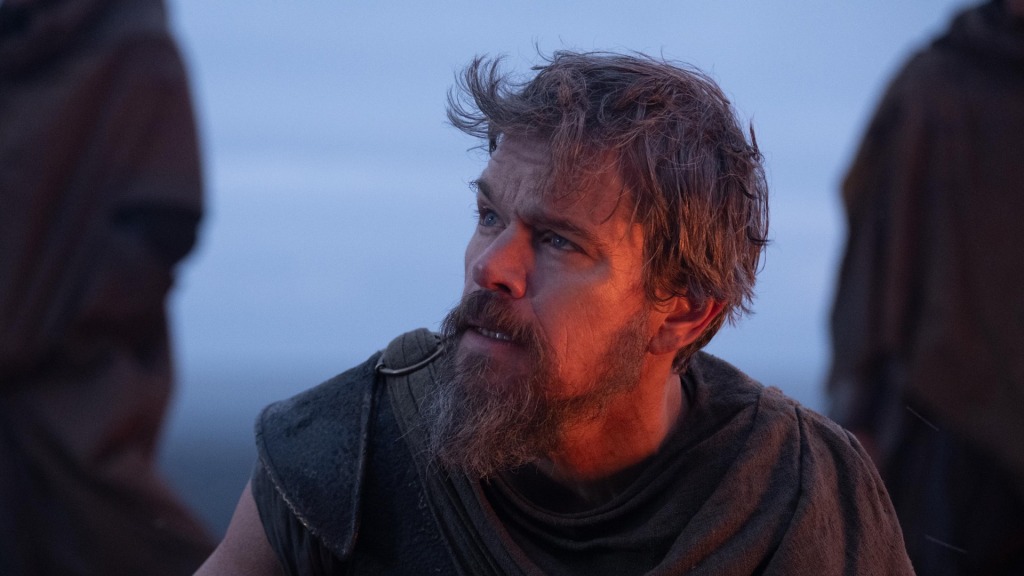
But Nolan’s approach to retelling the epic is also surprisingly intimate, with a fondness for close-ups that capture the drama playing out on the actors’ faces as their world crumbles. Throughout The Odyssey, the camera closes in on Odysseus’ face, making the background a blur and immersing the viewer in the general’s worries and heartache. Although the large-format camera was a challenge, the intensity of that labor never appears onscreen, as the result looks almost weightless in action. Whether the camera is handheld and follows skirmishes right alongside warriors, or floats up above the fray to look out at the neverending horizons where the gods will decide their fate, Nolan and van Hoytema use every inch of their canvas to make the monsters feel imposing and the vistas unending—yet they never lose an actor’s moment of agony, their tearful reaction to loss or fear.
Credit: Source link