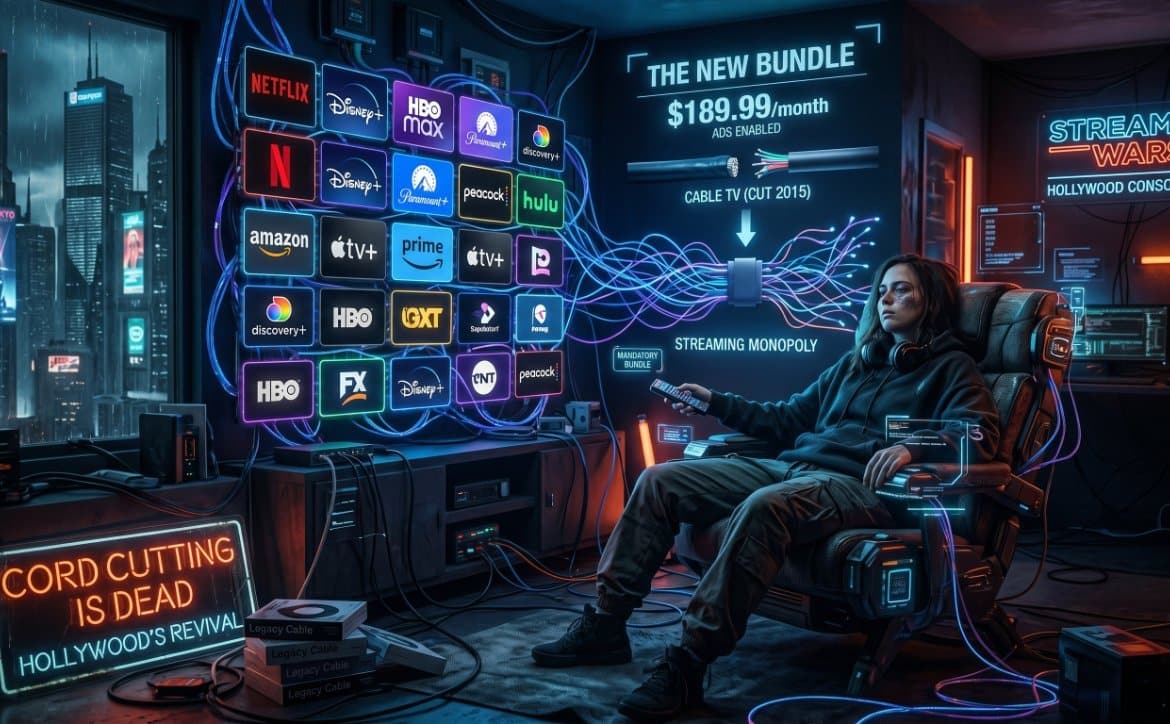
We were promised a revolution. For years, the rallying cry of the tech-savvy consumer was simple: cancel your satellite, burn your cable box, and save a fortune. But if you look at your bank statement lately, you will notice a frustrating reality. The question of why streaming costs more than cable in 2026 is no longer a mystery. It is the result of a calculated, multi-year counterattack by the biggest studios in the world, and they’re cashing in big time.
Estimated reading time: 5 minutes
The dream of cord-cutting was based on a world where Netflix was the only player who mattered. For ten dollars a month, you had everything. However, Hollywood was never going to let the “dumb pipe” companies own the relationship with the audience. By investing in their platforms, purchasing their rivals, and weaponizing their intellectual property, the old-guard studios have effectively killed the revolution. They didn’t just join the streaming war; they rebuilt the cable bundle inside a digital Trojan horse.
Here are the three key ways I believe Hollywood reclaimed its throne and ensured your digital entertainment bill would eventually eclipse your old cable invoice.
Why Streaming Costs More Than Cable
The Great Intellectual Property Reclamation
The first step in Hollywood’s offensive was the end of the licensing era. In the early 2010s, studios viewed Netflix as a convenient place to dump old content for easy cash. Once they realized Netflix was using that content to build a global empire, the studios decided to take their toys and go home.
Disney led the charge by pulling its massive library of Marvel, Star Wars, and Pixar films from other platforms to launch Disney+. Soon, every major studio followed suit. NBCUniversal launched Peacock to house The Office, while Warner Bros. launched HBO Max to reclaim Friends. This shift forced consumers to move from one “super-service” to a fragmented landscape.
If you want to watch the most popular shows today, you no longer pay one low fee. You must pay five or six different tolls to access the specific IP that these studios now guard behind their own digital walls. This fragmentation is a primary driver behind why streaming costs more than cable, as the individual ten-dollar fees (sometimes more) quickly add up to a triple-digit total.

Consolidation and the Death of Competition
To ensure they had enough must-see content to compete, the giants began eating each other. Hollywood realized that a dozen small streaming services could not survive, so they turned to massive acquisitions to consolidate power and intellectual property.
The Disney-Fox merger was the most significant example. It gave one company control over everything from The Simpsons to the X-Men. More recently, the merger of WarnerMedia and Discovery created a behemoth that controls everything from prestige HBO dramas to reality television.
These mergers serve two purposes. First, they reduce the number of options for consumers, which naturally leads to higher prices. Second, they allow these companies to bundle their diverse libraries together, making it nearly impossible for a new, independent service to break into the market. By buying the competition, Hollywood ensured that the streaming industry would look exactly like the studio system of the 1950s.
The Re-Bundling and the Return of the Ad
The final nail in the coffin of cord-cutting is the return of the very thing we tried to escape: the bundle and the commercial break. As the cost of producing prestige television skyrocketed, the studios realized that subscription fees alone would not satisfy the investors on Wall Street.
Now, every major service has introduced an ad-supported tier. If you want the cheap version of Netflix or Disney+, you have to watch commercials. Furthermore, the industry has pivoted back to bundling. You can now buy Disney+, Hulu, and Max as a single package. At a higher cost, of course.
When you add up the costs of these new bundles and the high-speed internet required to run them, the total monthly price often equals or exceeds that of your old cable bill. Hollywood has successfully recreated the cable model, but they have done it without the expensive hardware and with even more data on your viewing habits.
Conclusion
The revolution is over. We aren’t cutting the cord anymore; we are just plugging it into a different outlet. Hollywood didn’t lose the war against the internet. They simply bought the internet and moved their old business model into a new neighborhood. We still pay for five hundred channels we don’t watch, we still sit through commercials, and we still see our bills go up every year. The only difference is that now, we have to remember six different passwords to see it happen. That is the ultimate reason why streaming costs more than cable today.
In some of our articles and especially in our reviews, you will find Amazon or other affiliate links. As Amazon Associates, we earn from qualifying purchases. Any other purchases you make through these links often result in a small amount being earned for the site and/or our writers. Techaeris often covers brand press releases. Doing this does not constitute an endorsement of any product or service by Techaeris. We provide the press release information for our audience to be informed and make their own decision on a purchase or not. Only our reviews are an endorsement or lack thereof. For more information, you can read our full disclaimer.
*Portions of this article were researched and written using AI tools.
Credit: Source link