Today, the 1970s are seen as a golden age for American cinema, with the 95 best ’70s movies of all time epitomizing the kind of creativity and risk-taking that fueled this pivotal era in movie history. Filmmakers like Francis Ford Coppola, Elaine May, Steven Spielberg, Alan J. Pakula, and so many others came into their own in this pivotal decade and changed what movies could accomplish forever. Truly, the ’70s were a glorious time to be both a film geek and filmmaker, with movie theaters playing everything from “The Texas Chain Saw Massacre” to “What’s Up, Doc?” to “The Sting.”
But no decade of American cinema is devoid of box office flops, not even one full of so many seminal works like the 1970s. Even as motion pictures like “The Godfather” and “Star Wars” shattered box office records, there were still major theatrical duds offering up ominous ripple effects for the entire film industry. Five especially notable box office bombs from the ’70s changed Hollywood forever, inflicting wounds on the larger film industry that would be felt for years to come.
Whether it was suggesting a genre had become old hat, inspiring financial difficulties at a studio, or grinding a director’s career to a halt (among many other possible negative outcomes), these five box office bombs turned Hollywood upside down in an otherwise prosperous decade for the industry.
1776
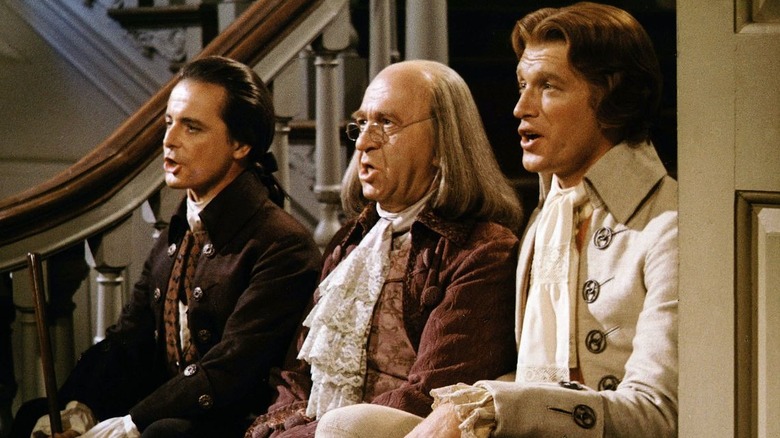
Some of the best musical movies ever were made during the 1960s, a decade when Hollywood went nuts making big musical extravaganzas that could be as potentially lucrative as “Mary Poppins” and especially “The Sound of Music.” Studios loved these titles because they could be shown in touring roadshow screenings that charged audiences hefty ticket prices. Audiences, meanwhile, enjoyed the best of these musicals because they delivered plenty of spectacle. But even before the ’60s were out, several of these musicals bombed. The likes of “Doctor Dolittle” and “Paint Your Wagon” indicated the bloom was off the rose for these projects.
Once the 1970s rolled around, especially in the decade’s first half, the musical was hopelessly passe, as audiences showed up instead for darker titles like “The Exorcist” and “The Godfather.” Some musicals, like “Fiddler on the Roof” and “Cabaret,” could still make money, but most of these titles were automatically flops. That included 1972’s tedious “1776,” in which the Founding Fathers sing a bunch of tunes before signing the Declaration of Independence. The whole groggy enterprise makes “Hamilton” look as edgy as “Avenue Q.”
Grossing only $2.8 million domestically on a $6 million budget, “1776” was a costly reminder to studios that what worked in 1965 was not going to be lucrative in 1972. Further major live-action musicals, save for the occasional “Grease” or “The Wiz,” would be scarce in the years immediately following “1776” flopping.
Sorcerer
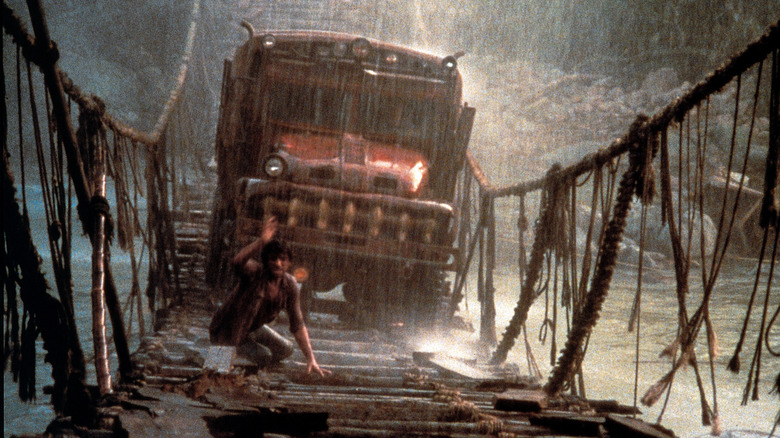
In Peter Biskind’s book “Easy Riders, Raging Bulls,” “Sorcerer” editor Bud Smith recalls seeing the trailer for the film before a screening of “Star Wars.” The towering scale of George Lucas’ space opera absolutely obliterated any sense of anticipation or excitement for “Sorcerer.” Despite the film hailing from director William Friedkin, who helmed early ’70s smash hits like “The French Connection” and “The Exorcist,” Smith’s prediction turned out to be tragically accurate. “Sorcerer” only grossed $9 million worldwide despite costing $22 million to make.
In hindsight, “Sorcerer” has been pinpointed as a key turning point in the American film industry abandoning the bleak and subversive movies that defined the New Hollywood movement. The days of “Bonnie and Clyde” and “The Graduate” defining mainstream American cinema were done. “Star Wars,” “Rocky,” and “Jaws” were now the kinds of triumphant filmmaking that audiences and studios alike craved. Studios like Universal Pictures and Paramount Pictures (which co-financed Friedkin’s film) weren’t interested anymore in throwing tens of millions at grim projects like “Sorcerer.”
The tragedy of these adverse long-term ripple effects is that today, “Sorcerer” is rightfully considered a masterpiece. Film industry titans like Quentin Tarantino have called it one of the best movies ever made. Alas, all that artistry couldn’t prevent studios from seeing “Sorcerer” as a blueprint for what not to make and Friedkin’s career from tumbling after its failure. Bud Smith saw all of this unfolding during the “coming attractions” at that fateful “Star Wars” showing.
At Long Last Love
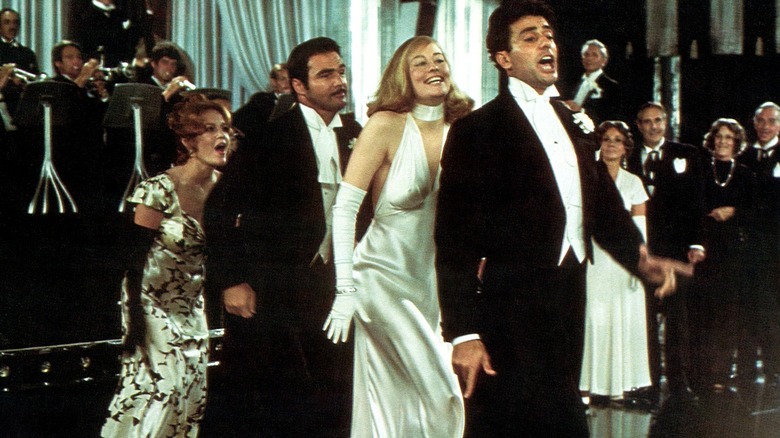
Few had it as good as director Peter Bogdanovich in the first half of the 1970s. His second directorial effort, “The Last Picture Show,” was an acclaimed, critically lauded box office hit. He followed that up with two more well-reviewed crowd-pleasers, “What’s Up, Doc?” and “Paper Moon.” Unfortunately, Bogdanovich’s hot streak came to a grinding halt in the mid-’70s when he helmed the 1975 Burt Reynolds/Cybill Shepherd musical “At Long Last Love,” which only grossed $1.5 million on a $5.1 million budget. Though today it has its defenders, “At Long Last Love” was simply just an infamous bomb at the time of its release.
In the wake of this failure, Bogdanovich officially struggled to get further financing or major gigs in Hollywood. More pressingly, “At Long Last Love” opened three months before “Jaws” turned the entire film industry upside down. Seeing “Jaws” in 1975 was a transformative experience signaling that cutesy romantic throwbacks like “At Long Last Love” had even less of a place in a 1970s cinema scene already prioritizing “The French Connection” over titles evoking “Top Hat.” Beyond falling victim to Hollywood’s newfound love for tentpoles, “At Long Last Love” has also been seen as a major setback moment for Shepherd.
“At Long Last Love” was crafted as a glitzy love letter to Hollywood’s earliest years. Instead, it was a box office dud that capsized Peter Bogdanovich’s career and guaranteed Hollywood studios wouldn’t be making more movies like this in the near future.
Lost Horizon
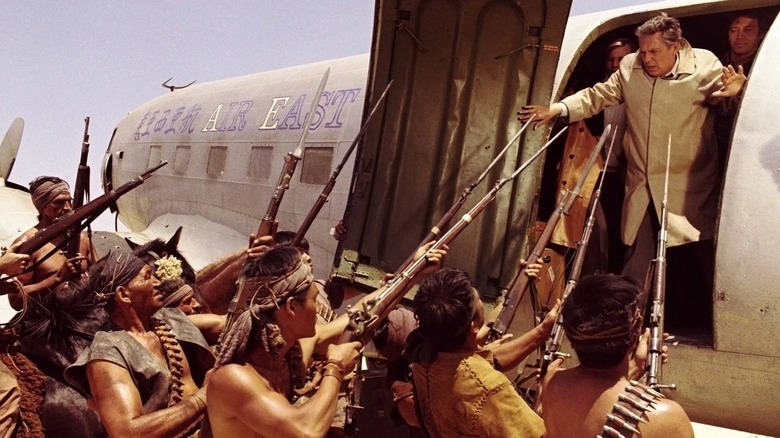
Normally, remakes and their ilk are considered guaranteed moneymakers for Hollywood. That was certainly not the case with “Lost Horizon,” a 1973 update of a 1937 feature of the same name. Though not quite regarded as one of the worst movie remakes of all time in terms of artistry, “Lost Horizon” was still a shocking flop. The feature, which offered plenty of star power in folks like Peter Finch and Liv Ullmann, topped out at only $3.8 million at the box office. Considering its $5.9 million costs, it was a disaster, pure and simple.
The effects of this film’s demise were enormous. For one thing, it marked one of the last hurrahs for major American studios initially releasing musicals through costly roadshow releases. This style of distribution had long been on the wane, but between 1972’s “The Godfather” establishing a precedent for movies dropping in hundreds of theaters right away and the roadshow musical becoming associated with flops like “Lost Horizon,” the roadshow release strategy was dead in the water.
Meanwhile, the film’s immense losses contributed to a dreadful 1973 for Columbia Pictures, which had to weather immense negative press and reorient itself after “Lost Horizon” tanked. Any hopes that this remake could provide easy cash for Columbia proved a nonsensical dream. Instead, this was another ’70s musical flop that struck tremendous sour notes for all involved.
New York, New York
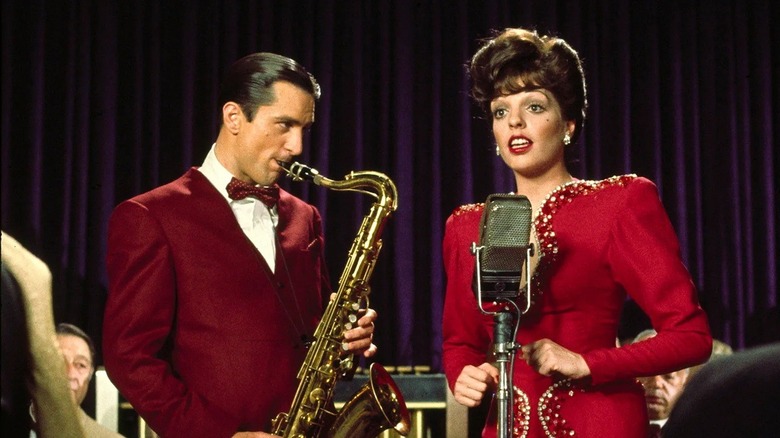
There’s so much greatness packed into Martin Scorsese’s filmography that everyone needs to watch even some of his box office bombs at least once. But although he’s a cinematic genius, sometimes his films just don’t connect with the general public. If a 2011 adaptation of a popular children’s book like “Hugo” struggled to break even, then it shouldn’t be a surprise that Scorsese’s foray into late 70s musical cinema was also a financial non-starter. For 1977’s “New York, New York,” Scorsese tried going Vincente Minnelli or Jacques Demy with a romantic musical starring Robert De Niro and Liza Minnelli.
Unfortunately, the film was as bleak as any other Scorsese movie, which made for an odd match (to say the least) for general audiences. Musical fans wanted something bouncier (even the downbeat “Sweet Charity” had Sammy Davis Jr. belting out a bubbly tune), while “Taxi Driver” die-hards weren’t falling over themselves for this kind of film. Inevitably, “New York, New York” only grossed $14 million, a disappointing haul given its $16 million budget. Not only did “New York” kick off a darker era for Scorsese, but it also cost financier United Artists nearly $10 million.
In hindsight, the movie ominously predicted things to come for United Artists. “New York, New York” was a grim spot in an otherwise lucrative year for the studio, which championed offbeat and artistic works. Three years later, United Artists was sold to MGM.
Credit: Source link