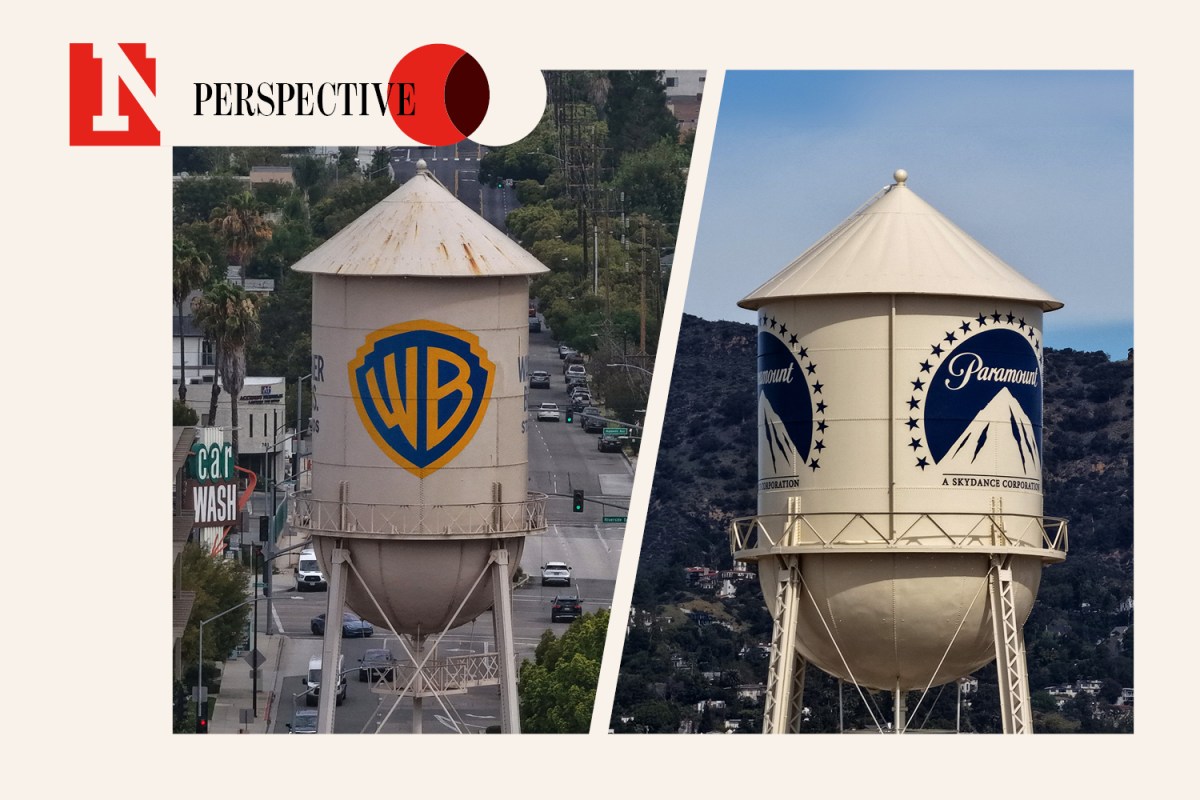
The fight over Paramount Skydance’s planned acquisition of Warner Bros. Discovery is being argued through the familiar language of studio power, but the more important monopoly question may sit outside the old Hollywood map.
The European Commission approved the deal with conditions on July 22, while a federal judge in California temporarily halted the transaction as 12 states pursue an antitrust challenge. That makes the case look, at first, like a fight over theatrical distribution and the shrinking number of legacy studios, which it partly is.
But treating the merger mainly as an old-Hollywood concentration problem risks missing the harder question: whether traditional studios are trying to get big enough to survive a market already dominated by streaming platforms with far greater control over viewers, data, advertising and distribution.
The Theater Fight
The states’ case makes sense. Fewer major buyers can mean fewer places for writers, directors, producers and performers to sell work. Fewer studio owners can mean fewer greenlights, fewer competing release strategies and more leverage over suppliers.
The Writers Guild of America has separately sued to block the deal, saying the proposed merger would violate federal antitrust law and harm writers. Its argument is practical: even if audiences now watch much of their entertainment at home, jobs and creative bargaining power still depend on how many serious buyers are willing to finance film and television projects.
Distribution also determines which films get screens, marketing support and negotiating power with exhibitors. A merged Paramount-Warner could have more leverage over theaters, suppliers and smaller producers. It’s also important to note that antitrust law does not require regulators to ignore harm in one market because bigger pressures exist in another.
Herbert Hovenkamp, an antitrust scholar at the University of Pennsylvania Carey Law School, said that distinction is central to the case.
“The opinion on the temporary restraining order was directed almost exclusively at theater distribution, not streaming,” the expert said to Newsweek. “Streaming is certainly relevant, but merger law follows this rule called the single-market rule, which says you can’t use gains in one market to offset losses in another market.”
Streaming Changed the Monopoly Question
The problem is that theatrical distribution is no longer the main place where Hollywood power is made.
Netflix ended 2025 with more than 325 million paid memberships, $45.2 billion in annual revenue and more than $1.5 billion in ad revenue, according to its shareholder letter. Nielsen said streaming accounted for 46 percent of U.S. television usage in June 2025, while Netflix broke into the top three media distributors by share of TV viewing that month for the first time.
As evidenced by the data, streaming did not merely create another release window but compressed the old sequence of theaters, home entertainment, licensing, cable, syndication and international sales into direct-to-consumer platforms that demand constant spending, global reach, technology infrastructure and advertising scale.
A studio can own valuable franchises and still lack the power that now matters most: the customer relationship, the recommendation engine, the subscription bundle, the ad product and the data loop that tells a platform what to make, promote and renew.
That is why the market definition changes the politics of the merger. If the market is theatrical distribution among legacy studios, Paramount-Warner looks like concentration. If the market is paid viewing time, streaming advertising, global subscribers and the ability to bargain with platforms, the deal looks more like defensive consolidation by companies whose old advantages have eroded.
Hovenkamp said streaming may look more competitive than theatrical distribution because several large platforms are fighting for subscribers.
“Amazon Prime is about the same size as Netflix,” he said. “The five major streamers are all fairly big firms, so we’re looking at a moderately competitive market. They compete with each other and people switch from one to the other. When Netflix raises its price, you can measure the results, that people will drop Netflix and move to Amazon Prime, usually things we measure when we look at competition. So in that sense, it’s a fairly conventional market.”
The DOJ Saw a Different Market Entirely
The Justice Department reached a different conclusion before the states sued. The antitrust division closed its investigation in June, saying it had completed its review and found the proposed merger was not likely to harm competition or American consumers.
That federal clearance does not settle the question, though, as state attorneys general are testing whether the DOJ’s view gave too much weight to streaming-era pressure and too little to the local, labor and studio-level harms that could follow a merger.
A bigger Paramount-Warner could cut overlapping divisions, shrink theatrical output, reduce the number of buyers for scripts and projects, or use its enlarged library to lock more programming behind its own subscription wall. Those outcomes would matter even if Netflix, YouTube, Amazon and Apple remain powerful.
But the survival argument also has a real basis. Legacy studios are no longer competing only against one another. They are competing against companies that can use entertainment to sell subscriptions, devices, retail memberships, cloud services, ads or attention at a scale the old studio model was not built to match.
The Real Test
The key question here is what a larger Paramount and Warner Bros. Discovery would be used to do.
If the merged company makes and releases more films and series than the two companies would have made separately, licenses widely, funds riskier projects and bargains more effectively against dominant platforms, the deal would look less like a traditional monopoly play and more like an attempt to rebuild competition at streaming scale.
If it cuts output, reduces creative buyers, raises prices, narrows theatrical choices and walls off more programming inside another subscription bundle, the states’ warning will look stronger.
That is where the streaming frame sharpens rather than weakens the antitrust case. The merger should not be judged only by the number of major studios left on a chart but by whether it increases or reduces the number of real paths between creators and audiences in the market that now exists.
Is Streaming the Monopoly?
America may be fighting the Hollywood monopoly it can see because the streaming monopoly is harder to fit into older legal categories.
After all, Netflix is not a studio in the classical sense just as YouTube is not a broadcast network and Amazon and Apple can treat entertainment as part of much larger consumer businesses. Their advantage is not just content volume but control over the pipes, devices, marketplaces, data and attention funnels around content.
That certainly does not give legacy studios a free pass to merge but it also brings attention to the fact that blocking old-media consolidation without confronting platform economics could produce a strange result: Hollywood might become less concentrated on paper while becoming less competitive in practice.
Hovenkamp said the states’ choice of market may prove decisive.
“The plaintiffs only have to focus on one market,” he said. “If they win in one market, they win the case. They made the decision that going after the theatrical portion of the market makes more sense than the streaming.”
The courtroom fight may turn on theatrical distribution, but the business pressure driving the deal comes from streaming. If Paramount-Warner is blocked, regulators will still have to explain how smaller legacy studios are supposed to compete against platforms that already set the terms of the market. If the deal proceeds, the merged company will have to prove that scale creates more competition, not fewer jobs, fewer buyers and another tighter subscription gate.
Credit: Source link