
Op-ed: The quippy sci-fi blockbuster was fresh exactly once. Ten years of rinse-and-repeat later, audiences have stopped showing up, even for the serious course corrections, and now even the man who started it has bombed with it.
There are three fresh carcasses on the table this summer, and they tell you everything.
Three Box Office Bombs Tell The Same Story
Masters of the Universe opened to a pathetic $54 million worldwide, cratered roughly 69% in its second weekend to $9.2 million, slid to fifth place, and won’t even hit $125 million worldwide on a movie whose theatrical break-even sits somewhere around $500 million.
The Mandalorian and Grogu, the first Star Wars movie in theaters in seven years, is limping toward the finish line as the lowest-grossing theatrical Star Wars film ever made. Worse than Solo, the previous floor nobody thought would be touched.
Then, over the weekend, the third body hit the slab, and it is the one that should worry DC the most. Gunn’s own Supergirl cratered to a $37 million domestic opening and roughly $62 million worldwide (adjusted lower). That is a smaller debut than Morbius, on a movie that reportedly needs $375 million worldwide just to break even.
The man who built this formula now has his own studio’s fingerprints on a bomb made of it. We will get to that autopsy below, because Supergirl is not a footnote here. It is the entire argument compressed into one weekend.
Some of the most bankable brands in entertainment, plus the second tentpole of the rebooted DC. They all belly-flopped. And if you have been paying attention, none of it is a surprise. They are the bill coming due for a decade of Hollywood doing the same thing to death.

It worked exactly once
Let’s go back to the scene of the crime.
In 2014, James Gunn’s Guardians of the Galaxy was a genuine jolt. A talking raccoon, a walking tree, needle-drop soundtrack, jokes flying in the middle of the space opera. It was goofy, but it was new. Nobody had seen Marvel do that yet. It landed because it was a surprise, and surprises only work once.
Hollywood, being Hollywood, learned exactly the wrong lesson. It didn’t learn “take a swing.” It learned “quip.” And then it ran that play into the ground, in every genre, for ten straight years.
The grim irony?
Gunn himself became one of the worst offenders. He took the same toolkit to DC. The Suicide Squad, Peacemaker, Superman, and now Supergirl, with Man of Tomorrow on deck for next summer.
The man who made the formula feel fresh is now running the rinse-and-repeat machine on the other side of the aisle. And as of this weekend, that DC machine has produced its first outright bomb.

The purest example is a fantasy classic, reduced to a sitcom
If you want the cleanest case study, look at Dungeons & Dragons: Honor Among Thieves.
Here’s an IP built on seriousness, stakes, and epic high fantasy, the same wellspring that gives you The Lord of the Rings, and the studio handed it to comedy directors and turned it into Guardians cosplay.
Endless wisecracks, characters who can’t go ten seconds without undercutting the moment, a tone that announces nobody on screen is taking any of this seriously (sound familiar MOTU fans), so why should you?
The trades shilled hard for it. The critic scores were glowing. And it didn’t matter, because the audience took one look and shrugged. Honor Among Thieves tapped out at $208 million worldwide on a $150 million budget, never sniffing a break-even point that sat closer to $375 million. A financial failure, plain and simple.
That’s the part the cheerleaders never want to sit with: it didn’t fail because audiences saw it and hated it. It failed because they couldn’t be bothered to show up for one more quippy, fantasy, goofy adventure.
Apathy is a far more damning verdict than hatred. People weren’t angry. They were done.

It came home to roost at Marvel itself
The formula didn’t just poison everyone else’s sandbox. It curdled inside Marvel’s own. And it curdled the same way it always does: it worked once, so they ran it into the ground.
Thor: Ragnarok in 2017 ran the exact same playbook. Bright colors, needle-drops, jokes stacked on jokes, a self-aware wink at everything. And it worked. Critics loved it, audiences turned out, and it was hailed for breathing life back into a character who had gone stale. So Marvel did what Marvel does with anything that works. It doubled down.
Thor: Love and Thunder took that same approach and shoved it past the breaking point, drowning one of the MCU’s most reliable characters in screaming goats and gags. It backfired.

Ant-Man and the Wasp: Quantumania was more of the same, and it bombed. A movie that was supposed to launch an entire saga instead launched a reckoning.
Both are widely pointed to as the moment the quip-every-twelve-minutes machine stopped being charming and started being exhausting.
The damage was bad enough that Marvel blew up its own roadmap. The planned Kang saga was scrapped, Avengers: The Kang Dynasty was gone, and in its place came Avengers: Doomsday and Secret Wars, built around luring Robert Downey Jr. back to the MCU, this time as Doctor Doom.
When your emergency fix is re-hiring the guy who already saved you once, that tells you exactly how deep the panic runs.
But the reset came with a catch. And it’s the most damning part of the whole story.

Even the course correction is bombing
Feige played it safe. He dialed the goofiness down and leaned serious, and the audience still didn’t come back.
Captain America: Brave New World staggered to roughly $415 million worldwide against a budget reported at $180 million but likely far north of $250 million after reshoots. Short of its break-even, a money-loser, and saddled with the worst CinemaScore in MCU history.
Thunderbolts, positioned as the “first and best” of Marvel’s new, grounded approach, cratered to about $382 million and is reported to have lost the studio around $100 million, landing it among the lowest-grossing entries in the entire franchise.
The Fantastic Four: First Steps was the lone bright spot, and even that’s a relative term: it barely staggered past its break-even and finished as the MCU’s best earner of 2025, but well below the $800 million Marvel was reportedly hoping for.
Sit with what that means. The goofy stuff bombed. Then the serious stuff that was supposed to fix it underperformed too.
That tells you the disease was never just the tone. It’s that the tone burned through years of audience goodwill, and now even the medicine tastes like the poison.
And the exclamation point: 2025 was the first year since 2008 that a DC movie outgrossed every single Marvel movie. Gunn’s Superman topped the entire MCU slate. That should have been the moment DC planted a flag and never looked back. Instead, hold that thought, because what happened next inside Gunn’s own house is the real tell.
And now the formula has bombed in Gunn’s own house
Which brings us to the body that should worry DC the most, because this one is entirely self-inflicted.
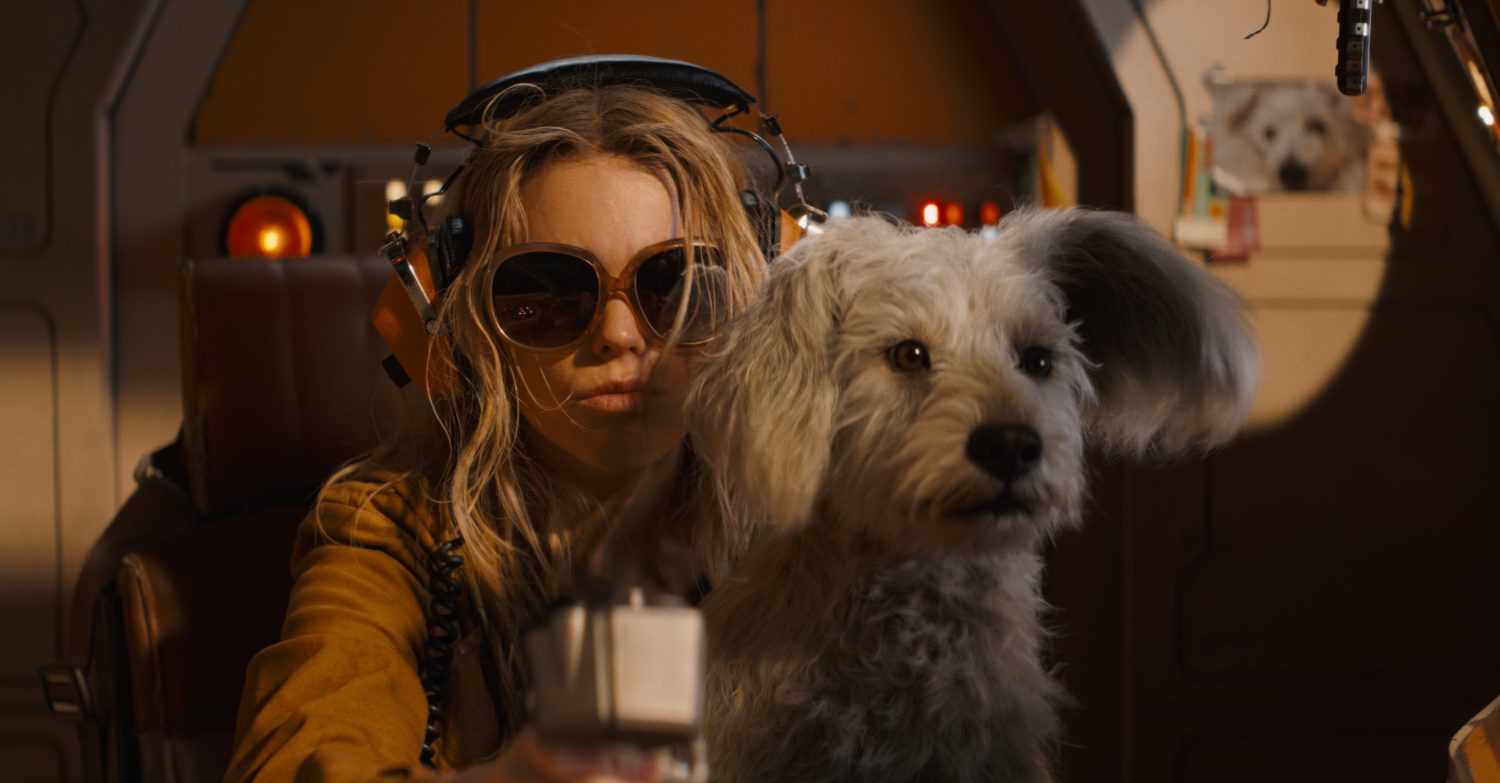
Over the weekend, the second film in Gunn and Peter Safran’s rebooted DC opened to $37 million domestically and roughly $62 million worldwide.
For perspective, that is a smaller debut than Morbius. It pulled a grand total of $250,000 out of China. And it reportedly needs to clear $375 million worldwide just to break even on a $170 million production budget, before a dime of marketing. It’s also smaller than The Marvels, The Flash, and even Birds of Prey when adjusted for inflation.
Safran’s statement afterward was the kind of line studios keep pre-written for exactly these Mondays. The film, he said, “didn’t meet our box office expectations,” but remains “one component of a broader, long-term strategy” the studio is “confident in.” The grosses are not confident.
Here is the part that should make the Warner lot wince. Supergirl: Woman of Tomorrow began as one of the most serious, brutal, melancholy books in modern comics, a Tom King revenge story with genuine weight.
The studio took that and, in Deadline‘s own words, turned it into “True Grit set in a Guardians of the Galaxy outer-space.” Needle-drop soundtrack. A wisecracking Lobo dropped in for comic relief. An attitude lifted wholesale from a movie that came out in 2014. The serious source material got run through the quip machine on the way to the screen. The director confirmed they went through 45 songs before Gunn landed the one they chose.
But the audience said no. Not in anger. In apathy, which, as noted up top, is the more damning verdict of the two.
The loudest complaint out of early screenings, per Deadline, was that fans had zero patience left for the Guardians and Mad Max homages. Been there, done that, do not do that again.
Variety ran its review under the headline “So Flat It’s Super-Horrendous,” and called the film generic. And the B-minus CinemaScore, a full grade below the A-minus Superman pulled a year earlier, says the opening-night crowd that did show up walked out lukewarm. And those are the hardcore fanboys who usually like everything.
The detail that should terrify DC is this. Gunn did not even direct this one. He handed it to Craig Gillespie, publicly praised the screenplay, and let the machine do what the machine does. The formula is now so baked into the studio that it infects the films Gunn never touches.
And here is what the cheerleaders keep getting wrong about the entire DC story. Superman was never the sincere alternative to any of this. Superman was the same formula. It had the needle-drops. It had the quips. And it had Krypto, the exact same find-the-cute-thing-and-sell-the-plush instinct that gave us Baby Groot and Grogu. Fans didn’t turn out for Superman because Gunn finally got serious. They turned out on hope and curiosity, willing to give him the benefit of the doubt on a fresh DC start.
Then they started walking, and you could watch it happen in real time.
Peacemaker Season 2, which Gunn explicitly billed as a direct sequel to Superman, shed nearly 40% of its viewers from premiere to finale, never charted on Nielsen, and got quietly canceled with no Season 3. The crowd that showed up for the movie would not stay for the show. Superman itself, even while topping Marvel, was quietly coming in under its own break-even. And then fans didn’t turn up for Supergirl and its Krypto either. Gunn lost 70% of the DC audience.
That is the whole case, and it is not a story about tone. The formula never changed between Superman and Supergirl. Krypto was in both. The needle-drops were in both. What changed is that the audience finally ran out of patience for it, and once that patience is gone, it does not come back on command, not even for the man who invented the formula in the first place.
The formula didn’t change. The audience’s patience did.
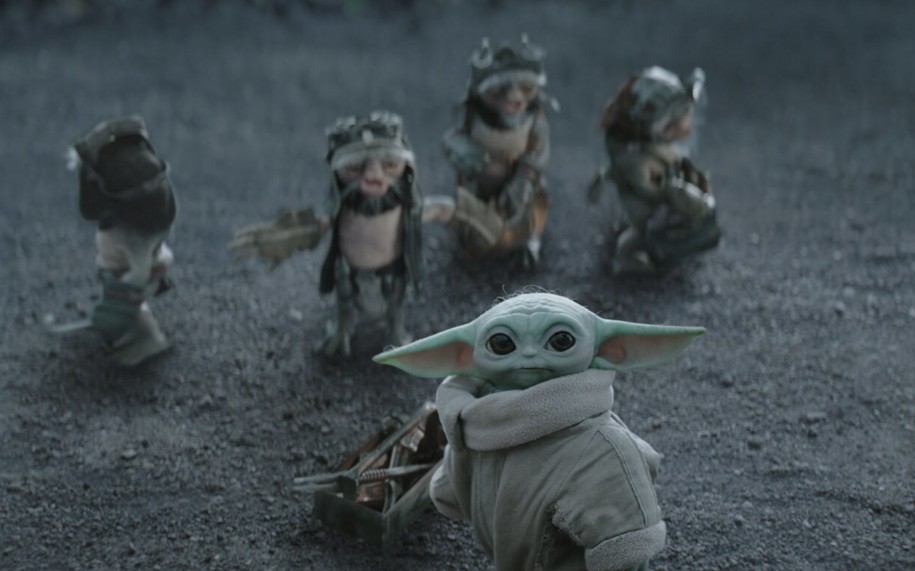
Grogu was milked dry before the movie ever rolled
Which brings us back to Baby Yoda.
The Mandalorian and Grogu didn’t fail in a vacuum. It’s the back half of a decline that started on the show.
The series fans adored in 2019 had already worn out its welcome by a wandering, weightless Season 3, and the cultural air had gone out of the room long before anyone bought a movie ticket.
Grogu is the same instinct that gave us Baby Groot: find the cute thing, merchandise it, and squeeze until there’s nothing left.
It’s an idea that should’ve been retired years ago, kept on life support purely because the plush toys sell. The box office bomb wasn’t the shock. It was the autopsy.

The point
This isn’t a plea for everything to be grimdark. Goofy can work. Guardians worked. The problem was never the joke. The problem is that Hollywood found one thing that worked, then strip-mined it across every franchise it owns until the audience stopped feeling anything at all.
The quip was the accelerant. It torched a decade of goodwill, and now the receipts are coming in.
Supergirl bombing in Gunn’s own house. Masters of the Universe. Mandalorian & Grogu. A Marvel slate in the red. A fantasy classic turned into a punchline that nobody paid to see.
Fans are tired of it. They’ve been saying so for a while. The difference now is that the box office is finally saying it for them.
Credit: Source link