Opinion: If one thing has become abundantly clear in recent years, it’s that Hollywood favours the familiar: You blink – they reboot.
But as showbiz’ Big Five studios churn out a continued slew of repurposed films to the masses, there exists one glaring problem for the industry at large.
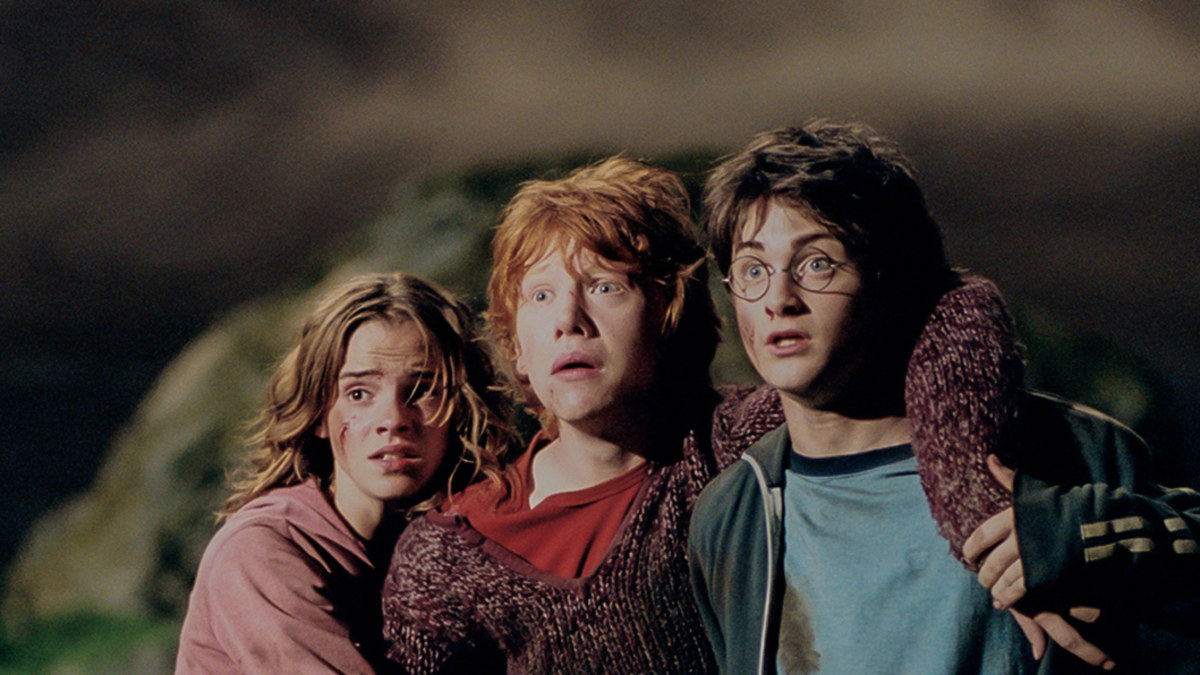
Actor, Emma Watson (L) Rupert Grint (M) and Daniel Radcliffe (R)were the original stars of Harry Potter, which is about to get a TV reboot. Getty
From Harry Potter to 13 Going on 30; the endless reducing, reusing and recycling of Intellectual Property has pigeonholed Hollywood within a ‘nostalgia trap’ of its own making – and there are fears a reboot reckoning will soon be afoot.
Today, a troubling phenomenon is unfolding across film and television; seen time and time again through systemic – and dare I say, tiresome – attempts at repeating the past.
According to Senior Media and Film Culture lecturer at Deakin University Dr Sian Mitchell, it’s quickly become a vicious cycle.
The rapid growth of streaming and franchise culture in lieu of physical media has birthed a cinema landscape where quick, copy-paste concepts are the surest form of currency there is.
“[It’s] very much a cookie-cutter conveyor belt of blockbuster filmmaking that is quite samey,” Mitchell said.
And from within this new ecosystem dominated by known IP, the so-called ‘nostalgia trap’ is rearing its ugly head.
Treating memory as commodity
According to a study from the University of Southampton, nostalgia in excess can “trap” individuals in a comparison loop, making the present appear inadequate.
Tinseltown has long shown a tendency to treat memory as commodity in this way, cashing in on audiences’ emotional tethers through the same format time and time again.
And admittedly, I’m far from immune to their tactics.
I watched with great enthusiasm as one of the best pieces of media to come out of the 21st century (The Last of Us, obviously) was adapted to near-perfection from console to silver screen.

Top Gun: Maverick, starring Tom Cruise, picked up seven Oscar nominations. AP
I rejoiced at the news that Pete ‘Maverick’ Mitchell would be making his grand Top Gun return, years on from my ex-Navy dad first educating me on that particular brand of American propaganda.
And yes, alright, guilty – I could not sprint to the cinema fast enough to watch The Devil Wears Prada 2, despite the film overall falling just short of total pointlessness.
Like many sequels to come before, it largely relied on recycled star power from its core charismatic quartet to do all the heavy lifting – and lure suckers like myself to the cinema in the process.
Nonetheless, I absolutely ate it up – and therein lies the problem.

The Devil Wears Prada made a comeback earlier this year. 20TH CENTURY STUDIOS
The part we all play
I’ll be the first to recognise that as a consumer, I’ve had a hand in the continued prevalence of reboot culture – after all: if audiences didn’t respond well, reboots would be rendered obsolete.
But as it stands, films utilising existing Intellectual Property continue to thrive in the box office.
Of the top 66 movies to earn at least $100 million domestically in the last three years, 47 (71 per cent) were a part of an established franchise, per industry analyst Entertainment Strategy Guy.
In short, this regressive wave of nostalgia has quickly been consumed by corporate interests – to the detriment of all involved.

Is it time for the reboot to get the boot? Getty
It manipulatively says: “Remember this thing you liked all those years ago? Remember how it made you feel? Remember how much simpler life seemed?”
It urges us to buy into this newer, shinier version, and re-live the joy of days gone by.
It’s all well and good to revive an iconic adaptation like Harry Potter for the sake of expanding upon unexplored plot points; but where do we draw the line?
It’s safe to say that as a child, I never quite envisaged being the throes of my mid-twenties, watching a franchise I still remember seeing in cinemas reimagined in real time.
And at the rate we’re going, it’ll likely receive the reboot treatment at least thrice by the time I finally bite it.

The new Harry Potter TV series will be coming out later this year. Getty
Alas, our rose-coloured recollection and attachment to past media has the unfortunate side effect of hindering both present enjoyment and future progress.
According to senior Media and Film Culture lecturer at Deakin University Dr Sian Mitchell, without innovation there emerges a formulaic, repetitive cycle – which ultimately has no shelf life.
“I think we’re running the risk of just homogenising storytelling, and it’s the same people who get the opportunities as well, and they’re going to tell the same stories over and over again,” Dr Mitchell told nine.com.au.
“What’s going to happen is that we won’t get these original, innovative stories and perspectives and authentic kinds of narratives being made.”

Dr Sian Mitchell Deakin University Supplied
But unfortunately, it’s easy to see why Hollywood has chosen this dead-end path.
The appeal of this approach for Hollywood’s ‘Big Five’
A built-in fanbase and mass brand recognition are undeniably major drawing cards – and reboots, remakes, and sequels are certified shoe-ins for a smash hit.
Deemed notably low-risk financially – and highly marketable off the back of brand familiarity – they’re a no-brainer.
But according to Dr Mitchell, this disregard for artistic integrity will spell the end of innovation and, inevitably, the end of true storytelling.

’13 Going On 30′ is a nostalgic treat. nna\ella.rayment-ward
“The Hollywood studios are completely risk-averse, and they’re getting worse, I think. We’re just not seeing that kind of original artistry in film as we used to.”
She added that this issue is further compounded by the rise of streaming culture, and the gradual shortening of theatrical releases.
“There used to be a longer window for films before they went to a streaming service or a pay per view service – so it was easier to make bigger deals outside of those streaming services first.”
Within this framework, smaller, independent or art-house films could negotiate distribution; ultimately resulting in increased visibility and box office success.
“Whereas now, [some streaming services] do their own negotiations with distributors outside of that model,” Dr Mitchell says.
“That’s partly impacted how much space there is in a cinema, and how much money [they] can make out of a big tentpole blockbuster versus something smaller.
“They’ll go for the blockbuster always, because they need to make their money back.”
This risk-averse mindset has the unfortunate consequence of leaving original content in the lurch, struggling to be green lit or lock in promotional funding without a connection to past success stories to help it along.
Speaking at CinemaCon in promotion of upcoming original feature Disclosure Day, director Steven Spielberg provided insight to this effect.
While discussing how to best preserve cinema as an art form, Spielberg stressed the importance of more studios taking the plunge to invest in original concepts like Disclosure Day in lieu of reboots, sequels or spinoffs.
“If all we make is known, branded IP, we’re going to run out of gas,” he stated.
“There is nothing more important than giving the audience visual stories, and they can be in any form, but we need to tell more original stories.”

Steven Spielberg said, “If all we make is known, branded IP, we’re going to run out of gas.” WireImage
A growing need for the new
Film and TV, in many ways, serve as a cultural snapshot.
For Baby Boomers, we saw the era of ‘New Hollywood’ that emerged between 1950-1970; defined by gritty realism, anti-establishment rebellion and a certain youthful disillusionment that mirrored the political activism of that period.
But what do younger generations have that’s as uniquely reflective of their identity? What media defines their formative years? What narratives speak to their time?
This particular form of time capsule is what we stand to lose should the industry continue down the path it’s currently on.
But from a slew of sequels and remakes, there has emerged a glimmer of hope in the form of notable outliers – and the audience response to these projects is telling.

Sinners has scooped a record-breaking 16 Academy Award nominations. AP
“You look at something like Sinners, which did incredibly well in the box office, or Weapons last year, and these are unique, different stories,” Dr Mitchell says.
“I think [these films] show that there’s an audience out there who would love to see something different getting put on theatrical screens or on streaming services.”
Ultimately, the pattern appears clear: We’re collectively starved for original content – and are responding accordingly when such content is released.
But the reboot reckoning that will spell disaster for Hollywood, according to Dr Mitchell, will come when mounting audience fatigue finally peaks – and this could be sooner than we think.
Owing to its cyclical nature, the industry itself is on the verge of a reboot of its very own.

The future of Hollywood could be bleak, if it keeps doing the same thing. Getty
“These things go in cycles, [and] the audience will end up just being really bored and gravitating towards things like Sinners or Weapons that offer something different.
But Dr Mitchell says this presents an opportunity for studios to take the leap, and get on board with new writers, creators and IP.
“Hopefully, if studios are paying attention to the bottom line, that will then signal to them that oh, maybe they need to do something different as well.”
And when considering solutions, it may come down to the way in which we use nostalgia – as opposed to abusing it.
Where do we go from here?
When considering how best to mine past triumphs without sacrificing innovation, the industry at large must take note of specific formats that have seen success, in lieu of reducing, reusing or recycling IP that has long since done its dash.
From this springboard, Hollywood’s fixation on nostalgia may be best utilised to supplement storytelling – not to replace it.
Historically, this method has seen great success through the likes of Netflix’s Stranger Things; an original story bursting with so much 80’s appeal that it captured the hearts of both younger and older viewers in one fell swoop.
To create works of art that evoke fond memories of a bygone era, without cheapening the products of that time, is the key.
When asked about the recommended approach to best preserve original storytelling, Dr Mitchell’s response was simple: Diversification.
She cited an annual report by USC Annenberg’s Inclusion Initiative Inclusion in the Director’s Chair, which showed that the industry, perhaps predictably, “leans white and male.”
But despite this particular demographic outnumbering diverse voices, the 2025 report found that women of colour in particular were behind films that saw the most critical acclaim.
“Out of all of that, they were making the ones that were doing really well and were really successful, even though they were a smaller proportion.” Dr Mitchell says.
“In short, diversify the people you’re attaching to films and the people who are telling the stories,” she advises, noting that there are countless “untapped audiences” waiting for original content they can relate to amongst a stream of repurposed stories.
“I get really bored with films that are always just a guy being an action hero. Sometimes they’re really fun and they’re escapist, and that’s great.
“But it’s like, where am I seeing people like me?”
At the end of the day, the plain reality (that Hollywood would do well to remember) is that we can never reclaim what once was – we can only hope to create more worth remembering.
Credit: Source link