Hollywood hasn’t seen a deal this big in a very long time.
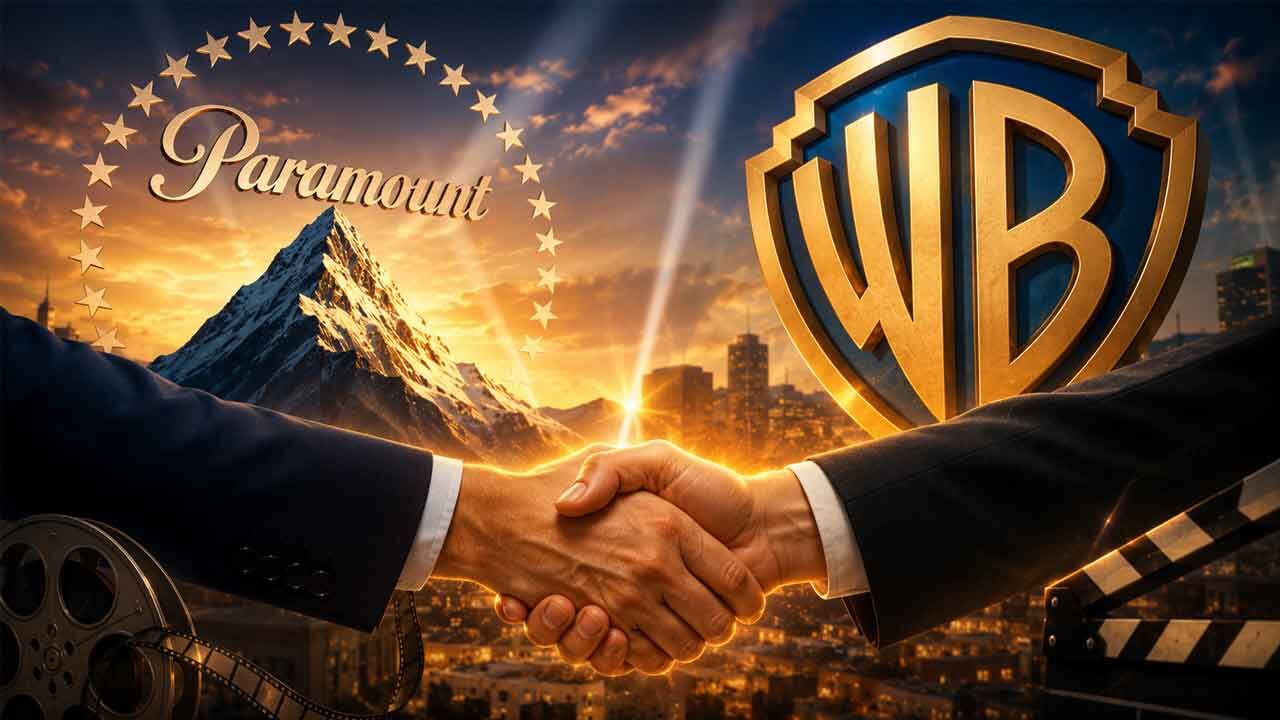
On Friday, the US Department of Justice gave the green light to one of the most consequential media mergers in history — clearing the way for Paramount Skydance to take over Warner Bros. Discovery in a deal worth around $110 billion. For the entertainment industry, this changes almost everything.
What the DOJ Said
After an eight-month deep dive into the deal, federal antitrust officials concluded that the merger would not hurt consumers or damage competition in the streaming, television, or film markets.
The deal was approved without any conditions, meaning Paramount will not be forced to sell off any assets. The DOJ said that based on evidence from its investigation, it concluded the merger “is not likely to result in harm to competition or American consumers,” including in streaming, linear television, and theatrical film distribution.
That’s a clean pass — no strings attached.
What’s Actually Being Merged
This is not just two companies coming together. This is a collision of some of the most recognizable names in entertainment. On Paramount’s side: CBS, Paramount Pictures, and the Paramount+ streaming service. On Warner’s side: CNN, HBO, HBO Max, the Warner Bros. film studio, and Discovery’s sprawling network of channels.
Together, the combined company will deliver a portfolio that includes blockbuster franchises such as Game of Thrones, Mission Impossible, Harry Potter, Top Gun, the DC Universe, and SpongeBob SquarePants.
Put simply — if it’s on a screen and you love it, there’s a good chance one of these two companies made it.
The Streaming Question
The DOJ’s biggest area of scrutiny was the streaming market, where the fight for subscribers and advertising dollars is getting more brutal by the year. Could a merged Paramount-Warner threaten the likes of Netflix and Amazon?
The department said no — in fact, the opposite. The combined platform would still be smaller than the biggest players, and might actually give consumers a stronger alternative to the giants currently dominating the space.
David Ellison’s Vision
Paramount Chairman and CEO David Ellison said: “From the very beginning, our pursuit of Warner Bros. Discovery has been guided by a clear purpose — to honor the legacy of two iconic companies while accelerating our vision of building a next-generation media and entertainment company.”
Warner Bros. Discovery CEO David Zaslav added: “Our guiding principle throughout this process has been to secure a transaction that maximizes the value of our iconic assets and our century-old studio while delivering as much certainty as possible for our investors.”
Both men framed this as a deal built for the streaming era — not just a corporate reshuffling.
Not Everyone Is Celebrating
The DOJ’s blessing doesn’t mean the road ahead is smooth.
Massachusetts Senator Elizabeth Warren blasted the approval, saying: “This is terrible news for every American who doesn’t want Trump-aligned billionaires to control what they watch and how much they pay. The Paramount-Warner Bros. deal has reeked of corruption and influence-peddling. This fight isn’t over.”
California Attorney General Rob Bonta also made clear his office hasn’t stepped back, posting: “The merger of Warner Bros and Paramount is not a done deal and remains under investigation by my office.”
Paramount still faces the threat of litigation from state attorneys general who may move forward with legal challenges to block the merger on antitrust grounds.
What’s Still Pending
The DOJ approval is huge, but it isn’t the final word globally.
Paramount is still awaiting regulatory approval from European officials. The European Union’s regulator began reviewing the proposed deal this week and set a July 14 deadline for its decision.
Australia’s competition regulator had already cleared the deal, concluding the merger is unlikely to substantially lessen competition in the theatrical film market.
Paramount CEO David Ellison has told investors that the merger is on track to be completed by September — after which a “ticking fee” kicks in, making the deal progressively more expensive. That clock is very much ticking.
Why This Moment Matters
The entertainment industry has been under pressure for years. Streaming giants like Netflix and Amazon have poured billions into content. Traditional studios have struggled to keep up. Mergers like this one are the industry’s answer — get bigger, get stronger, or get left behind.
Paramount summed it up in its statement: “This deal is pro-competitive, resulting in a stronger company better positioned to compete against dominant technology platforms in an industry increasingly defined by intense competition for audiences, talent, technology and investment.”
Whether that plays out the way the executives promise — or whether the critics turn out to be right — is a story that will unfold over the next several years. For now, one of Hollywood’s most watched deals just cleared its biggest hurdle.
Credit: Source link