
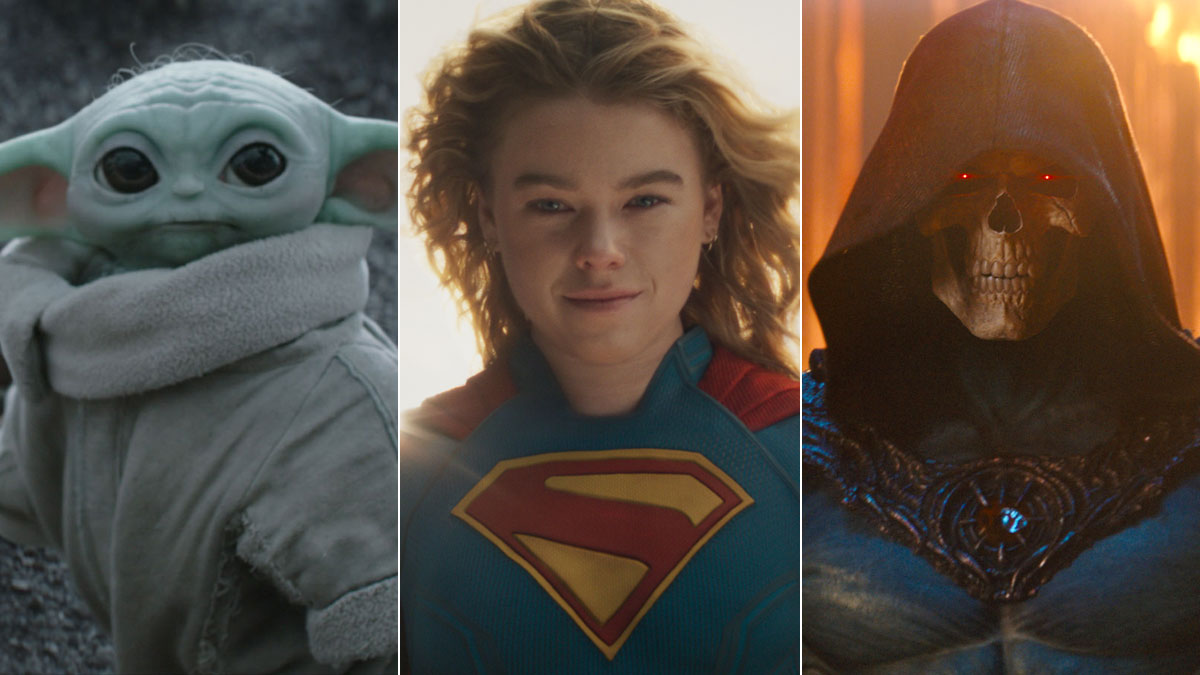
One of the least successful parts of DC Studios’ box office flop Supergirl comes down to a costume change: At one point, Kara Zor-El (Milly Alcock) trades in her jeans and Blondie T-shirt for the classic ensemble the character wears in the comics, which comes off as a corporate-driven mandate to see Kara in that cape and skirt for the sake of selling action figures. It was a choice that undercut the character’s hot mess energy in favor of conformity to the character’s history — a history which clearly did not excite fans en masse.
It’s been a rough year at the box office for a number of movies based on pre-existing intellectual property. The Mandalorian and Grogu, despite Star Wars once being a multigenerational slam dunk, underperformed. Masters of the Universe, based on the beloved ’80s toys/animated series, was a flat-out flop. Supergirl, despite the launching pad of last year’s Superman (one of the highest-grossing titles from 2025), failed to win the weekend, and stands to lose $100 million for Warner Bros.
Looking at the box office standings for the past few years, a few trends emerge: Kids fare remain one of Hollywood’s safest bets, no matter the quality — but once the filmgoer in question is over the age of 12, quality starts to matter a whole lot more.
Related Video
One thing all three of this year’s underperformers have in common is a lack of critical support: Technically, Masters of the Universe and Mandalorian and Grogu managed to stay on the “fresh” side of Rotten Tomatoes’ binary score, but only with 67% and 61% scores respectively — the cutoff between fresh and rotten is 60%, which Supergirl slid under with 54%. Metacritic wasn’t any kinder: Grogu got a 53, Masters a 52, and Supergirl a 49.
Those are scores that speak to a lack of enthusiasm on the part of critics, which then fed into the audience reaction. Meanwhile, more critically acclaimed films like Project Hail Mary (94% on Rotten Tomates) and Steven Spielberg’s Disclosure Day (80% on Rotten Tomatoes) have been successful box office performers. (This doesn’t explain every big success of the year, though in the case of Michael, its 38% on Rotten Tomatoes was never going to stop it from delighting Michael Jackson fans who don’t want to think about those pesky allegations.)
Theatrically released films have huge amounts of competition for attention, considering the rise of TV, streaming, video games, YouTube, and other distractions. These days, a “habitual” moviegoer, as defined by the National Research Group in a Cinema United study, sees only six movies a year in theaters. That doesn’t feel like a lot (especially if you’re a parent, and anything with Super Mario or Toy Story in the title will be a priority), and certainly doesn’t leave moviegoers itching to take a risk on something that may not be for them.
“For them” matters a lot, because the titles that succeed in connecting with people, obviously, benefit hugely on a financial level. Supergirl, for example, didn’t successfully court the young women that showed up for projects like Wicked; 41% of the Supergirl opening weekend audience was female. By contrast, 52% of the audience for 2017’s Wonder Woman was female, propelling that movie’s financial success. The aspect of Supergirl that might have been seen as most appealing — the cosmic adventure element that draws a lot of comparisons to Guardians of the Galaxy — doesn’t feel that fresh anymore… after three pre-existing Guardians adventures.
And what the surprise hits of 2026 have been able to offer is freshness — stories not just targeted directly at those under 25, but stories that draw upon popular Internet phenomena or generational anxiety (with a Simpsons remix). And wouldn’t you know it, but they’re both critical darlings: Backrooms has received 87% on Rotten Tomatoes, and Obsession currently scores a 94%.
Earlier this century, there was a slow transition from films being sold on the star power of a single person, like Julia Roberts or George Clooney, to franchises like the MCU becoming the real movie stars. Now, the “movie star” can be a critically acclaimed book adaptation, or an auteur’s take on Greek mythology. Christopher Nolan’s The Odyssey is well-positioned to be one of the year’s biggest hits; Universal isn’t even bothering with “influencer” screenings — relying on the pre-release hype to drive what will certainly be a huge weekend at the box office. The critical reaction will have to be truly catastrophic to keep it from eclipsing the live-action remake of Moana, another safe bet for Disney that doesn’t need to please critics, just kids.
At the crux of 2026’s box office ups and downs is the emergence of a more discerning audience, as well as a whole new conception of what “IP” means, because a brand name on its own may not be strong enough to sell those old enough to pay attention to reviews on paying for tickets. Supergirl shoving Kara into that uniform didn’t matter to viewers. All that work to sell figurines, and now nobody will buy them.
Credit: Source link