
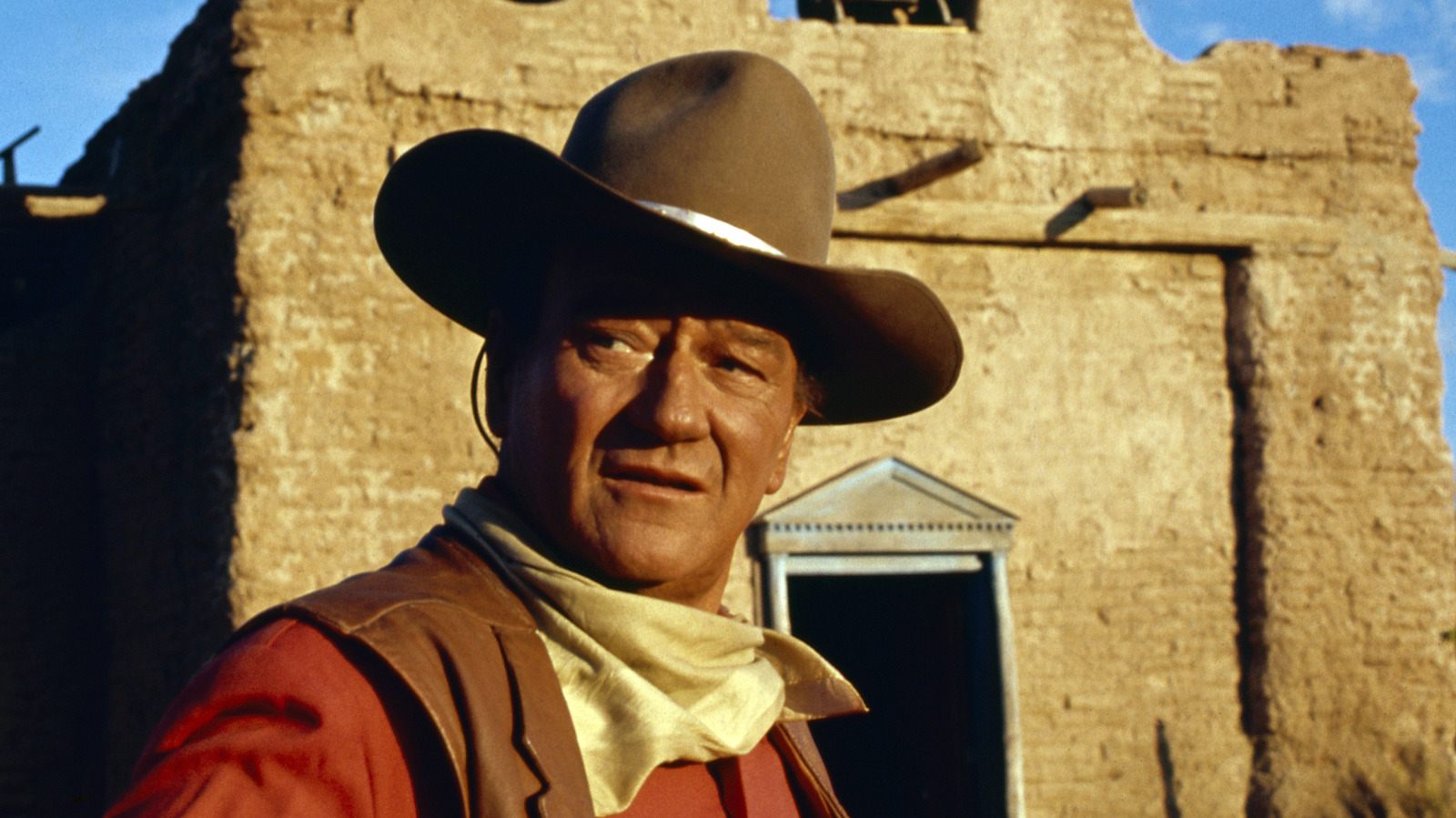
Celebrities are known for having cherished dining spots — from Giada de Laurentiis’ Italian family go-to in Rome, to Frank Sinatra’s Las Vegas steak house. While most of these tend to be in jet-set favored cities, legendary Hollywood actor John Wayne liked a spot in a rather different setting: the Moqui Cave deep in the red-rock country of southern Utah.
In Kanab, which became known as “Little Hollywood” due to its history as a setting for Westerns, you can find the sandstone Moqui Cave, once a shelter for Indigenous people in the region that was turned into a bar in the middle of the century, and became the unlikely hangout spot for Wayne and another whole motley crew of A-list actors.
The cave, located just six miles north of Kanab, was turned into a dance hall and bar by Garth and Lara Chamberlain in 1951. Entering it was like stepping into a real-life Western movie: With a distinctive decor replete with handcrafted wooden furniture, an agate bar counter, and live music on Friday and Saturday nights, it offered all the ambiance you would expect from an intimate hangout deep in the Red Rock Country. Wayne, one of the most popular actors in Hollywood history, shot seven movies in the region, and would regularly kick back after work — indeed, the “alcoholic beverages” served in Westerns were usually iced tea or colored water — with a drink or two over at Moqui. Its location also made it a refreshing retreat for the sweltering desert days, with indoor temperatures lingering around 65 degrees Fahrenheit all year. That’s quite the relief when summer temperatures are regularly in the 90s.
Moqui Cave is a relic of both Indigenous and Hollywood history
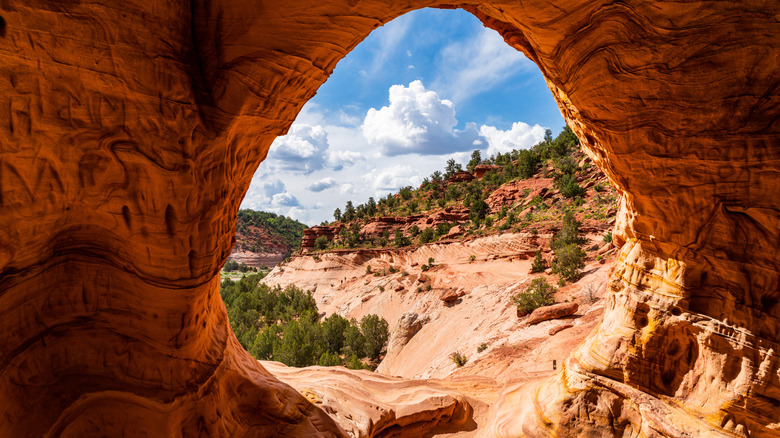
Prior to becoming a hub for “Little Hollywood” royalty, Moqui Cave had a long history tied to the territory’s past. The Indigenous people of the area used to come to the cave for shelter and food storage. The Cave’s ties to booze also predate its discovery by the film industry — in the early part of the twentieth century, it was a Prohibition-era speakeasy.
By the 1920s, the region had become a Hollywood production company darling, favored for its dramatic cliffs, canyons, and bright colors — the perfect setting for the Western genre, which exploded in popularity in the mid-twentieth century. As Kanab hosted the glitterati from tinsel town, Wayne was not the only actor to regularly visit Moqui — Clint Eastwood, Clark Gable, James Caan, Jack Palance, and Robert Mitchum were among the others.
The bar at Moqui Cave eventually closed in the mid-1970s, but visitors can still get a taste of its heyday by heading to the museum that exists in its place. Filled with both remnants from its Indigenous past — including 1,000 arrowheads — and memorabilia and signed pictures, Moqui Cave is more than just an eccentric roadside stop (and when visiting Utah, we also recommend another freeway exit spot for delicious barbecue). It acts as a very unique type of fossil: both of a long Indigenous history, and a more recent stint as a hub of the golden days of Hollywood.
Credit: Source link