Sign up for the Slatest to get the most insightful analysis, criticism, and advice out there, delivered to your inbox daily.
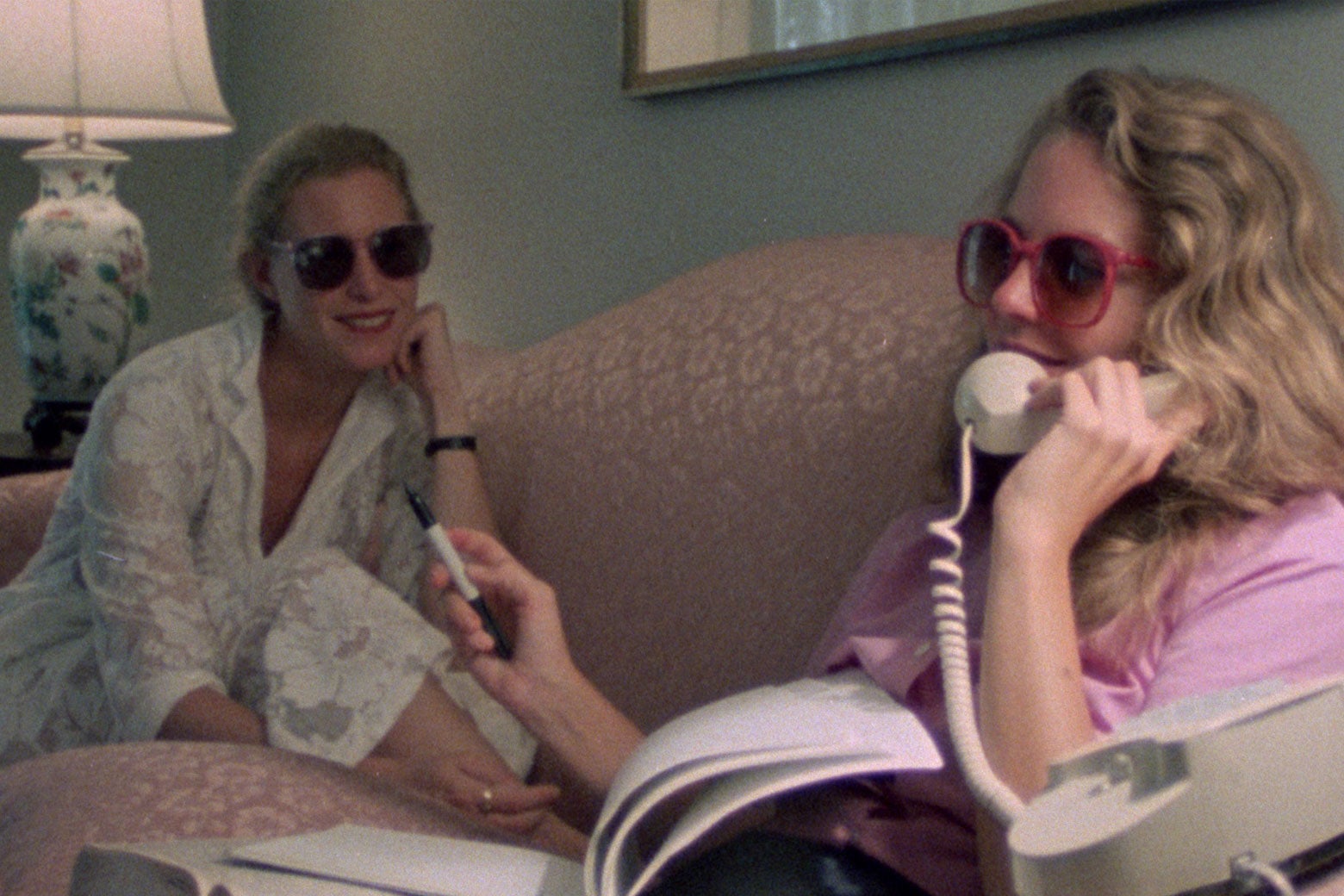
In the mid-1980s, the filmmaker Ross McElwee set out to make a documentary about Gen. William Sherman’s march through the South. But then his girlfriend dumped him. Waylaid by his own romantic travails, McElwee wound up shooting Sherman’s March, a comic tour of Dixie in which the hapless director, hauling his own camera like a cross, delves into his infatuation with Southern women in all their glory. Sherman’s March won Sundance in 1987 and launched McElwee’s career as one of film’s most distinctive independent voices.
Decades later, Hollywood came calling, in the form of an offer to remake Sherman’s as a mainstream comedy from the director Steve Carr (Paul Blart: Mall Cop). McElwee’s new film, Remake, weaves that narrative into the story of McElwee’s relationship with his son, Adrian, an avid documentarian like his father who died of a drug overdose in his 20s. The result is poignant, upsetting, and unexpectedly funny. With Remake coming to theaters and Sherman’s March receiving a long-overdue restoration (both are playing at New York City’s Film Forum this week), I spoke with McElwee about revisiting the women of his past, about making a movie alongside his lost son, and about the YouTube and TikTok revolutions his work, in many ways, prefigured. Our conversation has been edited and condensed for clarity.
Dan Kois: The remake that inspires the new movie’s title is this Hollywood fictional version of Sherman’s March that you signed up for. That premise does not seem like a great idea to everyone. Your brother memorably asks, “Can a movie bomb twice?” What was interesting about this remake idea to you? Did Steve Carr seem like the guy?
Ross McElwee: Well, I mean, the whole notion is so surreal that they would be trying to make a film about my younger days wandering around the South, making the film that I made, that somehow that could be in any way an improvement or even an alternative to the original Sherman’s March. But I was very curious, and I don’t really know anything about the nuts and bolts of fiction filmmaking, and I was thinking of it maybe as a learning experience. And I really enjoyed talking to Steve and felt his interest in the film was very genuine. It wasn’t because he thought a remake would make a lot of money, but because he thought it could make for a good film.
All of that was in play. But also what was in play was the fact that my son, more than once over the years, had said to me, “Dad, I like your documentaries, but you really need to make a real movie.” And this would be an example of a real movie. You would have actors and large crews and all of that, the antithesis of the way I had always made films.
In Remake, you describe Sherman’s March as the movie where you found your footing as a filmmaker, and now Remake seems like a movie about losing your footing.
That’s a very good way of putting it, yeah.
When did you come around to feeling like all this footage, that Adrian’s footage and your footage of this awful time in your life, could or should be a movie?
In the years after Adrian died, I couldn’t even look at the footage I had of him. I think months went by before I actually turned on the editing console and started looking through footage. When I did, I just started taking things I really liked. There was footage of us crayfishing that I just loved. I loved the ambience of being with him again in that world, just the two of us, and he’s fishing, and I’m filming him fishing, and we’re talking as he’s working. There was a glowing ease to our relationship in that moment. And so once scenes like that were beginning to be cut together, it gave me the impetus to continue.
And meanwhile I was thinking, But this is going to be so incredibly depressing for people to have to sit through. It’s so tragic. So maybe there’s a way to meld this with the film I was making about Sherman’s March being turned into a fiction film. That’s a very delicate balance, because most of the material I filmed concerning the remaking of Sherman’s March was quite comic.
The obvious intersection of the themes in those two projects is something you already mentioned, which is Adrian’s frustration at the way that your art worked. He was frustrated by what looked to him like opportunities that you weren’t leaping at—like that scene when he yells at you because you said no to directing a Jaguar commercial. And that dovetails with his aspirations for himself, which are both moving and funny in the same way that your learning to be a filmmaker in Sherman’s March is both moving and funny. We see him learning what his own visual style is through the course of this movie, and it’s obviously different from yours, but there are similarities. There’s even that moment when he forgets to turn on his audio recorder, which seemed like an outtake from Sherman’s March.
I actually had not made that connection, but you’re right.
It made me feel as if this whole project of Remake became a kind of collaboration between you two. Did it feel like that to you?
Oh, yeah, insofar as you can have a collaboration with someone who’s no longer alive, but yes, I felt that his footage was mirroring the way I filmed, although I think he was in some ways far more assertive and aggressive with the camera than I was. And he was more willing to feature things about himself that were unpleasant in a way that I wasn’t—or if I did it, it was always with a sense of humor. There’s nothing funny about his descent into drug culture, ultimately. But there were things I admired about the honesty of his filming. You know, I always find it difficult to ascertain my own objectivity in all of this because I’m in it, it’s my story, and this is doubly difficult because it’s my son and me.
Subjectivity is built into it. It’s a first-person film. Watching Sherman’s March again was a great reminder of how first-person filmmaking is now part of our vernacular. 1980s Ross McElwee is sort of a YouTuber, he’s sort of a vlogger, he’s sort of a reality TV creator. But I was really reminded of something else. There’s a scene in Sherman’s March when one of the women strings up a hammock for you and you sit in the hammock and the camera is on your shoulder and we get this Ross-eye view of the sun coming through the trees as the hammock swings. It reminded me of Nickel Boys. Have you seen RaMell Ross’ film?
Oh, of course. I think it’s brilliant, and I thought his Hale County was also one of the best documentaries I’ve seen in a long time. Do you know that one?
I love it. Seeing that moment, I thought, Wow, Hollywood’s finally catching up with Ross McElwee, whether they got Sherman’s March made as a feature or not. When you see first-person, subjective storytelling out there now, how do you see it diverging from what you’ve been trying to do in your career?
Sherman’s March was long before the internet. But you’re right that part of the film embodies the spirit of YouTubers going out into the world and filming things that happen to themselves. My filmmaking has always entailed looking back at the way that I—usefully, and in many instances joyfully—filmed what craziness was happening around me. I now wonder if that’s still possible to do, because the landscape has changed so much. People are so wary of the camera now, out in the world, as they should be. They never know if something might end up on YouTube.
Your dad even pitches your camera as a way to connect with women, because people will be more likely to trust you because you’ve got a camera on your shoulder.
Those days are over. I think it’s now the opposite.
During Remake, you revisit a few of the people we met in Sherman’s March. I was really happy to see Charleen again, who told you to put your camera down, because “This is not art! This is life!” It made me think about the role that she played throughout your films, artistically. She’s a big character. People love her. She’s never afraid to speak her mind. What role did her friendship play in your life, in your movies and outside your movies?
I live in Boston. She lived in North Carolina. We didn’t see each other that often, maybe two or three times a year, and I would make a point of trying to go find her and film a little bit of an update, not having any idea how it would be used, but just to have it. But I think our relationship was really strong and personal. It began before Sherman’s March, when she was a teacher in the North Carolina schools. That’s where I first met her. When I decided what I wanted my first film to be about, I thought it should be about Charleen, because she’s such a great subject.
And it turned out the film was very intimate about her life. It wasn’t just about her teaching. It’s about her personal life, her love life, her family. In the years after that, both when I wasn’t filming and when I was, I think she was integrated into my life and I was integrated into hers. Her daughter always jokes about how Charleen was so pleased to take the attention I was giving her.
She was a star who had been waiting for her moment all those years.
Oh, yes. Frankly, I was surprised that she was never given a chance to be like Oprah Winfrey and have her own talk show. I think it would have been a great format for her, but she wasn’t interested in that. She just wanted to keep doing what she did down South, and she would deign to see me when I came to town, with or without a camera.
She’s a very particular kind of Southern woman. I watched Sherman’s March for the first time when I had just arrived to the South for college, from Wisconsin, and it was my first introduction to Southern women in all their complexity. The movie was like a two-hour primer on what I would be navigating for the whole rest of my life. What was it about Southern women that you wanted to capture when you were making that movie?
Oh my gosh, I don’t know if I could possibly answer that question. They’re all very different. I mean, you’re right, they’re all striking, and they’re all gifted in their own ways. Some of the women I knew beforehand, some of them I met for the first time when I was making Sherman’s March, but somehow, for some filmmakerly reason, I knew that they would be good on film.
Well, you are a filmmaker! You’re making a movie about who you are attracted to at that time, and one of the things that is attractive to you is a kind of vivaciousness that translates into being great on camera. We can see you falling in love with them personally, but also you falling in love with them as subjects for this film that you wanted to make.
Oh, true. I was in love with some of them, you know, for very real reasons, and others for—mainly for filmmaking reasons, I think. There were some I knew, probably we’re never going to be good matches: Claudia the interior designer.
Dee Dee the Mormon.
Dee Dee the Mormon, exactly. I kept thinking, You know, if I meet the right woman on this, then the film’s going to end wherever that ends. It could be we never get farther than Savannah, and that would be it. People just don’t make films like this anymore. It’s too complicated and too risky to jump into filming something like this where you don’t know the outcome. And you don’t know how long it’s going to take to film, and you don’t know if in fact your idea about what might be worth filming is going to make the final cut.
You’re right, but also, people do make movies like this—they just release them out into the world a few minutes at a time every day.
Yeah, no, you’re totally right about that. Those kinds of movies are now being made probably a million a day, if you think about all the YouTubers and selfie-makers and influencers. I think that now our predominant form of documentary filmmaking is what people put on YouTube. Is that better or not? I don’t know. Maybe it’s better.
Credit: Source link