
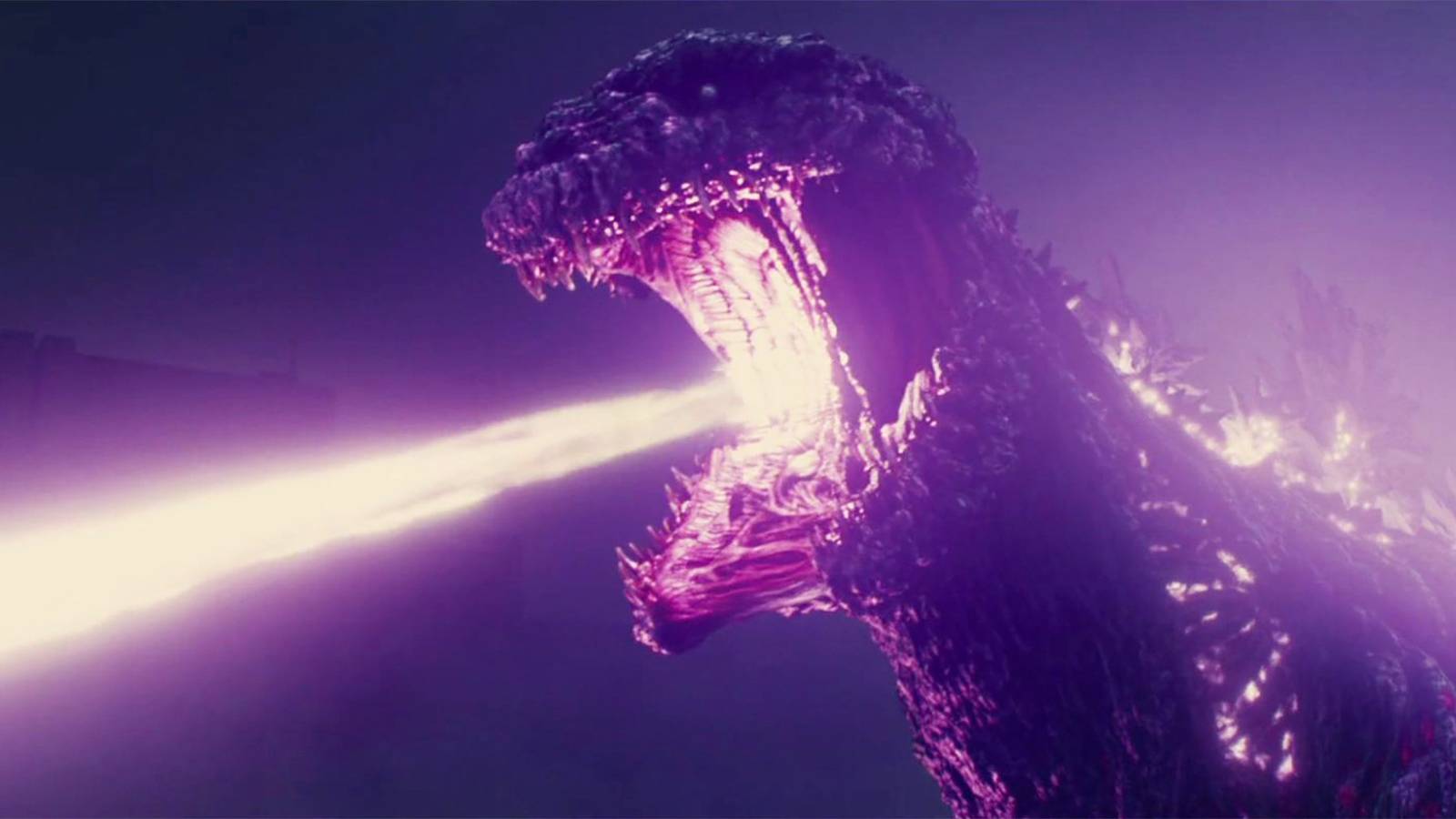
Godzilla movies are fun, except for when they’re not. The fun times are when he’s fighting other monsters and destroying buildings and causing explosions. But the bad times are when we’re supposed to focus on the human characters who are always within viewing distance of said destruction…or, that one time when Godzilla was a T. rex (and yes, that is the correct abbreviation) in New York. The biggest drag of any Godzilla movie—or, any Kaiju movie in general—is that the star of the movie is the giant monster on the poster and you can’t make a feature-length movie of monsters fighting or causing mayhem the entire time. That would get excessive and boring after a while, so there has to be a human element that the audience can identify with to give the film a structured narrative to follow.
Unfortunately, no matter how hard the writers or the actors try, that’s always the weakest part of the movie. The first Godzilla film in years to make its human characters genuinely interesting was Godzilla: Minus One, blending a family dynamic with post-war drama in a monster movie, and surprisingly…it worked great. But before that, Toho released 2016’s Shin Godzilla, which made the innovative and seemingly obvious choice of just dropping the human drama aspect altogether and make it about the monster.
Directed by Hideaki Anno and Shinji Higuchi, the film follows a mysterious creature that emerges out of Tokyo Bay and begins to evolve and grow, threatening to destroy Tokyo. It’s then up to the Japanese government to stop it before it can wreak total havoc…and that’s it. That’s literally the entire plot synopsis of a two-hour-long movie described in two sentences.
How Would a Government Deal with Godzilla?
Brevity is the key term here, because the movie starts with a weird occurrence and a giant monster coming out of said occurrence, and then painstakingly goes into the minutiae of how the government will deal with it. This isn’t the government depicted in a ’90s Michael Bay movie where characters are yelling, everyone’s sweaty with their ties undone, people are haphazardly running from rooms with jumbles of paper, and Stanley Anderson is the President. No, this is people sitting in taupe-colored rooms (which is allegedly very soothing), and dryly going over what information they have on the anomaly and what options they have to resolve the problem.
Does that sound fantastically boring? Because by all accounts, it absolutely should be, but the dry, methodical process demonstrates what would have to be done with a fantasy monster appearing, almost like a natural disaster, actually adds to the tension and hysteria. The characters even acknowledge the amount of bureaucracy that goes into making simple decisions: “So much red tape. Every action requires a meeting.” That’s like the thesis of the entire movie!
Attack helicopters can’t just be brought into a highly populated area to attack the monster, and a military presence can’t just be called to assist. The proper legal channels have to be gone through, and the necessary officials have to sign off on it. This should be so crushingly dull and tedious, but it surprisingly adds to the anxiety of the predicament by cross-cutting with the destruction that Godzilla is causing. Knowing that the longer the process takes, the higher the risk of more people dying in the delay really shows how dire the situation is. The procedural nature of the government scenes also makes Godzilla even scarier, since they don’t try to make him a realistic monster. They make him over-the-top scary by making him as overpowered as possible, and contrasting that with the realistic world that the people inhabit makes the threat feel appropriately overwhelming.
Every Godzilla Movie From the 2010s, Ranked
Stop, Zilla time.
Ditch the Human Element

That’s where the lack of a human element makes the film feel so much more streamlined. The story takes an omniscient perspective and consistently cuts to wherever the information is that’s vital to the audience. Godzilla isn’t a hidden monster, and we don’t see everything from the point of view of one person. The movie follows wherever the action is, where world-building is necessary, and where vital information is learned. The story has a protagonist named Haguchi (Hiroki Hasegawa), but he’s very deliberately left underwritten, and is more a focal point, so the audience can keep up with the flood of details and information that’s always flowing in.
His motivation isn’t saving a pregnant wife, or to protect his family—if he even has one, since he never mentions any loved ones, or at least none that come to mind—his entire motivation is the same as everyone else’s: Save Tokyo, and potentially, the world. We don’t need him to have kids that he’s estranged from, that he can hug when they survive, or a love interest to kiss at the very end. The desire not to die and also to prevent the deaths of potentially millions of others (or more) is a clear motivation that anybody can get behind.
From a Hollywood perspective, Shin Godzilla defies what Western audiences would expect in a kaiju movie. There are no themes of family or character arcs—there’s barely a main character—all it is, really, is a large group of people realistically going about their business and doing their jobs in a time of unrest. It just so happens that that time of unrest is because of a giant monster that popped out of the ocean, but it’s the most procedural version of that premise that could be done, and that’s what makes it unique and so compelling.

- Release Date
-
July 29, 2016
- Runtime
-
120 minutes
- Director
-
Hideaki Anno, Shinji Higuchi
-

Hiroki Hasegawa
Rando Yaguchi : Deputy Chief Cabinet Secretary
-
Yutaka Takenouchi
Hideki Akasaka : Special Advisor to the Prime Minister
Credit: Source link