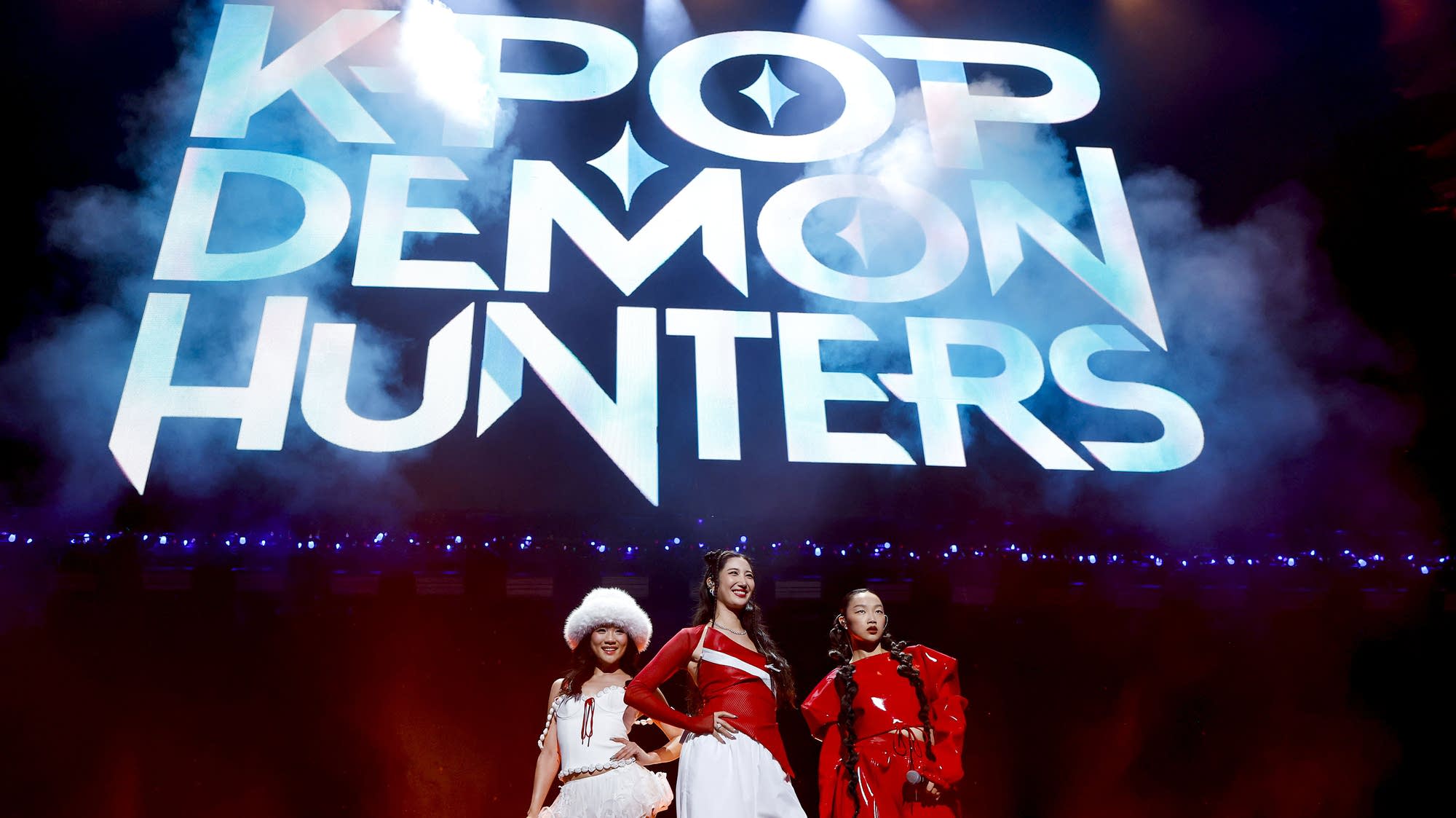
The latest numbers from UCLA’s Hollywood Diversity Report show studios are moving backward when it comes to diversity both onscreen and off for shows and movies on streaming platforms. But the audiences watching on those platforms are showing up for diverse representation. For example, the biggest streaming film of last year was “KPop Demon Hunters,” and women of color, in particular, helped pull in major ratings.
For more, “Marketplace Morning Report” host Kimberly Adams was joined by Dr. Michael Tran, a sociologist and co-author of UCLA’s Hollywood Diversity Report. The following is an edited transcript of their conversation.
Kimberly Adams: Let’s dig into some of these numbers. Your report says Hollywood is backsliding on diversity, but that’s not true for audiences. Walk us through what’s changed.
Dr. Michael Tran: First, diversity sells. So films and TV shows that tend to do the best are the ones that match the country’s diversity. Even in today’s climate, diversity is still where the market is going, but then we’ve also found that Hollywood has never really met the demands of the market and reflected the racial, ethnic, or gender diversity of the nation. And, like you said, in the last couple years, it’s actually gone backwards. But in 2025, streaming films have basically gone the way of theatrical film and TV, where there’s been this like backsliding in diversity over the last two years.
Adams: Right. It feels like in the past streaming was a place where more diverse casts and crew were able to find some footing, even when they couldn’t on the big screen or in TV. Why is there this shift?
Tran: What we’re seeing is a kind of lag effect of the same phenomenon in theatrical film and TV. There’s a kind of like multi-year production cycle of what gets greenlit to what shows up on screen. So, we’re actually seeing the effects of things that are happening a few years ago. And a few years ago, Hollywood was going through what was called “the Great Contraction.” Much fewer films and television shows were being made, and one thing that we’re warning against is that diversity is a market imperative; it shouldn’t be treated as a luxury or something extra. And what we found is that Hollywood basically treated it as something extra. Diverse programming was the first thing to go.
Adams: Let’s talk about a bright spot of the report, which was “KPop Demon Hunters.” This animated musical becomes the most-watched original film of all time on Netflix. What did the viewing numbers for that film tell you about audiences and studios?
Tran: “KPop Demon Hunters” was really a juggernaut. We usually don’t talk about individual cases, but “KPop Demon Hunters” had this huge footprint on this year’s streaming film dataset. The reason why it’s in the streaming data set is because it went straight to streaming, and part of what we hear about that is that some decision-makers thought it was too niche for a traditional wide theatrical premiere, and I think this kind of offers a lesson.
You take a movie that’s about young women of color, it’s music-adjacent, etc., but the counterfactual to that is that in the last three years, the most-watched films on streaming have all been animated musicals or music-adjacent stories about young women of color — that’s “Encanto,” “Turning Red,” and “Moana.” So I think, overall, it’s useful to look at “K-Pop Demon Hunters,” because it’s a lesson that Hollywood has to reconnect with today’s market, which is young, increasingly diverse, and female-driven. And we have to think about how much money is being left on the table because of the disconnect that we’re currently seeing.
Credit: Source link