


Social Distortion, “Born to Kill.”
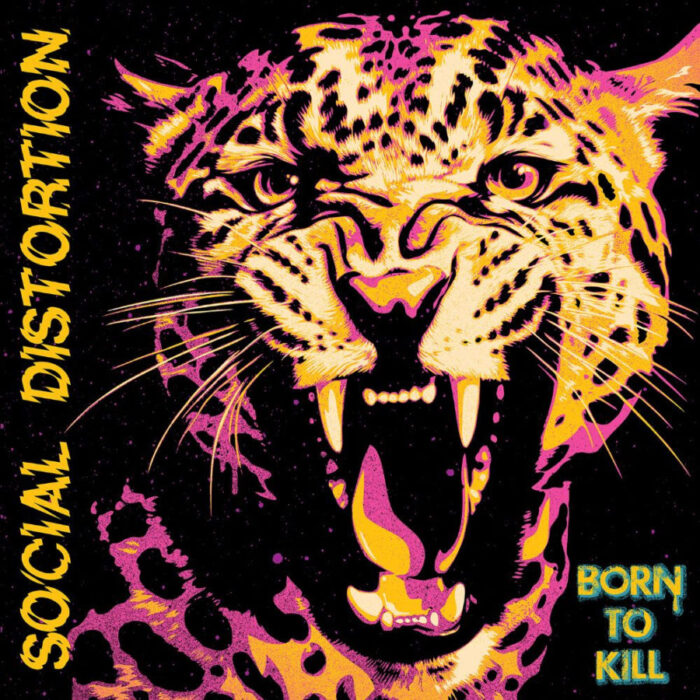
Punk veterans Social Distortion took the long road to their eighth album, Born to Kill.
Fifteen years have passed since 2011’s Hard Times and Nursery Rhymes, a gap shaped by relentless touring, an extensive writing process and frontman Mike Ness’ battle with cancer. It’s the kind of hiatus that can stall momentum. Instead, Born to Kill arrives focused, energized and anything but dated.
The band wastes no time setting the tone. The title track opens with a punchy, three-chord blast, with Ness taking aim at doubters head-on.
“I’m the underdog who ends up on top,” he sings, delivering a familiar mix of swagger and defiance. “The rebel poet with a peacock strut/ Gonna make a change, gonna rearrange/ Look out, man, you’re in my pissing range!”
Ness produced the album with long-time Social D engineer Dave Hardy, who’s also worked with the Offspring, Ataris and Distillers. The result lands in a sweet spot: raw enough to feel live, but polished enough to not sacrifice studio techniques. Guitars ring out with force on fist-pumper “No Way Out,” where sharp riffs and driving rhythms give the song a muscular edge. The verses and choruses are tied together by blazing guitar work from Ness.
The core lineup — guitarist Jonny “2 Bags” Wickersham, bassist Brent Harding and drummer David Hidalgo Jr. — plays tight and purposeful throughout. Though Hidalgo joined the band in 2010, this marks his first appearance on a Social Distortion studio album.
That cohesion shows in the band’s willingness to stretch.
Their take on Wicked Game flips the familiar mood. Rather than leaning into the original’s brooding weight, Social Distortion recasts it as an upbeat, Americana-tinged punk rocker. It’s an unexpected turn that works.
Ness’ vocals hold up, too. Following his tonsil cancer diagnosis and recovery, his voice carries both grit and resilience. There’s wear in the tone, but also strength — a combination that suits the material.
Midtempo cuts like “The Way Things Were” and “Tonight” lean into nostalgia without getting stuck there. The latter, in particular, highlights Ness’ songwriting, blending punk roots with a broader Americana palette.
“Partners in Crime” brings the energy back up, complete with a lyrical nod to both 1950s country artist Harlan Howard and rock’s core ethos that’s been adapted in song many times over, from the Carter Family to David Bowie and Bono:
“You’ve got three chords, and you’ve got the truth,” Ness sings.
Things shift again on “Crazy Dreamer,” which features Lucinda Williams and Benmont Tench of Tom Petty’s Heartbreakers. The track leans further into Americana, with Williams’ gritty vocals pairing naturally with Ness’ gravelly delivery.
The back half of the album returns to familiar ground. “Walk Away” hits with a live-wire urgency, while “Never Going Back” blends punk drive with blues grit — a combination that’s long defined the band’s sound. An anthemic chorus grows even bigger with a harmonic vocal attack, and the song has one of the most blistering guitar solos on the record.
“Sinking to the bottom/ How low can one descend?/ Iit took a lot of trying to get up that hill/ I ain’t ever going back again,” Ness sings, seemingly referencing his career arc.
The closing stretch — “Don’t Keep Me Hanging On” and “Over You” — brings things down just enough to end on a reflective note without losing momentum. Born to Kill offers more than enough evidence that Mike Ness and Social Distortion have plenty left in the tank to continue making punk rock records.
Follow writer Mike DeWald at mikedewald.bsky.social.
About The Author

Mike DeWald is a Northern California journalist and reporter. Mike has been a Reporter with the Bay Area’s KCBS Radio since 2022, and on staff since 2020. Previously, Mike produced KSRO’s “The Drive with Steve Jaxon” drive-time radio show since 2008, covering news, music, pop culture, politics and more. Mike has contributed to a number of digital music podcasts and publications including the Rock’N Vino Podcast and The Download Parlor. He is an avid live music fan and photographer.
Credit: Source link